
Lieferung heute & morgen

Qualitätsgarantie

Willkommens-Angebote freischalten: KOSTENLOSE Lieferung | Bis zu 80 % RABATT | Kostenlose 30-Tage-JoyPlus-Testphase
App herunterladen
A fridge-freezer should work reliably for many years. However, eye-catching displays, large litre figures or terms such as “Inverter” do not automatically mean it is the right choice. What really matters is the actual usable capacity, the installation requirements and your everyday needs.
A large fridge can look very appealing on the specification sheet. In practice, however, the usable capacity of the fridge and freezer compartments is what counts. Shelves, ice makers and air ducts reduce the space that is actually available. Always check these separately:
A 250-litre fridge-freezer may be sufficient for a small household, while families or larger households are more likely to need a model with 330 to over 600 litres of capacity.
A NoFrost fridge generally prevents ice from building up in the freezer compartment and reduces the need for manual defrosting. However, interior surfaces, door seals, ventilation areas and a water dispenser still need to be cleaned regularly. Models with a water or ice dispenser also require the water tank, outlet and, where applicable, filter to be cleaned.
It is not just the external dimensions that matter. Before buying, you should also check:
A side-by-side fridge or French-door fridge often requires more width and room to manoeuvre than a conventional freestanding fridge.
The EU energy label ranges from A to G. However, the energy efficiency class should always be considered together with the annual consumption in kilowatt hours. Despite having a good rating, a large fridge may use more electricity than a smaller model.
For a rough cost calculation:
Annual consumption in kWh × your electricity price per kWh = estimated annual electricity costs
Example: A model using 172 kWh per year would cost around 60,20 Euro in electricity at 0,35 Euro per kWh. The actual amount depends on your tariff. If you are looking for an energy-efficient fridge, do not just look at the letter rating; check the kWh figure as well.
The figure in dB(A) describes the noise emissions. Levels of around 34 to 40 dB are considered relatively unobtrusive in many homes, although perceived noise also depends on the room acoustics and installation position. A quiet fridge is particularly important for open-plan kitchens, small flats and rooms next to bedrooms or home offices.
A conventional combination with the freezer compartment at the bottom often places the fridge section at a convenient eye level. A side-by-side fridge offers wide shelves and plenty of freezer space, but requires more floor width. A French-door fridge combines wide fridge compartments with a generally separate freezer section.
For households that need to store large quantities of food, an additional freezer may be a more practical option than an oversized fridge-freezer. In a cellar or garage, check the stated climate class and permitted ambient temperature range. Not every appliance is suitable for unheated rooms.
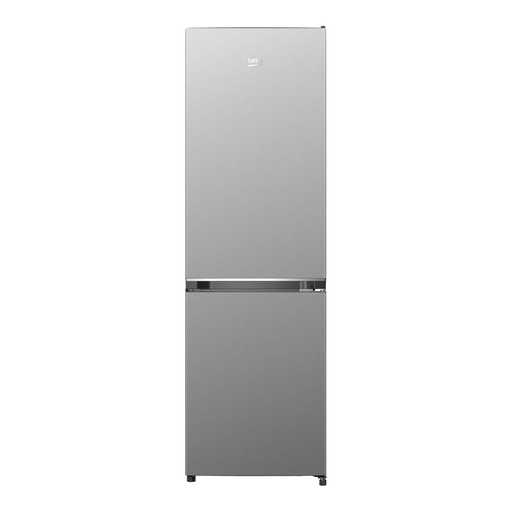
Why this product suits the profile: This combination provides 180 litres of fridge space and 70 litres of freezer space in a width of 54 cm. It is suitable for smaller households and kitchens with limited floor space.
The usable capacity is listed separately. NoFrost, a door alarm and a reversible door make everyday use easier.
Energy efficiency class D, annual consumption of 172 kWh and 39 dB according to the product specifications.
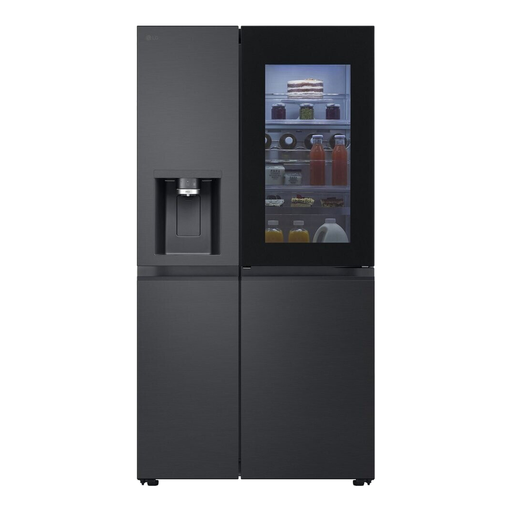
Why this product suits the profile: With a total capacity of 628 litres, a water and ice dispenser and app control, it is designed for households that value convenience and generous storage space.
The specification sheet lists the fridge and freezer capacities separately, as well as a noise level of 35 dB. Make sure you plan for the width, depth and door opening before buying.
Energy efficiency class D, 276 kWh per year, NoFrost, Craft-Ice function and LG-ThinQ compatibility according to the product description.

Why this product suits the profile: As a separate 286-litre freezer, it is ideal for storing supplies and larger packs, or for adding extra capacity to an existing fridge-freezer.
NoFrost reduces ice build-up. For use in a garage or cellar, you must still observe the permitted temperature range of down to -15 °C.
Energy efficiency class D, 34 dB, Fast Freeze function, five drawers and a reversible door according to the product data.
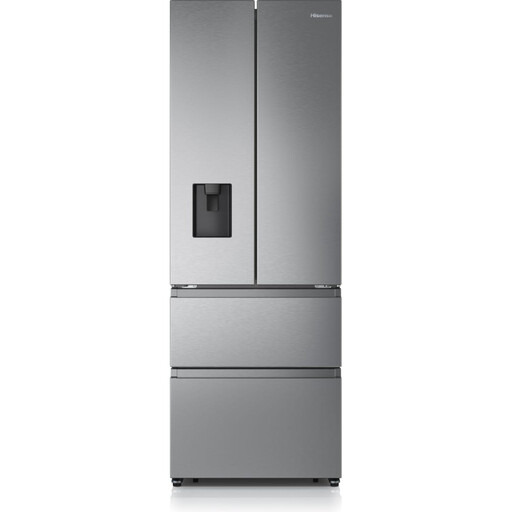
Why this product suits the profile: The French-door design provides 336 litres of fridge space and 149 litres of freezer space, plus an integrated water dispenser.
The product data specifies a total usable capacity of 485 litres, 38 dB and NoFrost Plus. Remember to factor in tank cleaning when using the water dispenser.
MultiFlow-360° Inverter compressor, CrispZone with humidity control and Holiday Mode according to the product description.
We have put together a complete, regularly updated list of products that fully meet these strict selection criteria and the safety regulations applicable in the EU.
Its service life depends on usage, installation location, ventilation, door seals and maintenance. It is not possible to give a reliable fixed lifespan for every model. Regularly cleaning the seals, leaving sufficient clearance from the wall and ensuring the appliance is level can help it operate reliably with fewer problems.
In addition to the width, height and depth, many models require extra space for air circulation. The doors must also be able to open fully. With a side-by-side fridge or French-door fridge, the door width is particularly important. The installation instructions provided by the manufacturer are the definitive guide.
For households that store a lot of frozen food, a separate freezer can provide a clearer layout and more usable freezer space. It is also suitable as an addition to a fridge with a freezer compartment or a smaller fridge-freezer. Before buying, compare the electricity consumption, installation space and temperature conditions at the intended location.