
Lieferung heute & morgen

Qualitätsgarantie

Willkommens-Angebote freischalten: KOSTENLOSE Lieferung | Bis zu 80 % RABATT | Kostenlose 30-Tage-JoyPlus-Testphase
App herunterladen
A fridge freezer saves space by combining two appliances in one housing. However, an apparently great-value offer can later lead to higher electricity costs, space issues or additional maintenance. Three points in particular are often underestimated: the actual external dimensions, the difference between No Frost and Low Frost, and annual energy consumption.
This buying guide helps households, couples and families choose a suitable fridge freezer for their kitchen, flat, utility room or garage.
An appliance measuring 60 cm wide will not automatically fit every 60 cm recess. Many models also need clearance at the sides, rear and top to dissipate heat. Depth is important too: the CHiQ JR318WSD, for example, is 59.5 cm wide, 185.5 cm high and 63.5 cm deep. This means it may protrude visibly from a fitted kitchen run.
Before buying, measure:
A No-Frost fridge freezer technically removes moisture from the freezer compartment, thereby reducing ice formation. With Total No Frost, the system generally applies to both the fridge and freezer compartments. With Low Frost, ice builds up more slowly, but manual defrosting is still required.
If you want to keep maintenance to a minimum, look specifically for “No Frost” or “Total No Frost” in the technical specifications. This helps avoid the mistaken expectation that a Low Frost appliance will never need defrosting.
The energy efficiency classes on the EU label range from A to G. The kWh per year figure is also relevant to running costs. Despite having a favourable energy class, a large fridge freezer may use more electricity overall than a smaller appliance.
You should therefore always compare:
For one or two people, a fridge with a freezer compartment and a capacity of around 200 to 260 litres may be sufficient. A family fridge freezer should often offer more than 300 litres of usable capacity. The CHiQ JR318WSD has 226 litres of fridge space and 96 litres of freezer space, giving 322 litres in total. Its 70/30 layout is suitable for households that regularly store fresh food and frozen products.
However, a 300-litre fridge or larger only makes sense if the installation space and your actual needs are suited to it. Unused storage space still contributes to the appliance’s energy consumption.
A quiet fridge freezer is particularly important in open-plan kitchens, small flats or rooms next to a bedroom. Manufacturers state noise levels in dB(A). Models rated at 35 to 40 dB(A) are often chosen for noise-sensitive living environments. The actual impression of the noise also depends on the floor, distance from the wall and the compressor’s operating phase.
A fridge freezer with a bottom freezer places the frequently used fridge compartment at eye level. This makes it easier to access drinks, vegetables and everyday groceries. A top-freezer model, on the other hand, can be practical where space is limited in height or the budget is restricted.
Useful features may include:
Additional features such as water and ice dispensers require more space and may increase cleaning requirements. Also check whether a water connection or a manually filled tank is needed.
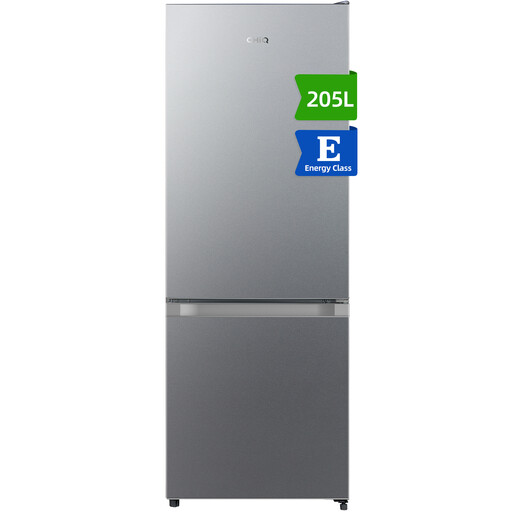
Why this product suits this profile: With 205 litres of usable capacity, a width of 54 cm and a height of 144 cm, this model is suitable for couples, smaller flats and kitchens with limited installation space.
The compact dimensions make planning easier. Low Frost reduces ice formation but does not eliminate the need for occasional defrosting.
205 litres of total capacity, reversible door, 39 dB and energy efficiency class E.
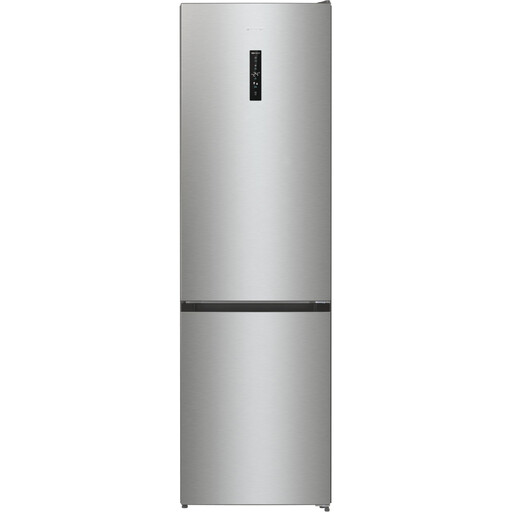
Why this product suits this profile: This model combines 331 litres of usable capacity with No Frost, Super Cool and Fast Freeze for households that shop regularly.
No Frost is specified for both the fridge and freezer compartments. The dimensions of 60 × 200 × 59.2 cm must be taken into account before ordering.
Energy efficiency class C, 158 kWh per year, 35 dB, door alarm and reversible door.
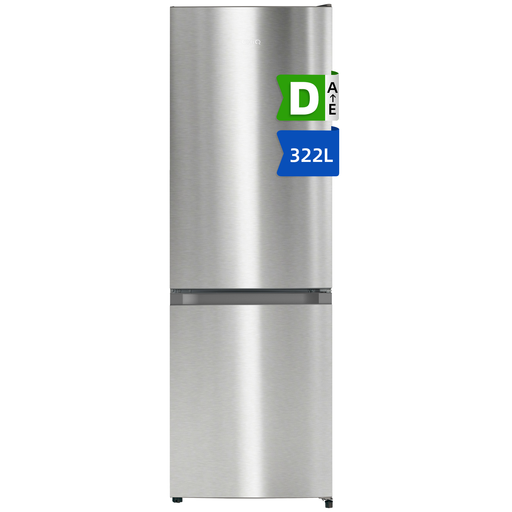
Why this product suits this profile: With 322 litres of storage, a bottom freezer compartment and climate classes N, SN, ST and T, this appliance is also suitable for a utility room or garage with temperatures from 10 to 43 °C.
The specifications state Total No Frost and an operating range down to 10 °C. Its depth of 63.5 cm prevents inaccurate planning based on an exact 60 cm space.
226 litres of fridge space and 96 litres of freezer space, Fast Freeze, 196 kWh per year and 37 dB.
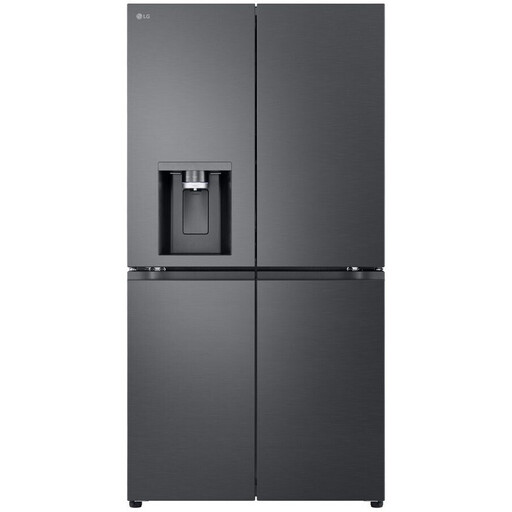
Why this product suits this profile: With 645 litres of total capacity and four doors, this appliance is designed for large households with high refrigeration and freezing needs.
No Frost reduces the need for manual defrosting. Before buying, however, check the width of 91.4 cm, depth of 73.3 cm and the space required for the doors to open.
384 litres of fridge space and 261 litres of freezer space, energy efficiency class C, 230 kWh per year and Fast Freeze.
We have put together a complete, regularly updated list of products that fully meet these strict selection criteria and the safety regulations applicable in the EU.
Place the appliance on a level, stable floor and leave the clearances specified in the instruction manual. After transporting the fridge freezer on its side, leave it standing upright for several hours before connecting it. The exact waiting time depends on the manufacturer’s instructions.
For efficient operation, allow hot food to cool first, open the door only briefly and avoid overfilling the compartments. Regularly cleaning the seals helps ensure that the door closes properly. The actual lifespan depends on use, location, maintenance and repair options; it would not be reliable to give a general figure in years.
As a general guide, couples can plan for around 200 to 260 litres. Families often need 300 litres or more. The key factors are how often you shop, how much food you store and the proportion of frozen food.
Annual costs can be calculated from the consumption shown on the EU energy label: kWh per year × your electricity price per kWh. At the same electricity price, a model using 158 kWh per year will incur lower running costs than an appliance using 300 kWh per year.
No Frost is practical if you want to avoid manual defrosting. Depending on their design, however, appliances may contain more technology, have larger external dimensions or use a different amount of energy. You should therefore compare the No-Frost function, usable capacity, dimensions and kWh figure together.