Holiday-home users with fresh leftovers
If you keep opened cream and other chilled foods while you’re staying at your holiday home, you need a place to store them where the required temperature can be maintained.


Choose a fridge-freezer that lets you check the temperature where you store opened cream, and follow the storage instructions on the packaging. If your holiday home is unoccupied for longer periods, also consider your actual freezer needs and whether the fridge and freezer compartments can be controlled separately. Only switch off the fridge compartment once it has been completely emptied.
If you keep opened cream and other chilled foods while you’re staying at your holiday home, you need a place to store them where the required temperature can be maintained.
If the house is empty between visits, compare energy consumption, freezer requirements and whether the fridge and freezer compartments can be controlled separately.
If space or the doorway is tight, check the appliance dimensions and the clearance needed to open the door. If the room gets very cold in winter, also check the ambient temperature range permitted for the specific model.
The Verbraucherzentrale recommends storing cream on the middle fridge shelf at 5 to 7 °C; the storage instructions on the individual pack should always take precedence.
| What you need | What to check before buying | Who is this important to? |
|---|---|---|
| Keeping cream sufficiently chilled | Check the temperature in the intended storage area; follow the instructions on the packaging. | If I keep opened cream, the temperature needs to be right where I actually store it. Around 36% of consumers put keeping cream chilled first. |
| Energy consumption while the property is unoccupied | Compare annual kWh consumption; check whether the specific model offers separate controls. | If I leave frozen food in the appliance between visits but want to switch off the empty fridge compartment, I need a suitable separate control. Around 29% of consumers prioritise periods when the property is unoccupied and energy consumption. |
| Space and installation conditions | Check the external dimensions, door clearance and, if the appliance will be used in a cool room, its climate class. | If space, the route into the property or winter room temperatures are a concern, the appliance needs to suit its location. Around 21% of consumers pay particular attention to fit and installation conditions. |
| Freezer space needed | Choose the freezer capacity to match your storage needs; compare the defrosting method and annual energy consumption. | If I regularly store frozen food, I need enough freezer space for it, but no more than necessary. Around 14% of consumers put their freezer requirements first. |
If the fridge compartment is switched off or set too warm, it may not meet the storage requirements for cream.
Use up or remove chilled leftovers before a longer absence. Only switch off the fridge compartment once it has been completely emptied and if the specific model allows it to be switched off separately.
The space required can differ considerably from the external dimensions of the closed appliance, due to the door opening and access to the installation location. For example, the manufacturer lists a depth of 110 cm with the door open for the Exquisit KGC250-85-NF-040D inoxlook-az.
Measure the space, access route, wall clearance and door swing using the dimensions of the model you have chosen.
Unused freezer capacity can mean unnecessary energy consumption. The Verbraucherzentrale recommends choosing freezer capacity to match your actual storage needs.
Compare fridge and freezer capacities separately, and also take the annual consumption in kWh into account.
The climate class specifies the ambient temperature range for which the specific appliance is designed.
If the appliance will be used in winter, compare the actual room temperature with the range specified for the model you have chosen. Don’t assume it’s suitable based on the brand or type of appliance alone.
The RCSA240K30WN is an example of a slim, freestanding fridge-freezer.
The KGC250-85-NF-040D inoxlook-az combines a 54.5 cm-wide body with a freezer compartment and NoFrost.
The KGN36NLEA is an example of a larger freestanding fridge-freezer with specified fridge and freezer capacities.
The KGN 52Vb03 is an example of a larger fridge-freezer with NoFrost and, according to the manufacturer, separate cooling circuits.
The selection below includes freestanding and integrated fridge-freezers with both fridge and freezer compartments. Check that the appliance dimensions and installation type are right for your holiday home.
 No image available
A compact freestanding fridge-freezer for holiday homes that need both fridge and freezer space.
173 l total usable capacity; four-star freezer compartment; energy class C.
 No image available
A larger freestanding fridge-freezer for households that need more freezer space as well as a fridge compartment.
375 l total capacity; energy class A; black finish.
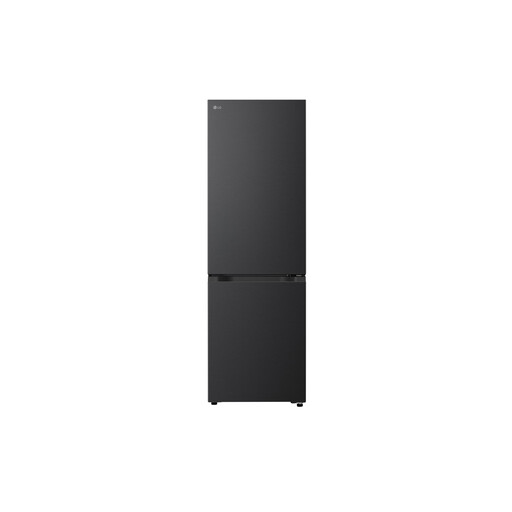 No image available
This fridge-freezer could be a good fit if your holiday home has a suitable space for an integrated appliance.
333 l total capacity; energy class A; 0 °C zone according to the product name.
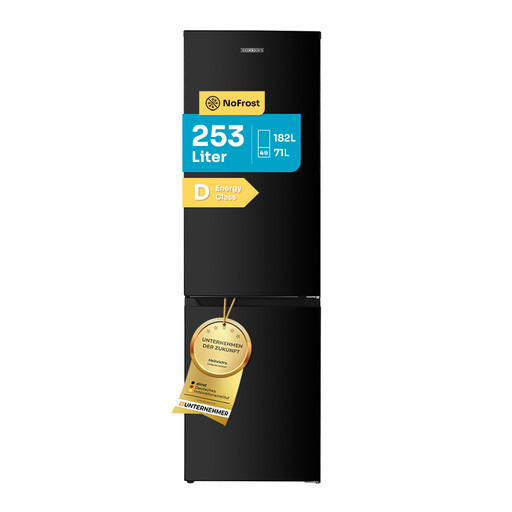 No image available
A fridge-freezer for holiday homes where you need both fridge and freezer space.
253 l total capacity; 182 l fridge compartment and 71 l freezer compartment; No Frost; energy class D.
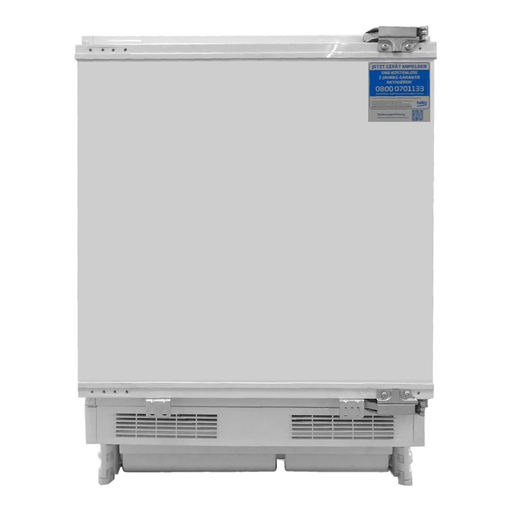 No image available
An option if you have a suitable kitchen space for a built-in appliance and a smaller total capacity is enough.
107 l total capacity; niche height 88 cm; energy class E.
First, follow the storage instructions on the packaging. The Verbraucherzentrale recommends keeping cream on the middle fridge shelf at 5 to 7 °C; check the temperature where the pack is stored. The use-by date on an unopened pack doesn’t give a general indication of how long it will keep after opening.
Only if the specific model allows the compartments to be controlled or switched off separately, and the fridge compartment has first been completely cleared of chilled food. The Verbraucherzentrale says this is possible with some fridge-freezers that have two control circuits; it isn’t a feature of every appliance.
Compare the actual room temperature while the appliance is running with the climate class of the specific model. For example, Liebherr gives a range of +10 to +32 °C for SN and +16 to +32 °C for N. This doesn’t mean that any model is approved for temperatures below its stated range.
Choose freezer capacity to suit the food you actually store at your holiday home. The Verbraucherzentrale points out that a freezer that’s larger than you need can use energy unnecessarily, so compare the annual consumption in kWh as well.
For a fridge, compare the EU energy efficiency class on the A to G scale and the stated annual consumption in kWh. The European Union explains that the label must also be visible when the appliance is sold online; it doesn’t require buyers to choose a particular efficiency class.