Home cooks with a small kitchen
If you want to keep cooked soup chilled and have limited worktop space, start by checking where the appliance will go, how much floor space it needs and whether the door can open fully.


For leftover soup you plan to eat soon, enough fridge space and room for covered containers matter more than having the largest possible freezer compartment. If you regularly freeze portions, you should also check the usable freezer capacity. A slim freestanding appliance needs floor space and room for the door to open, while an under-counter model requires a suitable niche and doesn’t automatically offer much freezer space. The German Federal Institute for Risk Assessment recommends cooling hot food quickly to below 7 °C for longer storage. Choosing the right appliance doesn’t replace safe food handling.
If you want to keep cooked soup chilled and have limited worktop space, start by checking where the appliance will go, how much floor space it needs and whether the door can open fully.
If you cook more soup than you’ll eat soon, you’ll need a freezer compartment or section that fits your containers, as well as fridge space. The German Federal Centre for Nutrition recommends using suitable, labelled freezer packaging.
If you want to make use of your existing kitchen units, check that the niche dimensions and cabinet door are compatible with the appliance, and consider how much freezer space an under-counter model offers.
A good fit if: there’s enough floor space for the appliance and room in front for the door to swing open.
Consider: Fridge and freezer capacities vary by model. The appliance’s width alone won’t tell you how much space you need for it or its door.
A good fit if: there’s a suitable niche beneath your existing worktop and you only need to freeze small amounts.
Consider: The niche and cabinet door must be suitable for installation. The freezer compartment won’t necessarily be as spacious as a separate freezer section.
| What matters when buying | What to check | Who is this important to? |
|---|---|---|
| Floor space and installation dimensions | Appliance width, height and depth, as well as door clearance. For an under-counter model, also check the niche and cabinet door dimensions against the available space. | If I’m short on floor space and want to keep my worktop clear, the appliance dimensions and door clearance are my first considerations. Around 31% of consumers prioritise floor space and installation dimensions. |
| Fridge space for leftover soup | Check fridge capacity separately from freezer capacity and make sure your containers will fit on the shelves. Also check the actual temperature inside the appliance. | If I plan to eat the soup soon, I need room in the fridge for covered portions. Around 31% of consumers prioritise chilled storage for leftovers they plan to eat soon. |
| Freezer space for meals later on | Compare the stated freezer capacity and the dimensions of the compartments or drawers with the containers you plan to use. | If I want to freeze several portions for later, my frozen food needs to fit, so I shouldn’t look at total capacity alone. Around 25% of consumers prioritise space for frozen meals. |
| Running and purchase costs | For the models you’re considering, compare annual energy consumption in kWh and the separate storage capacities on the EU energy label. Calculate running costs using your own electricity tariff. | If running costs are a priority for me, I want to compare the energy consumption of a suitable model with my needs. Around 13% of consumers focus on running and purchase costs. |
In a small kitchen, the appliance depth and the clearance needed for the door to open can also be an issue. With an under-counter model, you’ll also need to account for the niche and cabinet door.
Before ordering, check the appliance or niche dimensions against your kitchen, and make sure there’s room for the door to open.
Getting the measurements wrong could mean you need to alter the installation or rethink your kitchen layout.
Compact appliances vary in how their internal space is divided between the fridge and freezer. A larger total capacity doesn’t necessarily mean there’s enough room for frozen portions.
Compare fridge and freezer capacities separately, and check that your containers will fit in the compartment or drawers.
Beko describes MinFrost as reducing ice build-up. The Exquisit models mentioned here are listed as requiring manual defrosting. These terms don’t mean an appliance is frost-free.
Check the defrosting method for the specific model rather than assuming it from a similar-sounding feature name.
Manual defrosting takes time.
The manufacturer’s examples show freestanding appliances with different fridge and freezer configurations.
The freestanding RCSA300K40SN is an example of a slim combination with a separate freezer section at the bottom.
The UIK 1514 is an under-counter alternative with an integrated four-star freezer compartment, designed for a suitable niche.
The KGCR 384 150 T offers another freestanding option to compare if your kitchen doesn’t have an under-counter niche.
This selection includes freestanding fridge-freezers and integrated fridges with freezer compartments, for chilled leftover soup and, depending on the model, extra portions to freeze.
 No image available
This freestanding model could suit you if you need fridge space as well as a separate freezer section for portions.
333 l total capacity; Total No Frost; energy class C.
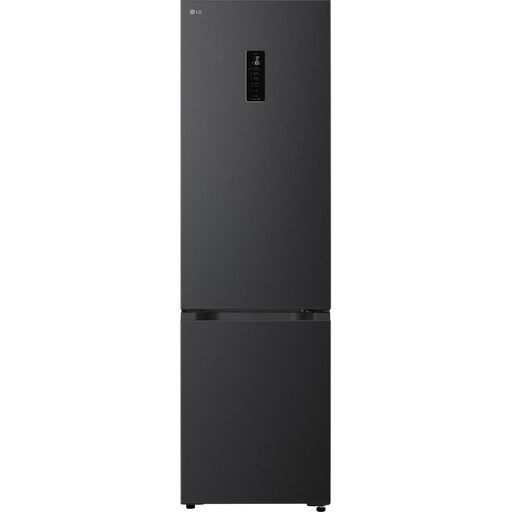 No image available
This freestanding combination is an option if you want separate areas for chilled leftovers and frozen portions.
375 l total capacity; energy class A; black finish.
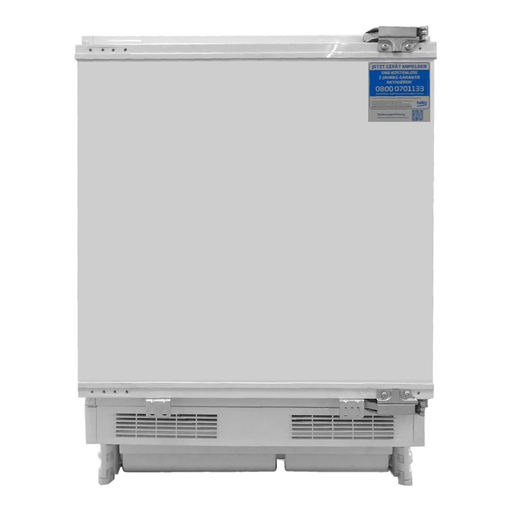 No image available
This integrated fridge suits an under-counter layout if the existing niche and fixed-door installation are compatible with the appliance.
107 l total capacity; designed for an 88 cm niche; energy class E.
The stated freezer compartment capacity is 15 l.
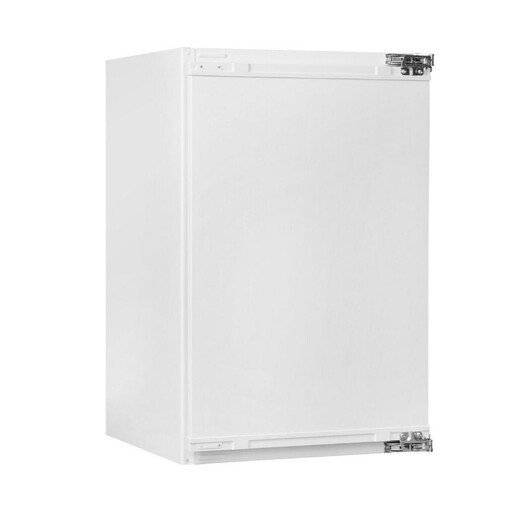 No image available
This under-counter model is designed for a suitable niche and may work for you if an integrated freezer compartment is enough for smaller quantities.
110 l total capacity; designed for an 88 cm niche; energy class E.
The stated freezer compartment capacity is 13 l; fixed-door installation.
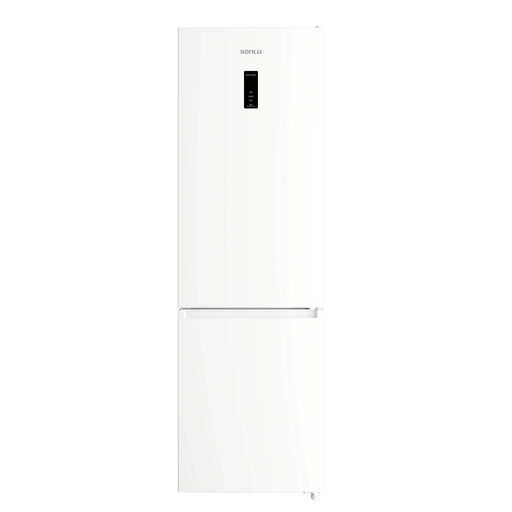 No image available
This freestanding combination has separate fridge and freezer sections. Check that its dimensions suit the space available before buying.
355 l total capacity, including 252 l of fridge space and 103 l of freezer space; 60 cm wide; energy class E.
No. The German Federal Institute for Risk Assessment recommends cooling hot food quickly to below 7 °C for longer storage, and keeping food covered and separate in the fridge. This is food-safety advice, not a legal minimum requirement for a particular appliance model.
As well as the cabinet depth, compare the depth with the door open against the space available for access. Exquisit lists 106 cm for the KGC5270-45-040E weiss and 93 cm for the KGC145-50-E-040F silber; these measurements apply only to those models.
Put portions in suitable freezer containers and label them with the contents and date. The German Federal Centre for Nutrition recommends freezing food in portions and using labelled freezer packaging. The guidance referenced here relates specifically to fruit and vegetables and doesn’t make any claims about how long soup can be stored.
The EU energy label shows, among other things, annual energy consumption in kWh, storage capacity and noise emissions. To estimate costs, multiply the stated annual consumption by your electricity tariff per kWh. How you use the appliance and its set temperature can affect actual consumption.
No. According to the German Federal Ministry for the Environment, old electrical appliances must be handed in at an authorised collection point or to another authorised collector. If you expect an online retailer to collect the appliance, check the conditions in advance. Take-back may depend, in particular, on whether it was arranged when you bought the appliance.