If you’re keeping soup in the fridge until your next meal, what matters most is having enough usable fridge space for several shallow, covered containers. A larger freezer won’t solve a lack of fridge space. If you regularly freeze extra portions, compare freezer capacity and drawer layout, as well as the appliance’s actual dimensions and stated annual energy consumption. The German Federal Institute for Risk Assessment recommends cooling hot food quickly to below 7 °C for longer-term storage. A fridge won’t do this for you.
Which capacity is right for you?
Households with leftover soup on a regular basis
If you often have several portions left after a shared meal, you’ll need space in the fridge for covered containers alongside your other food. The German Federal Institute for Risk Assessment recommends cooling hot food quickly for longer-term storage.
Households that freeze portions
If you regularly cook more than you’ll eat soon, check the freezer capacity as well as the fridge space, and make sure the drawers fit your containers. The German consumer advice centre lists regularly freezing larger quantities as one possible reason to have extra freezer space.
Households with limited kitchen space
When space is tight, the appliance dimensions, door clearance and storage needs all have to work together. The European Commission’s EU energy label includes details such as the energy efficiency class, annual energy consumption and separate fridge and freezer capacities.
What should you look for when buying?
First, check how much usable fridge space you’ll have for your soup containers, then work out how much freezer space you actually need. To compare appliances of a suitable size, check the fridge and freezer capacities and annual energy consumption on the EU energy label. The German consumer advice centre points out that larger fridge freezers generally use more electricity.
| What matters |
What to check when buying |
Who should pay particular attention? |
| Fridge space for soup portions |
Compare the fridge capacity and usable shelves with the height and footprint of your containers. |
If I need to chill several covered portions alongside other food after a shared meal, I’ll need shelves that fit and enough space. Around 33% of consumers put fridge space first. |
| Freezer space for extra portions |
Check the freezer capacity separately from the fridge capacity, and make sure the drawers fit your containers. |
If I regularly freeze soup for later, I need drawers that fit and enough freezer space. Around 27% of consumers prioritise freezing extra portions. |
| Running costs |
Once you’ve found a suitable size, compare the stated annual energy consumption in kWh. |
If running costs matter as well as space, I’ll compare the kWh figures for similar appliances. Around 20% of consumers prioritise energy consumption. |
| Fit in your kitchen |
Check the height, width and depth, the route for delivery, and the space needed to open the door. |
If you have a tight alcove or limited room to move around, you’ll need to make sure the appliance fits and the door can open properly. Around 20% of consumers put the installation dimensions first. |
Avoid common buying mistakes
-
Comparing only the total capacity
For soup containers, usable fridge space is what counts. A large total capacity doesn’t tell you how much is fridge space and how much is freezer space.
Compare the litre capacities of the fridge and freezer separately, and check that the shelves fit your containers.
-
Assuming NoFrost means soup will be stored safely
On appliances labelled NoFrost, the feature reduces the need to defrost. When storing leftovers, it’s still important to cool them quickly and store them hygienically.
Think of the defrosting feature as a convenience, and follow food storage guidance regardless.
-
Confusing lowFrost with NoFrost
Siemens describes the KG39E8IBA as a lowFrost model, while other specific models are labelled NoFrost. The terms refer to different defrosting technologies.
Check the details for the exact model rather than making assumptions based on the brand or product range.
Depending on the model, you may need to spend extra time defrosting it manually.
Brands and models to consider
Bosch
The freestanding KGN36VICT has a 218 l fridge and a 103 l freezer.
- Bosch lists Total NoFrost, independently controlled cooling circuits and a noise level of 35 dB(A) for this model.
- It measures 186 × 60 × 66,5 cm. These features apply to the KGN36VICT, not to every Bosch appliance.
LG
The GBBS322CEV is an example of a fridge freezer with a total capacity of 375 l.
- LG lists annual energy consumption of 175 kWh, a height of 203 cm and a width of 59,7 cm for this model.
- Manufacturer claims about keeping food fresher for longer don’t prove how long cooked soup will keep.
Siemens
According to Siemens, the iQ500 KG39E8IBA offers 249 l of fridge space and 94 l of freezer space.
- Siemens lists energy class B and a noise level of 38 dB(A) for this model.
- The KG39E8IBA is labelled lowFrost, not NoFrost. The two terms shouldn’t be treated as interchangeable.
Liebherr
The KGNsf 57Va03 is an example of a freestanding fridge freezer with a total capacity of 371 l and NoFrost.
- Liebherr lists dimensions of 201,5 × 59,7 × 67,5 cm and a noise level of 34 dB for this model.
- The advertised EasyFresh drawer is designed in particular for fruit and vegetables, so it doesn’t offer any specific benefit for leftover soup.
Beko
The freestanding B5RCNA365HG has a freezer at the bottom and, according to Beko, is 59,5 cm wide.
- Beko lists NoFrost and separate cooling systems for this model.
- Manufacturer claims about freshness and odour transfer aren’t an independent assessment of how cooked soup should be stored.
Joybuy product offers
This selection includes fridge freezers with generous fridge space, as well as more compact models and options suited to freezing extra portions. Compare how your containers will fit, the separate capacity figures, appliance dimensions and annual energy consumption. These appliances won’t replace the need to cool hot soup quickly.
 No image available
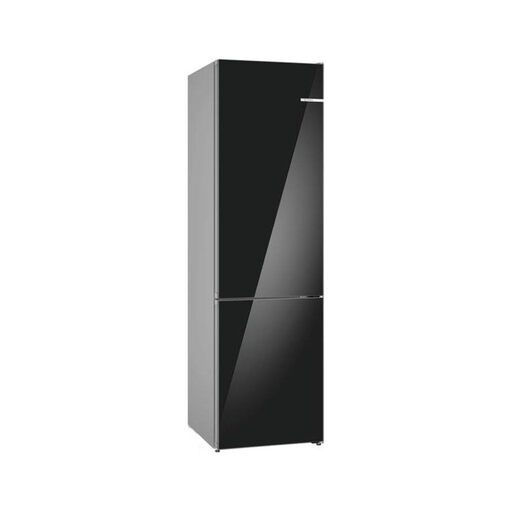
Bosch Serie 6 KGN39LBCF, 363 l, energy class C, black
The stated fridge capacity gives you room for several portions of soup alongside other food, while the separate freezer lets you store extra portions.
It has a stated fridge capacity of 260 l, freezer capacity of 103 l, annual energy consumption of 162 kWh and energy class C. The model features NoFrost and Super Cool, and three of its five fridge shelves are height-adjustable. The stated external dimensions are 203 × 60 × 66,5 cm. Hot soup still needs to be cooled quickly.
View at Joybuy
 No image available
LG GBBS727AEV Fit&Max, energy class A, black
If you need to chill several containers after a shared meal and freeze extra portions, the separate fridge and freezer capacities are worth checking.
According to the product description, the fridge holds 262 l and the freezer 113 l. Features include NoFrost, Express Cool and Express Freeze. It’s 59,7 cm wide, and a 110° door opening angle is specified. Cool soup quickly before storing it.
View at Joybuy
 No image available
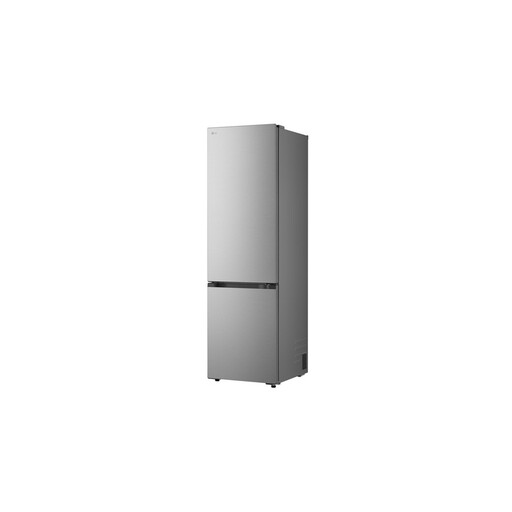
LG GBBSJ2CCPY, 375 l, energy class C, silver
This model has separate fridge and freezer space for chilled soup portions and extra food to freeze.
It has a stated fridge capacity of 262 l and freezer capacity of 113 l, as well as NoFrost, Express Cool and Express Freeze. The description lists four glass shelves, three freezer drawers and external dimensions of 597 × 2030 × 674 mm. Cool hot food quickly before storing it for longer.
View at Joybuy
 No image available
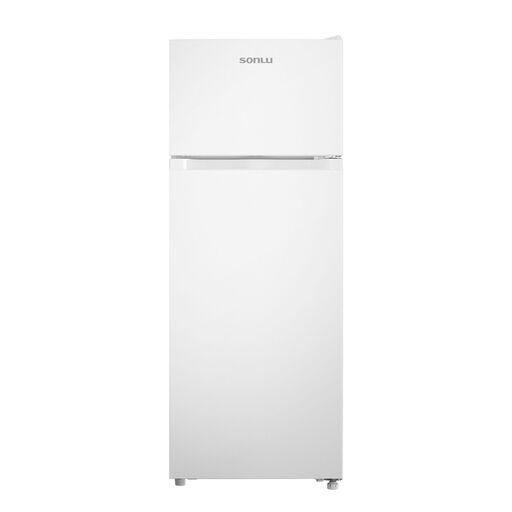
Sonlu TMF CD-240F, 206 l, energy class E
Its compact design may suit a smaller kitchen, provided the fridge and freezer have enough room for your containers.
The product details list a 55-cm profile, height-adjustable shelves and a freezer compartment. Before choosing, check that the shelf space suits your soup containers. The total capacity alone doesn’t show how much space is in the fridge and how much is in the freezer.
View at Joybuy
 No image available
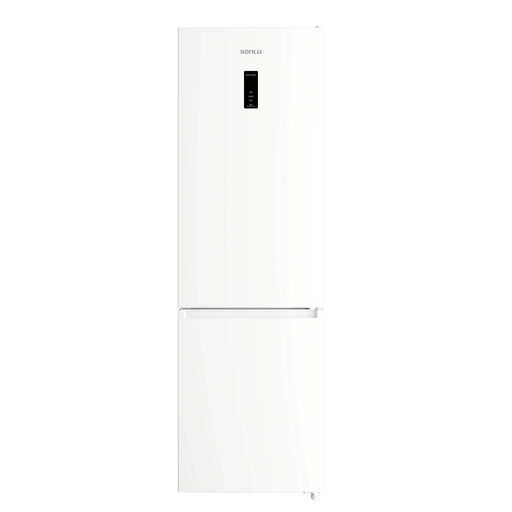
Sonlu CD-400RW, 355 l, energy class E
If you need space for chilled soup portions as well as extra food to freeze, the separate capacity figures make it easier to see whether this model suits your needs.
It has a stated fridge capacity of 252 l and freezer capacity of 103 l. The description lists a width of 60 cm, three freezer drawers and a reversible door. Even with a fast-freeze programme, soup needs to be cooled quickly before longer-term storage.
View at Joybuy
Frequently asked questions
How should I store soup for a meal later on?
The German Federal Institute for Risk Assessment recommends cooling hot food quickly to below 7 °C for longer-term storage, and keeping food covered and separate in the fridge. A large fridge won’t quickly cool a large quantity of hot soup for you.
How long can cooked soup stay in the fridge?
The German Federal Institute for Risk Assessment recommends keeping cooked leftovers in the fridge and eating them within two to three days. Good kitchen hygiene is important, too.
Do I still need to defrost a NoFrost freezer?
For models specifically labelled NoFrost, manufacturers say there’s no need to defrost them manually. lowFrost is a different feature and doesn’t mean the same thing, so check the defrosting technology for the model you’re considering.
What should I compare when it comes to energy consumption?
For appliances that are the right size for your needs, compare the annual energy consumption in kWh shown on the EU energy label. The European Commission says the label also shows the energy efficiency class and separate fridge and freezer capacities.


