Families with leftovers for tomorrow
If you cook lentils for several people, you’ll want to keep any leftovers chilled and easy to organise. The German Federal Institute for Risk Assessment recommends eating leftovers within two to three days.


For cooked lentils you plan to eat within a few days, having enough usable fridge space and cooling them quickly matter more than having a special freshness drawer. If you regularly freeze portions, also compare the stated freezer capacity separately. In either case, make sure the appliance’s dimensions, annual energy consumption and noise level suit your household. The German Federal Institute for Risk Assessment stresses that choosing an appliance is no substitute for safe food hygiene.
If you cook lentils for several people, you’ll want to keep any leftovers chilled and easy to organise. The German Federal Institute for Risk Assessment recommends eating leftovers within two to three days.
If you prepare lentil dishes for future meals, you’ll need freezer space for individual portions as well as room in the fridge. The German Federal Centre for Nutrition lists soups and stews as suitable dishes to cook in advance and freeze.
If you need both fridge and freezer space but have limited room, the appliance’s external dimensions and interior layout matter. Germany’s consumer advice centre points out that larger fridges and fridge freezers can use more electricity.
| Buying priority | What to check | Who is it important for? |
|---|---|---|
| Safe short-term storage | Check the usable fridge capacity and whether there’s room for shallow, covered containers. The German Federal Institute for Risk Assessment recommends keeping perishable foods in the fridge at between 2 °C and 7 °C at most. | If I want to keep cooked lentils for the family until the next meal, I need room to portion them out and a suitable fridge temperature. Around 33% of consumers are likely to prioritise safe short-term storage. |
| Space for freezer portions | Compare the freezer capacity separately from the fridge capacity and check that your containers will fit in the drawers. Germany’s consumer advice centre recommends −18 °C as the optimum freezer temperature. | If I regularly batch cook for future family meals, the usable freezer space matters more than a large total capacity in litres. Around 27% of consumers put freezing portions first. |
| Fitting your kitchen | Check the specific model’s height, width and depth against the space available, and allow room to open the door. Also make sure the interior layout leaves enough space for your containers. | In a small kitchen, I want to be sure the appliance will fit in its intended space, including with the door open. Around 20% of consumers are likely to prioritise the available space. |
| Ongoing energy use | Compare the annual consumption in kWh on the EU energy label, not just the letter rating. The European Commission describes the label’s A to G scale and the information it provides on consumption and capacity. | Once I’ve found the right amount of fridge and freezer space for my needs, I also want to consider ongoing energy use. Around 20% of consumers focus mainly on running costs. |
For lentils you’ll eat soon, fridge space matters; for portions you’re keeping in reserve, it’s freezer space. The EU energy label lists the two capacities separately.
First compare the usable capacity in litres for each compartment, then check the appliance’s external dimensions.
The German Federal Institute for Risk Assessment’s advice to cool larger quantities of food quickly applies regardless of the appliance’s features.
Divide the cooked food between several shallow dishes to cool, then refrigerate the portions covered.
Models with similar names can have different features, and an earlier recommendation won’t necessarily apply to another version.
Check the full model number and the manufacturer’s latest information before applying an offer or recommendation to a different appliance.
The freestanding Series 4 KGN36VICT fridge freezer has a 218 l fridge compartment and a 103 l freezer compartment.
The freestanding NRK620CA2XL4 is a fridge freezer that measures 60 cm wide.
According to Liebherr, the freestanding NoFrost CNdgc 5703 Pure fridge freezer has a total capacity of 371 l.
In its selection dated 6 July 2026, F.A.Z. Kaufkompass included the KG39N2IAF iQ300 as an editorial pick for low energy use and quiet operation.
Miele lists NoFrost and four freezer drawers for the freestanding KFN 4393 CD fridge freezer.
This selection at Joybuy includes fridge freezers for chilled leftovers and freezing individual portions. Compare the features listed with your storage needs and the space available for your appliance.
 No image available
For chilled family portions and individual freezer portions; the product title describes a freestanding appliance with a total net capacity of 173 l.
The title also mentions a 4-star freezer compartment, LED lighting and an Inox-look finish.
 No image available
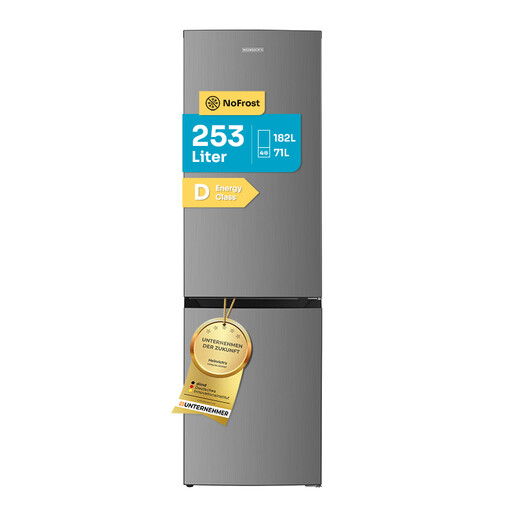
For households looking for fridge space and a separate freezer compartment for portions to eat later; the product title lists a total capacity of 253 l.
The title also lists a 182 l fridge capacity, a 71 l freezer capacity, a reversible door and 39 dB.
 No image available
For chilled leftovers and freezer portions in one appliance; the product title lists a total capacity of 262 l.
The title lists a width of 54 cm and a height of 176 cm. According to the product information, the Low Frost freezer compartment needs to be manually defrosted roughly once or twice a year.
 No image available
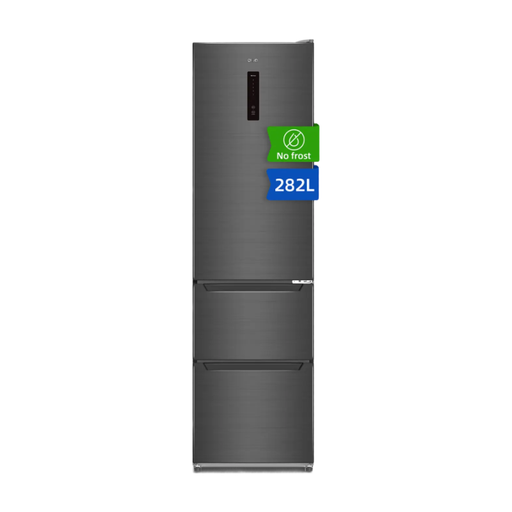
For households considering a multi-door fridge freezer for chilled food and freezer portions; the product title lists a capacity of 282 l.
The title lists a width of 54 cm, a height of 192 cm, energy class E and No Frost.
 No image available
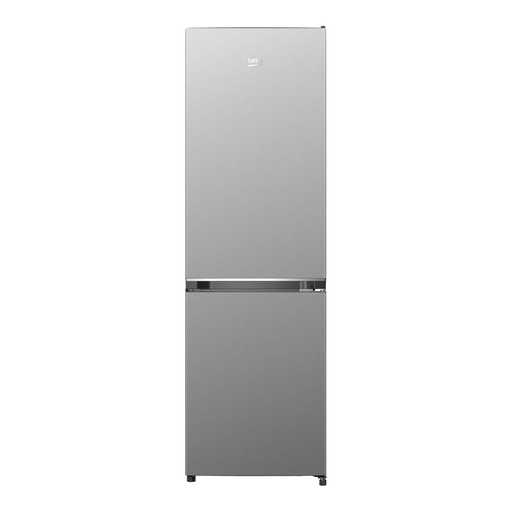
For chilled family portions and separately stored freezer portions; the product title lists a total capacity of 250 l.
The title lists a 180 l fridge capacity, a 70 l freezer capacity and energy class D.
The German Federal Institute for Risk Assessment recommends keeping leftovers chilled and eating them within two to three days. Larger quantities should be cooled to below 7 °C within a few hours; using several shallow dishes makes portioning easier. This food hygiene advice isn’t a guarantee of how long food will keep in any particular appliance.
The German Federal Institute for Risk Assessment recommends keeping perishable foods in the fridge at between 2 °C and 7 °C at most; Germany’s consumer advice centre recommends −18 °C as the optimum freezer temperature. Check the temperature in the appliance you actually use.
The EU energy label for household fridges and freezers uses an A to G scale and includes details such as annual consumption in kWh and capacity. The European Commission lists these as information provided on the label. Compare annual energy use between appliances with a layout and dimensions that suit your needs.
In Germany, old electrical appliances must not go in household rubbish. The German Federal Ministry for the Environment lists local collection points, manufacturers and, in certain circumstances, retailers as return options. Before buying, check whether any delivery and removal service offered also includes taking away your old appliance.