Who this selection is for

People preparing lunches with perishable ingredients

If you prepare dressings with yoghurt and salad ingredients, for example, you’ll need to plan separately for storage at home and keeping everything chilled until you eat. The Federal Centre for Nutrition and the Federal Institute for Risk Assessment offer guidance on this.

Meal-prep households that freeze portions

If you want to freeze prepared meals as well as keep dressing chilled, the balance between fridge and freezer space matters. The consumer advice centre recommends basing your freezer needs on the quantities you actually store.

Households short on kitchen space and mindful of energy use

If floor space is limited, you’ll need to compare the appliance’s external dimensions and required capacity with its stated annual energy consumption. The consumer advice centre recommends choosing an appliance of a suitable size.

What to consider when buying

What matters What to check when buying Who is this important to?
Keeping food chilled and food hygiene Check there’s room for your containers and look at the temperature controls. For perishable food, the Federal Institute for Risk Assessment recommends a fridge temperature of 2 °C to no more than 7 °C, as well as keeping food chilled when you’re out. If I prepare perishable ingredients, I want to plan separately for keeping them chilled at home and on my commute. Around 36% of consumers put suitable refrigeration and food hygiene first.
Size and available space Compare the external dimensions and separate fridge and freezer capacities with the space in your kitchen and the amount of food you need to store. If my kitchen has limited space, I need an appliance that will fit through the available access and provide the storage I need. Around 29% of consumers prioritise suitable dimensions and available space.
Freezer space for portions Check the freezer capacity and, where relevant, the four-star rating for the specific appliance; also consider the defrosting method. If I want to freeze ready meals in portions, usable freezer space matters more to me than extra fridge capacity. Around 21% of consumers put freezing first.
Energy consumption Compare the annual kWh consumption and energy efficiency class on the current EU label, taking the fridge and freezer capacities of similar appliances into account. When I compare appliances that suit my space and storage needs, I also want to understand their running costs. Around 14% of consumers prioritise electricity costs.

Common buying mistakes

  • Expecting the freezer to keep food chilled while you’re out

    An appliance keeps food chilled at home. The Federal Institute for Risk Assessment recommends keeping perishable food cool when you’re out, too.

    Plan for your commute separately from storage at home, and check whether you need an additional way to keep food chilled.

    You may need a separate cooling solution for transport.

  • Choosing based only on total capacity

    The EU label shows fridge and freezer capacities separately. A large total capacity won’t help if there isn’t enough fridge space for your dressing and ingredients.

    Compare both capacities with the containers you usually use and the portions you actually want to freeze.

  • Comparing older plus ratings with the current EU label

    Since 2021, the EU energy label for fridges and freezers has used a scale from A to G. Older plus ratings are no longer a current basis for comparison. The European Union explains this in its guidance on energy labels.

    Compare annual consumption in kWh and the energy efficiency class using the same current labelling system.

Brands to help guide your choice

Beko

The B3RCNO256XB is an example of a slim, freestanding fridge-freezer with a separate freezer compartment.

  • According to Beko’s product sheet, this model is 540 mm wide, with 180 l of fridge space and a 70 l four-star freezer compartment.
  • Its slim design doesn’t mean it has better cooling performance. Check the figures for the exact model, not similar variants.

Bosch

The KGN36VICT is an example of a freestanding fridge-freezer with separately stated fridge and freezer capacities.

  • For this exact model, Bosch lists 218 l of fridge space, 103 l of freezer space, energy efficiency class C and 35 dB(A).
  • The external dimensions need to suit the space where you’ll install it. A freshness feature does not guarantee a particular shelf life for homemade dressings.

Liebherr

The CNc 5203 is an option if you’re looking for fresh-food organisation and NoFrost technology.

  • Liebherr lists EasyFresh, NoFrost, a total capacity of 330 l and a noise level of 35 dB for this model.
  • Manufacturer claims about freshness features do not guarantee a particular shelf life for dressing. Also compare the dimensions, capacity split and energy label.

Miele

The KFN 4898 A-20 D Blacksteel is a larger fridge-freezer for buyers who want to make use of its specific features.

  • Miele lists PerfectFresh Active and Freeze&Cool for this model.
  • The freshness claims come from the manufacturer and do not prove an advantage for any particular dressing. The KFN 4898 A-20 D is not the same model as the differently named KFN 4898 A-10 D.

Fridge-freezers at Joybuy

These Joybuy products are suited to chilling prepared ingredients and storing frozen portions separately.

exquisit KGC5232-60-E-040C Inoxlook-az fridge-freezer

exquisit KGC5232-60-E-040C Inoxlook-az

A freestanding fridge-freezer for households that want to store chilled ingredients and frozen portions separately.

Total usable capacity: 173 l; four-star freezer.

View at Joybuy
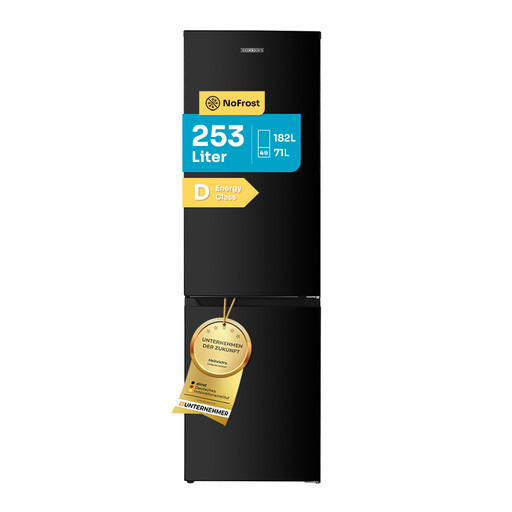
Heinrich's fridge-freezer in Black Inox

Heinrich's fridge-freezer (Black Inox)

An option if you want to use separate fridge and freezer spaces for prepared ingredients and portions.

Total capacity: 253 l; fridge: 182 l; freezer: 71 l; No Frost; noise level: 39 dB.

View at Joybuy

CHiQ JR263LGE Low Frost fridge-freezer

CHiQ JR263LGE

This fridge-freezer could suit you if you want to keep chilled ingredients and some frozen portions in separate compartments.

Capacity: 262 l; split: 70/30; Low Frost; width: 54 cm; height: 176 cm; energy efficiency class E.

The freezer compartment is described as Low Frost; according to the product description, it needs to be manually defrosted around once or twice a year.

View at Joybuy
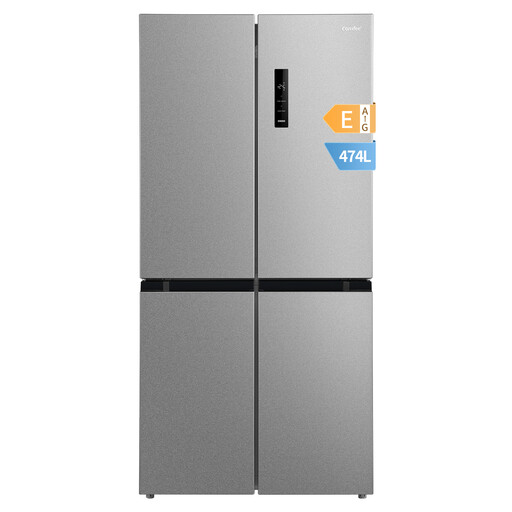
COMFEE' RCF470LS2EU(E) four-door fridge-freezer

COMFEE' RCF470LS2EU(E), four-door

A larger fridge-freezer for households that want separate access to several fridge and freezer compartments.

Capacity: 474 l; Vario Box; crisper drawer with three temperature settings; energy efficiency class E.

It is 838 mm wide, so check the available space where you plan to install it.

View at Joybuy
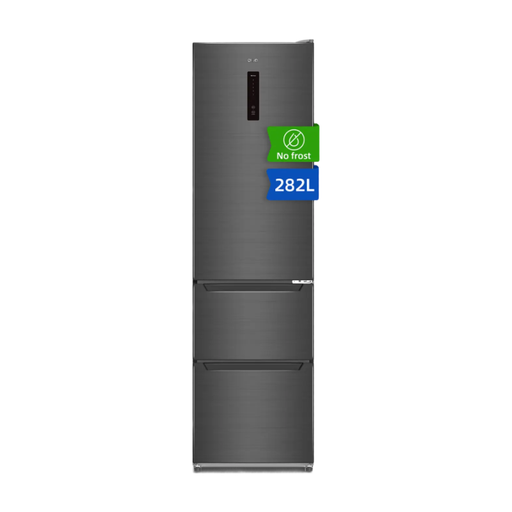
CHiQ CID282NEIBE Multi-Door fridge-freezer

CHiQ CID282NEIBE Multi-Door

This freestanding Multi-Door fridge-freezer is an option if you want to store meal-prep ingredients and frozen food in separate compartments.

Capacity: 282 l; width: 54 cm; height: 192 cm; energy efficiency class E; No Frost.

View at Joybuy

Frequently asked questions

How should I store homemade dressing before packing it?

Keep homemade dressing in the fridge; the Federal Centre for Nutrition recommends this for storing food. The Federal Institute for Risk Assessment recommends keeping perishable food chilled at 2 °C to no more than 7 °C. There is no single storage time that applies to every dressing, as the ingredients vary.

Will dressing stay cool enough until lunchtime if I keep it in the fridge at home?

Not necessarily. The Federal Institute for Risk Assessment recommends keeping perishable food cool while you’re out, too. Whether your particular lunch needs to be chilled depends on the ingredients and the conditions during transport; your fridge at home does not remove the need to consider this.

Should I mix the salad and dressing the night before?

For crisp leafy salads, the Federal Centre for Nutrition recommends mixing the salad and dressing shortly before eating. This is advice for maintaining quality and does not replace the need to keep the ingredients chilled.

Which energy information should I look at when buying in Germany?

Since 2021, the EU energy label for household fridges and freezers has used classes A to G. It also shows the annual consumption in kWh, the separate capacities and the noise emissions. The European Commission and the European Union explain this in their guidance on energy labels. Older plus ratings are no longer a current basis for comparison.

What happens to my old fridge?

In Germany, waste electrical appliances are collected separately. According to the Federal Environment Agency, local collection points generally accept them free of charge; retailers are required to take them back under certain legal conditions. Before ordering, check separately whether collection of your old appliance or installation services are available.