Which features matter to you?

For people eating meals at different times

If you use cream for several meals, easy access to space in the fridge compartment and hygienic handling are important. Always follow the storage instructions on the specific pack. The Federal Institute for Risk Assessment recommends keeping perishable foods as cold as possible until they are eaten or prepared.

Households preparing several meals

If you also need room for other ingredients, prepared dishes and frozen food, as well as your opened cream, compare the fridge and freezer capacities separately against your needs.

Households mindful of energy costs

For an appliance that runs all year round, it helps to compare annual energy consumption with usable capacity. The consumer advice centre and the European Commission list energy consumption and capacity as relevant points of comparison.

What should you look for when buying?

More compact fridge freezer

A good fit if: you mainly need to chill a small amount of cream and a modest stock of food, and space is limited.

The trade-off: there will be less spare capacity for several meals being prepared at once; a smaller size alone does not mean lower energy consumption.

Spacious freestanding fridge freezer

A good fit if: several people eat at different times and you also need space for fresh ingredients and frozen food.

The trade-off: consider the space it takes up, room for the door to open and annual energy consumption. More capacity will not automatically extend the shelf life of opened cream.

Integrated fridge freezer

A good fit if: you want to keep using your existing kitchen door and housing.

The trade-off: your options depend on the installation space. Check the housing dimensions and door fitting for the specific model.

Priority What to check when buying Who is it important to?
Fridge space for opened cream Check for shelves suitable for dairy products, as well as ways to set and monitor the fridge temperature; follow the instructions on the packaging. If I want to keep the pack chilled and within easy reach between meals eaten at different times, following its storage instructions, I need a suitable place in the fridge compartment. Around 36% of consumers put keeping opened cream chilled first.
Space for meals and food supplies Compare fridge and freezer capacity separately against your needs; check that the shelves and compartments suit the packaging you use. If I need to store several dishes and ingredients at once, enough space in the fridge is just as important as a suitably sized freezer. Around 29% of consumers prioritise storage space for several meals and food supplies.
Ongoing energy consumption Compare kWh/year and fridge and freezer capacity across specific models; use the same electricity price per kWh for your own cost calculation. If my fridge runs all year round, I want to weigh its stated energy consumption against the space it offers. Around 21% of consumers focus mainly on keeping ongoing electricity costs low.
Installation and maintenance Check the external dimensions, installation type and door hinge; prioritise NoFrost only if avoiding manual defrosting matters to you. If I need to fit an appliance into an existing kitchen and open it easily day to day, the dimensions and door hinge have to be right. Around 14% of consumers prioritise ease of installation and straightforward maintenance.

Common misconceptions

  • Assuming a freshness compartment or NoFrost will keep cream fresh for longer

    Manufacturers’ claims about freshness compartments apply to specific compartments and models. NoFrost makes the freezer easier to maintain by reducing the need to defrost; it does not prove that opened cream will keep for longer.

    Store cream in a suitable part of the fridge, following the instructions on its packaging, and consider convenience features separately.

  • Comparing energy ratings without considering capacity and annual consumption

    The energy label shows, among other things, energy consumption and fridge and freezer capacity. The consumer advice centre points out that a larger fridge may use more electricity.

    Choose a suitable size first, then compare the annual energy consumption of the specific models.

  • Relying on a product name without checking the model number

    A Beko listing on Joybuy gives the model as B7RCNE367HG in the product title, but lists RCNA366K40XB in the product description. These conflicting details make it difficult to identify the exact appliance.

    If the retailer’s details do not match, check the full model number against the product data sheet before making a decision.

Brands and specific model examples

Bosch

The freestanding KGN39VLCT is an example with 260 l of fridge capacity and 103 l of freezer capacity.

  • Bosch lists 162 kWh/year, 35 dB(A), Total NoFrost and independently controlled compartments for this model.
  • The VitaFresh 0°C drawer does not establish a general storage period for opened cream; the model specifications do not automatically apply to other appliances from the brand.

Siemens

The freestanding KG39NEIAF is an example with 260 l of fridge capacity and 103 l of freezer capacity.

  • Siemens lists 112 kWh/year, 29 dB(A) and Total noFrost for this model.
  • These manufacturer specifications apply to the KG39NEIAF and are not an independent assessment of the cooling performance of all Siemens appliances.

Liebherr

The CBNsda 5223 Plus is an example of a model with 320 l of total capacity, BioFresh and NoFrost.

  • Liebherr lists separate cooling circuits for this appliance; its external dimensions are 185,5 cm high and 59,7 cm wide.
  • The manufacturer’s BioFresh claims relate in particular to the freshness compartments described and do not establish that opened cream will keep for longer.

Samsung

According to Samsung, the wide RB53DG706AS9EF model has 538 l of total capacity and is 759 mm wide.

  • Samsung lists No Frost+ and energy efficiency class A for this model.
  • The manufacturer notes that AI Energy Mode may raise the cooling temperature. For sensitive foods, the required storage temperature should take priority over an energy-saving mode.

Beko

The BCNA306E5ZSN is an example of an integrated fridge freezer.

  • Beko lists NoFrost and separate cooling systems for this model; the appliance measures 193,5 × 54 × 54,5 cm.
  • The manufacturer’s claims about HarvestFresh and EverFresh+ relate mainly to fruit and vegetables. For integrated appliances, check the dimensions of your specific kitchen housing.

Fridge freezers at Joybuy

This selection includes fridge freezers for a range of space requirements, from more compact appliances to spacious models.
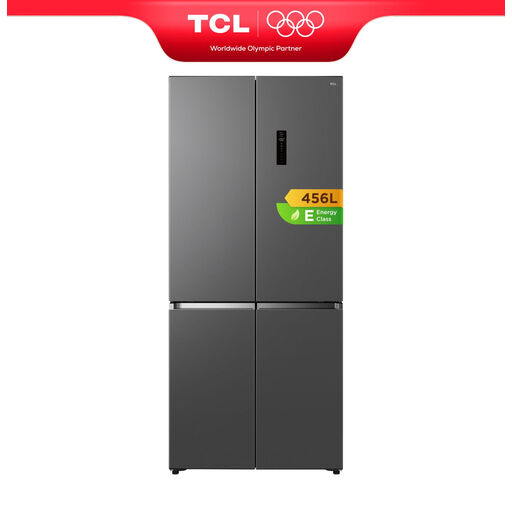
TCL RC593CSE0AM multi-door fridge freezer

TCL RC593CSE0AM multi-door, 456 l

Suitable if you need plenty of fridge space and a flexible-use compartment.

Fridge compartment: 312 l; freezer compartment: 66 l; variable compartment: 78 l, which can be used as fridge or freezer space according to the product details. Energy efficiency class E.

View at Joybuy
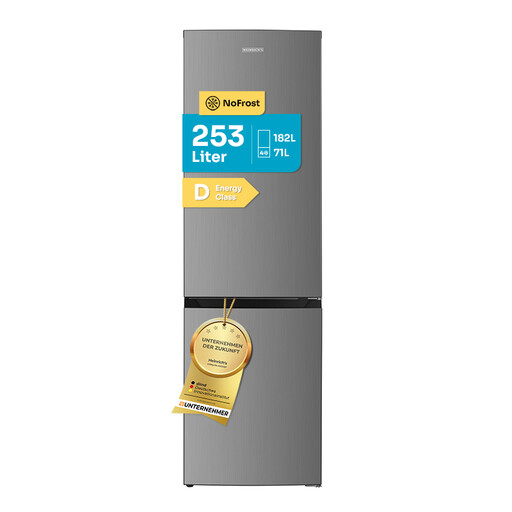
Heinrich’s fridge freezer, 253 l, stainless steel

Heinrich’s fridge freezer, 253 l, stainless steel

Suitable if you want to compare a smaller fridge compartment with a separate freezer for your household.

Fridge compartment: 182 l; freezer compartment: 71 l. The product description lists No-Frost, LED lighting and a reversible door.

View at Joybuy

Exquisit KGC5232-60-E-040C fridge freezer

Exquisit KGC5232-60-E-040C

Suitable if you’re looking for a compact freestanding fridge freezer with separate fridge and freezer compartments.

Total usable capacity: 173 l; fridge compartment: 121 l; freezer compartment: 52 l. The product details list a width of 49,5 cm, a height of 142,5 cm and a reversible door.

View at Joybuy

LG GBBS727AEV Fit&Max fridge freezer

LG GBBS727AEV Fit&Max, 375 l

Suitable if you want a spacious fridge compartment and a flexible freshness zone.

Fridge compartment: 262 l; freezer compartment: 113 l. The product description lists a FRESHConverter+ zone with selectable temperature settings, as well as Total No Frost. Height: 203 cm; depth: 67,5 cm.

View at Joybuy
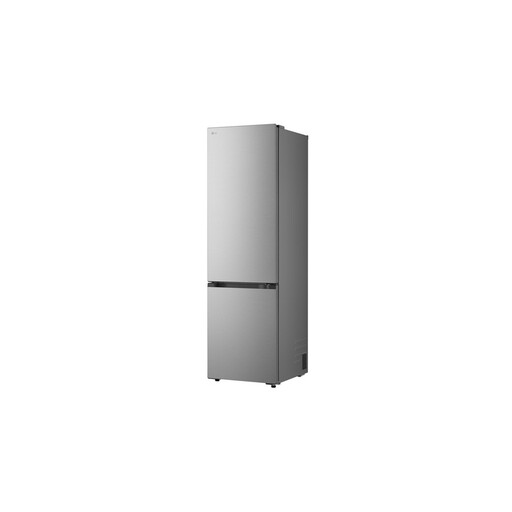
LG GBBSJ2CCPY fridge freezer

LG GBBSJ2CCPY, 375 l

Suitable if you need plenty of fridge space and want to use a separately adjustable freshness zone for certain foods.

Fridge compartment: 262 l; freezer compartment: 113 l. The product description lists a FRESHConverter+ zone with selectable settings for meat, fish or cheese, as well as No-Frost. Dimensions: 59,7 × 203 × 67,4 cm.

View at Joybuy

Frequently asked questions

How should I store opened cream until my next meal?

Keep it chilled, following the instructions on the specific packaging, and use clean utensils when serving it. The Federal Centre for Nutrition recommends storing dairy products on the middle shelves of the fridge. The best-before date on an unopened pack does not indicate how long it will keep once opened.

Can I put opened cream in the freezer instead?

The freezer is not an equivalent substitute if you want to take chilled cream out for your next meal. The Federal Centre for Nutrition notes that sour cream can become grainy when thawed; this quality-related advice does not apply universally to every type of cream or use.

Which details can help me compare energy costs?

The EU energy label includes details such as annual consumption in kWh, capacity and noise levels. For a rough comparison, multiply the stated kWh/year by your electricity price in euros per kWh. This does not measure how much energy the appliance will actually use in your home.

What should I check about delivery and disposing of my old appliance?

Before buying, check which delivery and connection services are offered with your order, and whether your old appliance can be taken away. The Federal Ministry for the Environment outlines online retailers’ take-back obligations and the conditions for free collection of certain old appliances when this is agreed at the time of purchase. Free take-back does not automatically include free installation.

Does the energy label require a particular efficiency class?

No, the label does not require private buyers to choose a particular efficiency class. For these appliances, the European Commission describes the current scale as running from A to G. Check the label for the specific model; the scale used for fridges and freezers has been in place since 1 March 2021.