Households with different mealtimes
If you cook once and want to eat individual portions over the following days, easy-to-reach fridge shelves and quick cooling are important.


For cooked pasta that you plan to eat in portions over the next few days, a practical fridge compartment is key. The German Federal Institute for Risk Assessment (BfR) recommends cooling leftovers quickly to below +7 °C and eating them within two to three days. If you want to store portions for longer, compare freezer capacity, dimensions and annual energy consumption too; a freshness drawer is no substitute for proper refrigeration.
If you cook once and want to eat individual portions over the following days, easy-to-reach fridge shelves and quick cooling are important.
If you prepare more portions than you’ll eat over the next few days, you’ll need a well-organised freezer as well as fridge space.
If you need to consider where the appliance will go and how much it costs to run, weigh up usable capacity, appliance dimensions and energy consumption together, rather than simply looking for the largest capacity.
For cooked pasta, the German Federal Institute for Risk Assessment (BfR) recommends cooling leftovers quickly and eating them within two to three days. Choose fridge or freezer capacity to suit the number of portions you want to store at once.
A good fit if: You plan to eat the portions within two to three days; the BfR recommends cooling leftovers quickly to below +7 °C.
The trade-off: You’ll need suitable shelves and room for shallow containers; a large freezer compartment alone won’t meet these needs.
A good fit if: You don’t plan to eat your prepared portions over the next few days and need freezer space with suitable drawers.
The trade-off: More freezer capacity takes up space, so compare compartment capacity, appliance dimensions and annual energy consumption together. Freezing won’t make food safe if it hasn’t been stored properly beforehand.
| Priority | What to check when buying | Who it matters most to |
|---|---|---|
| Quick cooling | Room for several shallow containers and an adjustable temperature setting you can check; monitor the actual temperature during use. | If I’m keeping cooked pasta for the next few days, I want to cool it quickly and reliably. Around 38 % of consumers prioritise refrigeration above all else. |
| Space for portions | Check shelf height, adjustable shelves and the fridge capacity you need against the containers you use. | If I want to chill several meals separately and keep them within easy reach, I check whether my containers will fit on the shelves. Around 23 % of consumers put space for portions first. |
| Freezer stock | Match freezer capacity and drawer layout to the number of portions you typically store; also compare the specific model’s annual energy consumption. | If I batch-cook more than I’ll eat over the next few days, I need room for portions I plan to eat later. Around 23 % of consumers prioritise freezer storage above all else. |
| Space and energy use | Check the appliance dimensions, including depth and door clearance, against the space available; compare kWh/year for suitable models. | If space is limited or I need to keep running costs in mind, I look for the right balance between external dimensions and internal capacity. Around 16 % of consumers have this as their main priority. |
The German consumer advice centre points out that larger fridges and fridge-freezers can use more energy. So compare appliances that suit your available space and storage needs, and check their stated annual energy consumption too.
A drawer designed for certain fresh foods doesn’t replace quick cooling and proper refrigeration for cooked pasta.
Allow space on the usable fridge shelves for shallow, covered portion containers.
Fridge and freezer capacities are listed separately. Total capacity alone therefore doesn’t tell you whether there’s enough room for portions you want to chill at the same time. The German consumer advice centre also notes that a larger appliance can use more energy.
Count the portions you need to chill and the freezer items you need to store separately, then compare compartment capacities and kWh/year.
Samsung notes that, when AI Energy Mode is enabled on this model, the fridge temperature may rise. For stored leftovers, what matters is the temperature actually reached.
If you use a mode like this, check the fridge temperature on the appliance itself.
The freestanding KG39NEIAF fridge-freezer lists its fridge and freezer capacities separately.
The freestanding Series 4 KGN39OCAF is a 60 cm model with separate fridge and freezer capacities.
The CNc 5023 fridge-freezer is a different-sized option, with a total capacity of 280 l and a height of 165.5 cm.
The freestanding RCNA366E60XBN has a freezer compartment at the bottom and, according to Beko, is 59.5 cm wide.
The RB53DG706AS9EF is a wide fridge-freezer with a total capacity of 538 l and an appliance width of 759 mm.
The fridge-freezers below offer fridge space for portioned meals, as well as separate freezer capacity. Compare the specific compartment capacities with your needs.
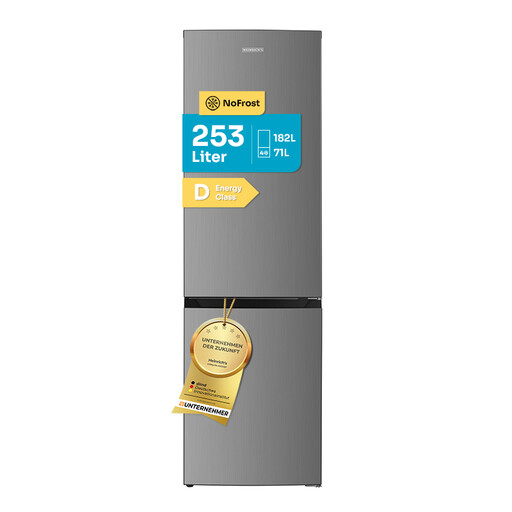 No image available
An option if you want to store chilled portions and extra freezer supplies in one appliance.
253 l total capacity: 182 l of fridge space and 71 l of freezer space. The product title also lists 39 dB, No Frost and a reversible door.
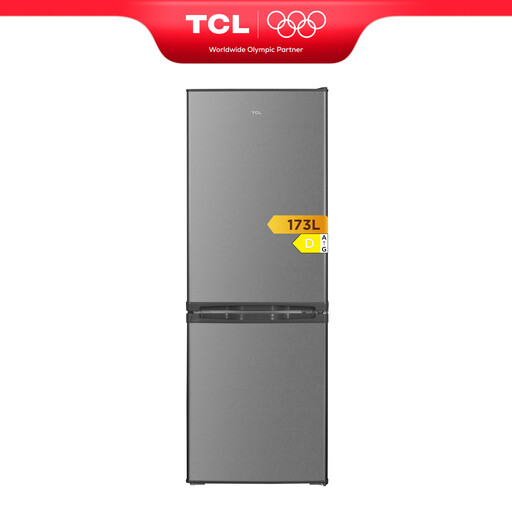 No image available
The separate compartments provide fridge space for individual meals, plus extra room for frozen portions.
121 l of fridge space and 52 l of freezer space; the product title lists adjustable shelves, LED lighting and energy class D.
 No image available
The listed fridge capacity suits several portions, while three freezer drawers provide separate storage for supplies.
187 l of fridge space and 75 l of freezer space; 54 cm wide and 176 cm tall. The freezer compartment uses Low Frost; according to the product description, manual defrosting is needed around once or twice a year.
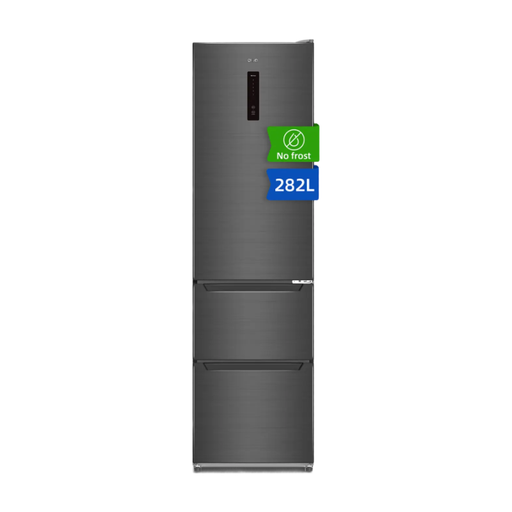 No image available
The listed fresh food compartment may suit prepared meals; the model also has separate storage areas.
197 l fresh food compartment; 54 cm wide and 192 cm tall. The product title lists No Frost, Dual Inverter, touch controls and energy class E.
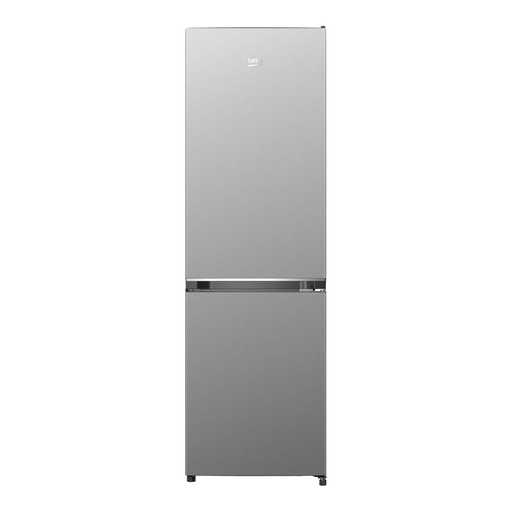 No image available
The separate compartments provide room for portions stored in the fridge, as well as extra freezer supplies.
180 l of fridge space and 70 l of freezer space. The product title lists No Frost, energy class D and an Inox finish.
The German Federal Institute for Risk Assessment recommends eating leftovers within two to three days. Larger quantities should be cooled to below +7 °C within a few hours, using several shallow dishes. The temperature actually reached is what matters, not a particular appliance feature.
No, you shouldn’t rely on that. The German Federal Institute for Risk Assessment explains that Bacillus cereus can produce a toxin in food that is highly resistant to heat. That’s why it’s important to refrigerate food promptly.
Fridges are labelled with the EU energy label and rated on a scale from A to G. For appliances that suit your needs in terms of size and usable capacity, also compare the stated consumption in kWh per year. This doesn’t mean that any one efficiency class is a general minimum requirement.
Before buying, measure the space where the appliance will go and the route it will take to get there. Check with the retailer whether connection or collection is available. According to the German Environment Agency, old electrical appliances can be taken to municipal collection points and, subject to the relevant conditions, to retailer take-back points too. Arrange collection of your old appliance when the new one is delivered.