Families who regularly buy fresh salad
If you buy delicate leaves for a meal, you need an easy-to-reach salad drawer and space to store them safely. The Federal Centre for Nutrition offers advice on keeping salad in the salad drawer.


If you regularly buy leafy salad for several people, look first for an easy-to-reach salad drawer and enough usable fridge space. A humidity-controlled compartment is no substitute for storing salad properly. Choose the freezer capacity and appliance size to suit the rest of your food, then compare annual energy use, dimensions and noise level – not just freshness claims or the energy efficiency rating.
If you buy delicate leaves for a meal, you need an easy-to-reach salad drawer and space to store them safely. The Federal Centre for Nutrition offers advice on keeping salad in the salad drawer.
If you need to chill ingredients as well as salad, it helps to plan fridge and freezer space separately around the food you usually keep. The consumer advice centre recommends taking capacity figures into account when choosing an appliance.
If you want to compare energy use, check the EU energy label for appliances of a suitable size. The European Commission says it includes information such as annual energy consumption and noise emissions.
First, check that the salad drawer is large enough for the amount of salad you buy and lets you store the leaves safely. For fresh salad kept safely in the salad drawer in a container, bag or damp cloth, the Federal Centre for Nutrition gives 1 to 2 days as a guide. Then compare fridge and freezer capacity, the space available for the appliance and its annual energy use.
| What matters | What to look for | Who will find this most important? |
|---|---|---|
| Salad drawer and storage conditions | Check the internal dimensions and accessibility of the salad drawer, and plan for suitable protected storage. | When I buy leafy salad for a family meal, I need an easy-to-reach drawer where the leaves can be stored safely. Around 36% of consumers prioritise salad storage conditions when choosing an appliance. |
| Fridge space for your shopping | Compare fridge and freezer capacity separately, and take usable shelves and drawers into account. | For my weekly shop, I want to chill other ingredients as well as salad, while planning freezer space separately. Around 29% of consumers prioritise fridge space for their whole shop. |
| Energy use | Compare annual energy use in kWh for appliances of a suitable size, then work out the cost using your own electricity tariff. | Once I’ve found an appliance with the right capacity, I also want to understand its ongoing energy use. Around 21% of consumers pay particular attention to energy use during continuous operation. |
| Installation and convenience | Check the appliance and alcove dimensions, door clearance and noise level; check which parts of the appliance are covered by NoFrost. | If the fridge-freezer is going in an open-plan kitchen or space is limited, its dimensions and ease of use need to suit the location. Around 14% of consumers prioritise installation and ease of defrosting. |
Some of the total capacity is taken up by the freezer compartment. The overall figure doesn’t tell you how big or accessible the salad drawer is.
Compare fridge and freezer capacities separately, and check the dimensions of the salad drawer and the space needed to pull it out.
A larger appliance takes up more floor space and may use more energy. The consumer advice centre recommends choosing an appliance size to suit your actual needs.
A humidity-controlled compartment doesn’t prove that salad will keep for longer. The Federal Centre for Nutrition still recommends storing fresh salad safely and eating it promptly.
Assess the specific drawer for its size and ease of use, and don’t assume its feature name guarantees a particular shelf life. For pre-cut salad, also follow the chilling instructions and use-by date.
NoFrost applies to the freezer compartment and defrosting. Fresh leafy salad belongs in the salad drawer; the Federal Centre for Nutrition lists salad among the foods that should not be frozen.
Choose NoFrost if it suits your defrosting needs, and assess salad storage separately by looking at the fridge compartment.
For the CNc 5203, Liebherr lists an EasyFresh-Safe and NoFrost. These specifications apply to this particular model.
For the KGN39VLCT, Bosch lists VitaFresh, 260 l of fridge capacity and 103 l of freezer capacity.
The Siemens product sheet for the KG39NEIAF lists hyperFresh, 260 l of fridge capacity and 103 l of freezer capacity.
For the GBB92MBB3P, LG lists a total capacity of 381 l and annual energy use of 88 kWh.
These models combine fridge and freezer space with designated drawers or features for organising fresh food. Compare the specific salad drawer and separate capacities with your needs.
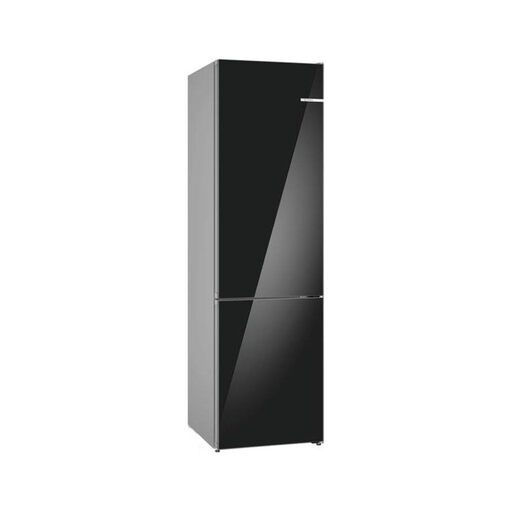 No image available
The description lists VitaFresh XXL for fruit and vegetables. Check that the drawer suits the amount of salad you buy and how you want to store it.
Listed capacities are 260 l for the fridge and 103 l for the freezer, with annual energy use of 162 kWh.
The product name lists energy efficiency class C.
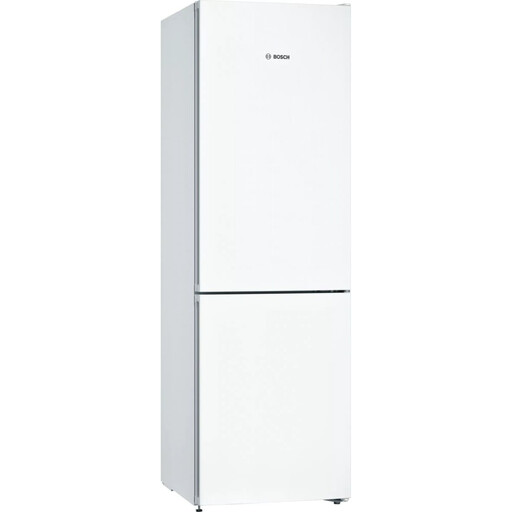 No image available
The VitaFresh drawer is described as having adjustable humidity for fruit and vegetables. Check that its size suits the amount of salad you need to store.
Listed capacities are 237 l for the fridge and 89 l for the freezer. The model is listed with NoFrost.
The product name lists energy efficiency class E.
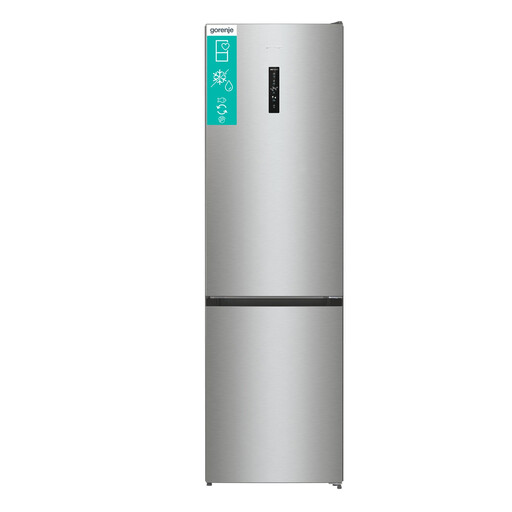 No image available
The description lists a CrispZone drawer with a humidity control for fruit and vegetables. Check the drawer’s dimensions and how easy it is to reach.
The model is listed as a fridge-freezer with NoFrost Plus.
The product name lists energy efficiency class C and a noise level of 35 dB.
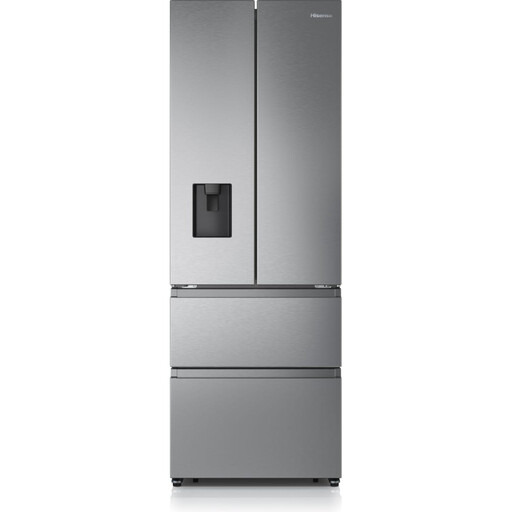 No image available
The CrispZone drawer is described as having an adjustable humidity control. Check that it suits the amount of salad and fresh ingredients you need to store.
Listed capacities are 336 l for the fridge and 149 l for the freezer.
Annual energy use is listed as 295 kWh, and the noise level as 38 dB.
The product name lists energy efficiency class E.
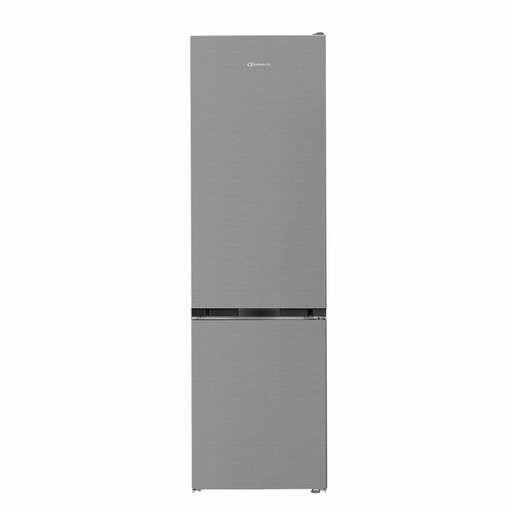 No image available
The description lists a FreshShield drawer for humidity control. Check that the drawer layout suits your storage needs.
Listed capacities are 297 l for the fridge and 118 l for the freezer, along with Dual Cool Total NoFrost.
The product name lists energy efficiency class C.
Store fresh salad safely in the salad drawer, for example in a container, bag or damp cloth. The Federal Centre for Nutrition gives 1 to 2 days as a guide, although firmer varieties may keep for longer. Wash and dry the leaves when you’re ready to prepare them, and add dressing just before serving.
The freezer isn’t a suitable option for salad you want to serve raw after defrosting. The Federal Centre for Nutrition lists salad among the foods that should not be frozen.
Follow the chilling instructions and use-by date, and eat pre-cut salad promptly. The Federal Institute for Risk Assessment warns that contamination can multiply more easily in fresh-cut products.
For the specific model, compare the efficiency class, declared annual energy use, fridge and freezer capacities, and noise emissions. The European Commission describes the EU scale for household refrigerating appliances as running from A to G. The stated energy use doesn’t guarantee how much electricity the appliance will actually use in your home.
The Federal Environment Agency says that when you buy a new appliance of the same type, you can return a large old appliance free of charge, including with online purchases delivered to your home. To estimate your individual electricity costs, multiply the new model’s declared annual energy use in kWh by your electricity price per kWh. Check delivery and installation services separately.