To keep salad leaves fresh until dinner, a generously sized salad drawer and protected storage matter more than a dedicated freshness system alone. The Federal Centre for Nutrition recommends using one to two days as a guide for storing many types of salad in the salad drawer. If you’re shopping for a household, also compare usable fridge and freezer space, external dimensions and annual energy consumption.
Who should consider these options?
Households that prepare salad regularly
If you’re storing salad leaves for dinner, you’ll need an easy-to-reach salad drawer with room for delicate leaves or containers. The Federal Centre for Nutrition recommends keeping fresh salad protected in the salad drawer.
Households that cook together and store food
If you need to store other fresh ingredients and frozen food alongside salad, how the fridge and freezer space is divided matters. The Verbraucherzentrale recommends taking your actual storage needs into account when choosing a fridge.
Households with limited kitchen space
When space is limited, the appliance’s external dimensions and door opening need to suit your kitchen, without leaving too little room in the salad drawer or main compartment for the ingredients you use. Energy consumption is another point to compare, as the Verbraucherzentrale explains.
What should you look for when buying?
First, check that there’s room inside for salad and other ingredients. Then compare suitable appliance dimensions, fridge and freezer capacities, and annual energy consumption.
| Buying priority |
What to check |
Who is it most important for? |
| Storing salad leaves safely |
Check the usable dimensions of the salad drawer and whether it has humidity controls. |
If I want to keep salad protected until dinner, the drawer needs to suit the leaves or containers I use. Around 36% of consumers might name salad storage as their top buying priority. |
| Space for ingredients and supplies |
Consider fridge and freezer capacity separately, and check the shelves and salad drawer against the containers you use. |
If I want to store salad, other ingredients and frozen food for several people, usable space in each compartment matters. Around 29% of consumers might put storage space first. |
| Keeping energy use down |
For appliances with enough space, compare annual consumption in kWh; the current EU energy label uses a scale from A to G. |
If running costs matter to me, I compare the annual consumption of appliances that meet my space requirements. Around 21% of consumers might name energy consumption as their top buying priority. |
| Fitting in your kitchen |
Check the height, width, depth, door hinge and clearance needed to open the door. |
If the space or doorway is narrow, I need to check the appliance dimensions and access carefully. Around 14% of consumers might put how well it fits in their kitchen first. |
Common buying misconceptions
-
Assuming freshness claims guarantee a longer shelf life
A freshness system can’t guarantee that every type of salad leaves will last the same length of time in all storage conditions. The Federal Centre for Nutrition recommends using one to two days as a guide for storing many types of salad in the salad drawer, even when they’re kept protected.
Choose a salad drawer based on its usable space and the settings it actually offers. Keep salad protected and use it soon.
-
Comparing only the total capacity
When you’re cooking together, you need to be able to use the salad drawer and shelves at the same time. Freezer space is particularly important if you regularly freeze food. Larger fridges tend to use more energy, according to the Verbraucherzentrale.
Compare fridge and freezer capacities separately, and check the shelf height and salad drawer space against the containers you actually use.
-
Relying on an older A+++ label or just the letter rating
The current EU energy label uses a scale from A to G and lists annual consumption separately. The letter rating alone therefore doesn’t show how much energy the appliance actually uses.
For appliances with suitable storage space, compare the stated consumption in kWh per year and factor in your own electricity tariff.
Brands to consider
Bosch
Selected models feature VitaFresh XXL, with separate storage areas for fruit and vegetables, and for meat and fish.
- Bosch lists 260 l of fridge space, 103 l of freezer space and annual energy consumption of 162 kWh for the KGN392WCF.
- Features and figures apply to the specific model and shouldn’t be assumed to apply to other Bosch fridges.
LG
Some models include NatureFRESH features and a humidity-controlled drawer for fruit and vegetables.
- LG describes FRESH Balancer as a humidity control feature. For the GBB92MBB3P, LG lists a total capacity of 381 l and annual energy consumption of 88 kWh.
- NatureFRESH features vary by model. Manufacturer claims about freshness aren’t a general guarantee of shelf life.
Liebherr
BioFresh models are worth considering if you need specific storage conditions for fresh ingredients.
- Liebherr describes the IXRF 5675 as having a BioFresh Professional compartment with high humidity and a temperature just above 0 °C.
- Claims about keeping food fresher for longer are made by the manufacturer and depend on the model and storage conditions; they don’t guarantee a particular shelf life for salad.
Beko
Salad drawers and cooling features vary by model. The freestanding B7RCNE367HG, for example, features HarvestFresh.
- Beko lists NoFrost, a reversible door and a width of 59,5 cm for this model.
- HarvestFresh is a light feature described by the manufacturer, not proof that salad leaves will keep for longer.
Joybuy products
This selection includes fridge-freezers with salad drawers for leaves and other ingredients, as well as models where storage space or kitchen dimensions are the main priority.
 No image available
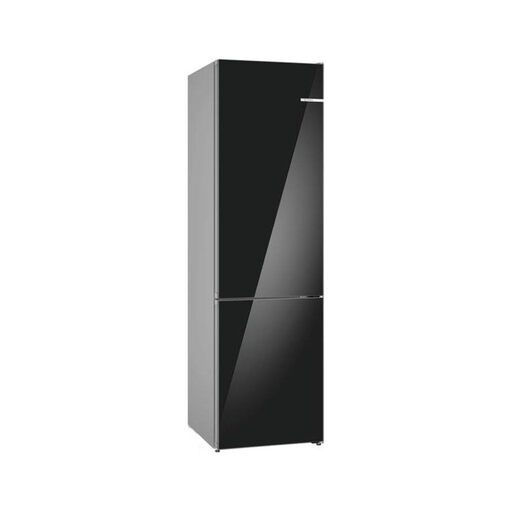
Bosch Serie 6 KGN39LBCF, 363 l, black
VitaFresh XXL is designed for fruit and vegetables, making it a good option if you’re looking for a dedicated salad drawer.
260 l fridge space, 103 l freezer space; 363 l total capacity; five shelves, three of which are height-adjustable.
View at Joybuy
 No image available
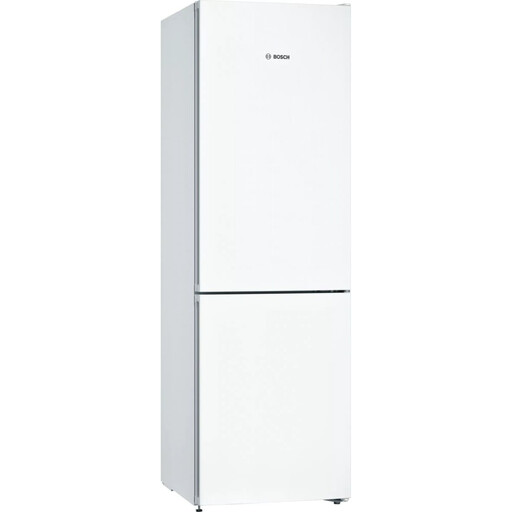
Bosch Serie 4 KGN36VWED, 326 l, white
The VitaFresh drawer is designed for fruit and vegetables and has adjustable humidity.
237 l fridge space, 89 l freezer space; 326 l total capacity; energy efficiency class E.
View at Joybuy
 No image available
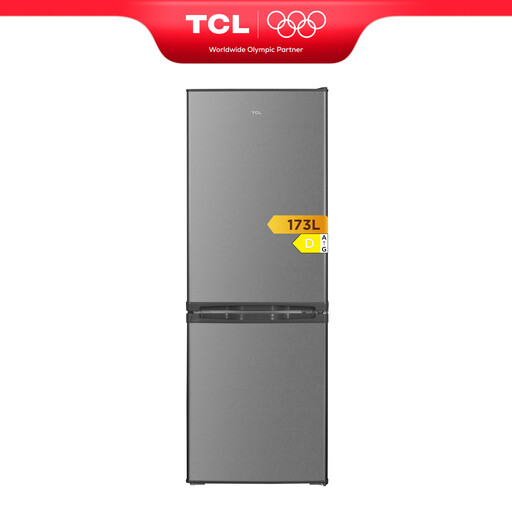
TCL RF225BID0DE, 173 l
The Fresh Zone drawer is designed for fruit and vegetables. Check that its usable space is right for your salad containers.
121 l fridge space, 52 l freezer space; adjustable shelves; LED lighting; energy efficiency class D.
View at Joybuy
 No image available
CHiQ JR263LGE, 262 l, 54 cm wide
The full-width crisper drawer is designed for salad and vegetables. Its stated width may be helpful when checking whether the appliance will fit in a limited space.
187 l fridge space, 75 l freezer space; 54 cm wide and 176 cm tall; three of the four glass shelves are height-adjustable.
View at Joybuy
 No image available
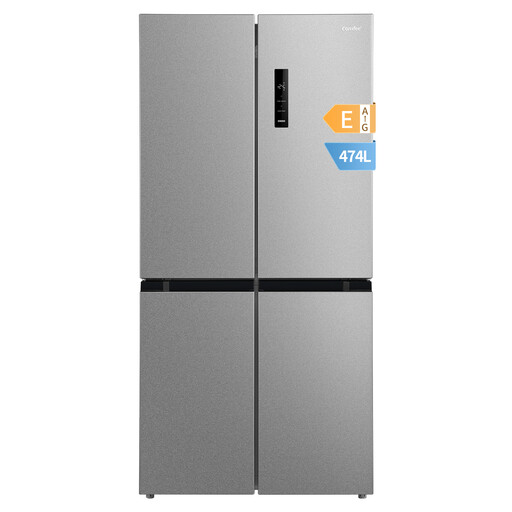
COMFEE RCF470LS2EU(E), 4 doors, 474 l
The generous total capacity and vegetable drawer with three temperature settings may be useful if you need to store lots of ingredients together.
474 l total capacity; dimensions: 838 × 653 × 1775 mm; Vario Box and Flip Tray.
View at Joybuy
Frequently asked questions
How should I store salad leaves until dinner?
Keep fresh salad protected in the salad drawer, for example in a suitable container, bag or damp cloth. The Federal Centre for Nutrition recommends using one to two days as a guide for many types of salad. Wash the leaves thoroughly with drinking water before eating, and add the dressing just before serving.
Do I need a special zero-degree zone for salad leaves?
No. The Federal Centre for Nutrition also recommends using the standard salad drawer for protected storage. If you’re considering a specialist compartment, check what it’s designed for according to the specific model’s description. For example, Bosch distinguishes between a humidity-controlled drawer for fruit and vegetables and a compartment at around 0 °C for meat and fish.
How do I compare the energy consumption of fridge-freezers?
First, compare appliances with enough space that will fit in your kitchen. Then check their annual consumption in kWh on the current EU energy label. The efficiency class alone isn’t a substitute for comparing the stated consumption; you should also factor in your own electricity tariff.
Which energy label applies to a new appliance in Germany?
New fridges and freezers are covered by the relevant EU energy labelling rules, with an efficiency scale from A to G. The European Commission treats used products differently under the labelling requirements, so the older A+++ label isn’t a current comparison point for a new appliance.
What happens to my old fridge-freezer?
Waste electrical appliances must be taken to an authorised collection point, such as a local council recycling centre or a retailer that is obliged to take them back. Before placing your order, check whether the retailer will collect your old appliance when delivering the new one as part of the specific service on offer.


