For a shared kitchen, your fridge freezer should suit your cooling needs, your actual freezer requirements and the space available; a large freezer compartment is not automatically useful if you mainly need to chill portions of cheese. Compare annual energy consumption, capacity and noise levels on the EU energy label, and check the defrosting method for the specific model. The Verbraucherzentrale recommends storing cheese at around 8 °C on the upper fridge shelf and handling it hygienically. The appliance is no substitute for suitable storage or the instructions on the packaging.
Who is this selection for?
Households with lots of individual portions
If you store portions of cheese for several people, you need easy-to-reach, separate spaces and clear rules for labelling and hygienic serving. The Verbraucherzentrale recommends using a suitable cheese dome or cheese container rather than wrapping cheese in completely airtight packaging.
Small shared kitchens
When space is limited, the appliance dimensions, door opening and usable fridge capacity matter more than having the largest possible overall capacity. The Verbraucherzentrale advises choosing an appliance size that meets your needs; the EU energy label shows capacity and energy consumption, among other details.
Households with frozen food to store
If you also store frozen food, compare the freezer capacity and maintenance requirements of the specific model. Manufacturers distinguish between manual defrosting, LowFrost and NoFrost; these terms do not refer to the same defrosting method.
What should you look for when buying?
First, work out how much fridge space everyone needs, then choose the freezer compartment according to your actual storage requirements.
| Buying priority |
What to look for |
Who will find this most important? |
| Storing portions of cheese |
Check the usable fridge capacity and adjustable shelves; allow space for separate, labelled portions. |
If I’m sorting portions of cheese for several people, I need clean spaces where everything is easy to find. Around 36% of consumers put well-organised portion storage first. |
| Fitting the available space |
Check the height, width and depth, as well as the door hinge and clearance needed to open it, against the space available. |
When space is limited, I want to measure up before buying to make sure the appliance fits and the door can open. Around 29% of consumers prioritise making sure it fits the space. |
| Energy consumption and noise |
For appliances of a suitable size, compare annual energy consumption in kWh and noise emissions in dB(A) on the EU energy label. |
If the appliance will run continuously in a shared kitchen, I pay attention to its energy consumption and noise. Around 21% of consumers prioritise these ongoing costs and impacts. |
| Freezer capacity and defrosting |
Check the freezer capacity and defrosting method for the exact model, and weigh them against your actual need for frozen food storage. |
If we regularly store frozen food, I need enough freezer space and want to know how much maintenance it involves. Around 14% of consumers prioritise freezer capacity and defrosting requirements. |
Common buying and storage mistakes
-
Comparing only the total capacity
The fridge and freezer compartments serve different purposes. The Verbraucherzentrale points out that an appliance’s energy consumption depends on its size. What’s more, a large total capacity doesn’t tell you how much usable fridge space there is for portions of cheese.
Work out how much fridge space you need first, then compare the fridge and freezer capacities and the annual energy consumption in kWh.
An appliance that is larger than you need may use more energy to run.
-
Assuming LowFrost is the same as NoFrost
On models equipped with it, LowFrost reduces ice build-up, but it doesn’t automatically remove the need for manual defrosting. Bosch describes the KGE398IBP as having LowFrost and confirms that it does not have the ‘Never defrost again’ function.
Check the defrosting method in the details for the exact model, and allow for the maintenance involved if it needs manual defrosting.
A freezer compartment that needs manual defrosting will require occasional maintenance time.
-
Relying on the fridge alone to look after your cheese
Chilling cheese does not replace following the storage instructions on the packaging or handling it hygienically. The Verbraucherzentrale recommends using a cheese container or cheese dome and advises against wrapping cheese in completely airtight packaging.
Make space for individual portions that are easy to reach, and agree on rules for labelling and hygienic serving with everyone who uses the kitchen.
Brands and selected models at a glance
Gorenje
The RF4142PW4 is a compact fridge freezer with a top-mounted freezer compartment that may be worth considering if space is limited.
- According to Gorenje, this model has 165 l of fridge space, 41 l of freezer space and is 55 cm wide.
- The manufacturer says the freezer compartment needs to be defrosted manually. These details apply to this model, not all appliances from the brand.
Beko
The freestanding RCSA300K40SN combines a slim design with a bottom freezer compartment.
- Beko lists this model as 54 cm wide and says its door hinge can be changed.
- According to the manufacturer, MinFrost reduces ice build-up, but it does not mean that defrosting is no longer necessary.
Bosch
The KGE398IBP is an example of a larger freestanding fridge freezer, with separate capacities listed for the fridge and freezer compartments.
- Bosch lists this model as having 249 l of fridge space, 94 l of freezer space, LowFrost and a door alarm.
- The model is 201 cm tall. LowFrost does not mean there is no need to defrost.
Liebherr
The CNsdc 5203 is an example of a larger fridge freezer with a NoFrost freezer compartment.
- Liebherr lists this model as having a total capacity of 330 l and a noise level of 35 dB.
- The manufacturer’s EasyFresh details refer to fruit and vegetables and do not show that cheese will keep for longer.
Siemens
The KG39N2XAG is an example of a larger fridge freezer for which Siemens lists NoFrost and a noise level of 29 dB(A).
- The model specifications can help you compare capacity, noise and defrosting methods.
- Siemens marks this specific model as no longer available, so this does not indicate that you can currently buy it.
Joybuy products
The following Joybuy products are fridge freezers. Compare their capacity, dimensions and defrosting methods with the needs of your shared kitchen.
 No image available
LG GBBSJ1CCPY fridge freezer
Could be an option for a shared kitchen if you need both fridge and freezer space.
Total capacity: 333 l; Total No Frost; energy class C.
Joybuy
 No image available
LG GBBS727AEV Fit&Max 375L fridge freezer
Could suit a shared household looking for an appliance with the 375 l total capacity stated in the product name.
Total capacity: 375 l; energy class A.
Joybuy
 No image available
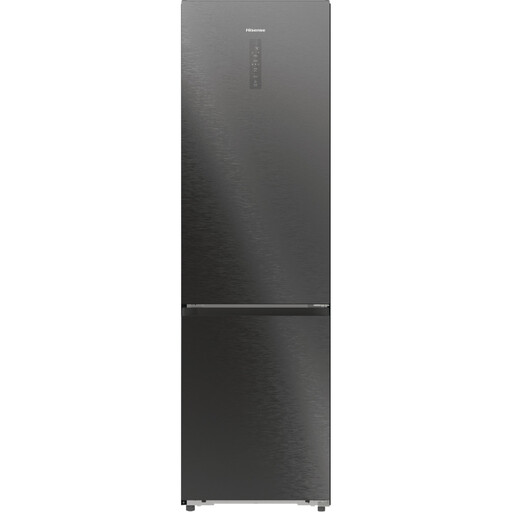
Hisense RB5P410SAFC fridge freezer
Could be an option for a kitchen looking for a fridge freezer; check its dimensions against the space available.
Joybuy
 No image available
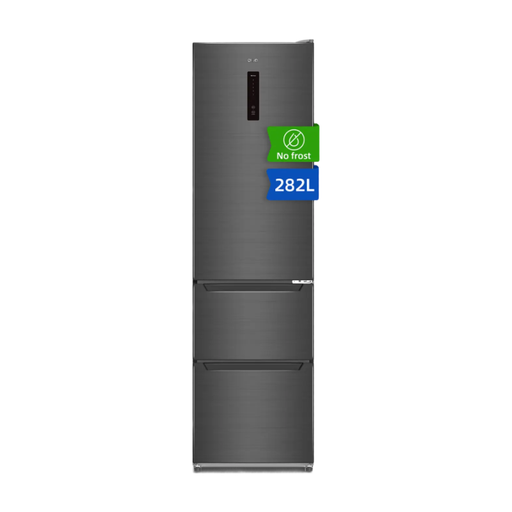
CHiQ CID282NEIBE 282L multi-door fridge freezer
Could be worth considering for a kitchen with limited space if the 54 cm width stated in the product name suits the available spot.
Total capacity: 282 l; 54 cm wide and 192 cm tall; energy class E; No Frost.
Joybuy
 No image available
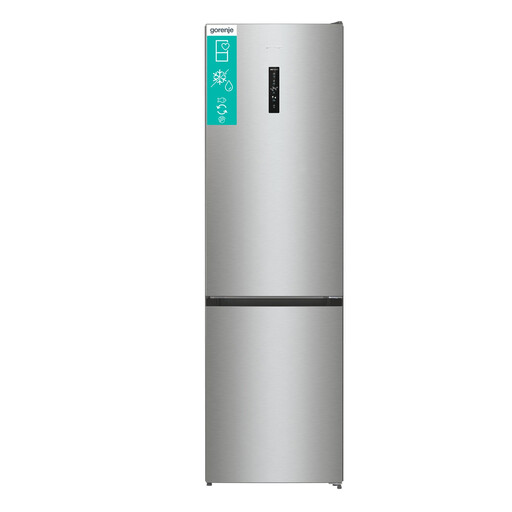
Gorenje NRK620CA2XL4 fridge freezer
Could be an option if you’re looking for a fridge freezer with NoFrost Plus; also check that its dimensions fit the available space.
Total capacity: 331 l; energy class C; NoFrost Plus; 35 dB.
Joybuy
Frequently asked questions
Where should we store portions of cheese in the fridge?
The Verbraucherzentrale recommends storing cheese at around 8 °C on the upper fridge shelf and following the storage instructions on the packaging. In a shared kitchen, setting aside portions for each person and serving them hygienically can help. The Verbraucherzentrale recommends using a cheese container or cheese dome rather than completely airtight packaging.
Is a good energy efficiency class enough to make a decision?
No, the energy class alone is not enough. The European Commission says the EU energy label includes details such as annual energy consumption, capacity and noise emissions. Compare these figures for appliances that suit your space and storage needs.
Do we still need to defrost a NoFrost freezer compartment?
On models specifically labelled as NoFrost, the technology is designed to avoid manual defrosting; check the details for the appliance you’re considering. Gorenje lists the RF4142PW4 as requiring manual defrosting, while Bosch describes the KGE398IBP as having LowFrost.
Which details on the EU energy label are most useful to us?
When comparing fridge freezers, annual energy consumption, fridge and freezer capacity, and noise emissions are particularly useful. The European Commission lists these details on the EU label for fridges and freezers; compare them with your needs and the space available.


