Shared flat with a communal freezer
You share drawers with other people and need to set aside space for labelled portions of compote and other food.


First, choose a freezer compartment that’s suitable for freezing fresh food, then work out how much space will actually be free for everyone’s portions – not just the appliance’s total capacity. Next, compare the annual energy consumption, noise level and defrosting method of the specific model. The Verbraucherzentrale says a four-star rating is required if you want to use an ice compartment, rather than a separate freezer compartment, to freeze food properly and store it for longer. Cool the compote quickly, then divide it into portions and transfer them to suitable, labelled containers.
You share drawers with other people and need to set aside space for labelled portions of compote and other food.
You regularly freeze several portions, so you need to consider both the available freezer space and whether the freezer compartment is suitable for freezing fresh food.
You want to compare the dimensions, annual energy consumption and freezer capacity separately, rather than installing an unnecessarily large appliance that uses energy all year round.
A good choice if: Several people use the freezer compartment frequently and you want to avoid manual defrosting as much as possible.
Consider: NoFrost doesn’t tell you whether there’s enough room for everyone’s portions. The model’s freezer capacity and dimensions still matter.
A good choice if: A suitable freezer compartment is all you need and you’re happy to defrost it occasionally.
Consider: Bosch and Siemens say that the LowFrost models mentioned reduce ice build-up, but don’t eliminate the need to defrost completely.
A good choice if: You only freeze small portions now and then, and there’s enough space in your existing, suitable freezer compartment.
Consider: A small or already full freezer compartment may not have enough room for a larger batch of cooking. Before replacing your appliance, you can measure its energy consumption.
| What matters | What to check when buying | Who it matters to |
|---|---|---|
| Freezer space that’s actually available | Compare freezer capacity in litres, drawer layout and the amount of space you plan to set aside for each person. | If I share drawers with several people, I need to set aside clear space for my portions. Around 36% of consumers put the freezer space that’s actually available first. |
| Freezing and organising portions | Check whether the appliance is suitable for freezing fresh food, its star rating if applicable, drawer access and defrosting method. | If I freeze several portions after cooking, I want to store them neatly and find them again easily. Around 29% of consumers prioritise suitability for freezing and ease of use. |
| Energy use over time | Compare the kWh/year figure on the EU energy label for the specific models you’re considering and, if relevant, the measured consumption of your existing appliance. | If running costs matter more to me than extra storage space, I compare annual energy consumption rather than just capacity. Around 21% of consumers put this first. |
| Fit and noise | Check the exact model’s height, width, depth, door clearance and dB(A) rating. | If the appliance needs to fit in a shared kitchen and suit the living environment, I check its dimensions and noise rating. Around 14% of consumers prioritise space and noise. |
Fridge and freezer capacities are listed separately. In a shared flat, other people may already have filled some of the freezer drawers with their food.
Agree on how much space each person needs for their food, then compare the models’ freezer capacities.
Bosch and Siemens distinguish in their model information between reduced ice build-up and eliminating the need to defrost completely.
Check the defrosting information for the specific model rather than assuming how much maintenance it needs from the feature name alone.
With a LowFrost appliance, you’ll still need to set aside time to defrost it occasionally.
A fridge freezer runs all the time, and the energy consumption figure on the energy label is measured under standardised conditions.
Compare the kWh/year figures. If you already have an appliance, measure its energy consumption before considering a replacement.
Energy is used throughout the appliance’s lifetime. Your individual costs depend on factors such as your tariff and how you use it.
Bosch’s model pages list freestanding fridge freezers with different freezer capacities and defrosting methods.
The KG39EAICA is listed as a freestanding fridge freezer with 249 l of fridge space and 94 l of freezer space.
According to the manufacturer’s website, the MDRB521MGA46O is a freestanding fridge freezer with 256 l of fridge space and 122 l of freezer space.
According to Samsung, the RB38C607AB1/EF is a fridge freezer with a total capacity of 387 l and No Frost+.
According to its model page, the CBNsfc 572i Plus is a fridge freezer with a total capacity of 360 l.
The models below range from compact fridge freezers to larger No Frost and side-by-side appliances. For each one, check that the freezer capacity, dimensions and confirmed suitability for freezing meet your shared storage needs.
 No image available
Three freezer drawers are listed, making it easier to organise shared portions. The freezer compartment has a four-star rating.
Total capacity: 333 l. Freezer capacity: 113 l. Also listed are Total No Frost and Fast Freezing.
 No image available
This more compact fridge freezer may be a good option if space is limited and 52 l of freezer capacity is enough for your shared food supplies.
Total net capacity: 173 l. Freezer compartment: 52 l and four stars. Listed figures include 124 kWh/year, automatic defrosting, a width of 49.5 cm and a height of 142.5 cm.
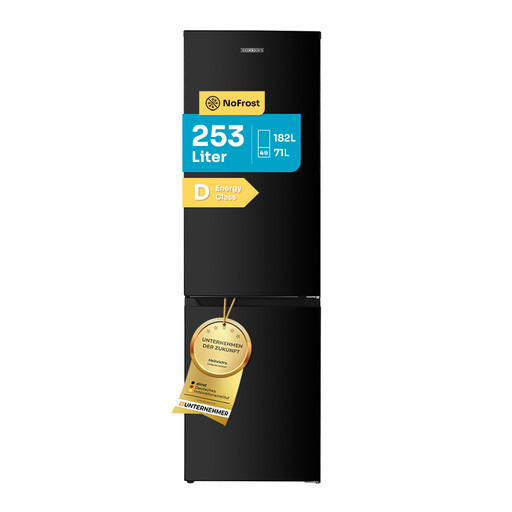 No image available
Before choosing this model, check that its freezer compartment is suitable for freezing fresh food; the available model information doesn’t list a star rating.
Total capacity: 253 l. Freezer capacity: 71 l. Listed features include No-Frost, a noise level of 39 dB and a height of 181 cm; the door hinges are reversible.
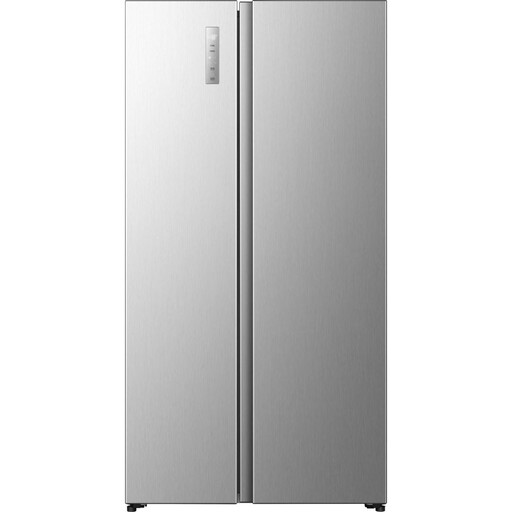 No image available
The listed freezer capacity may suit larger shared food supplies. Check that it’s suitable for freezing fresh food before buying.
Total capacity: 544 l. Freezer capacity: 197 l. Listed features include two freezer drawers, Total No Frost and a Fast-Freeze function.
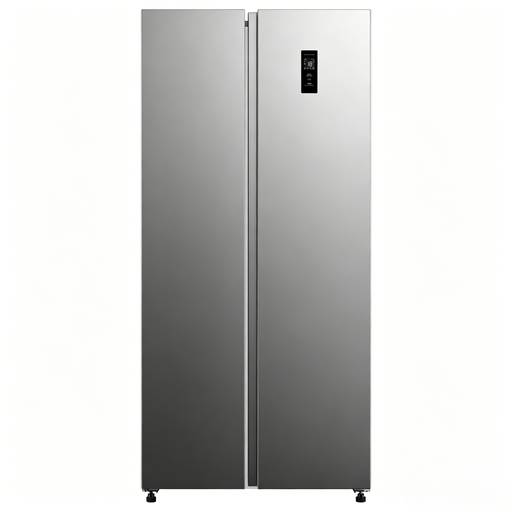 No image available
The freezer compartment has a four-star rating, indicating that it’s suitable for the type of freezing described. Check the dimensions against the extra space it will take up.
Total capacity: 444 l. Freezer capacity: 168 l. Listed features include No Frost, separate digital temperature controls, a noise level of 40 dB and dimensions of 830 × 610 × 1785 mm.
Yes, cooked food is generally suitable for freezing. Cool the compote quickly, divide it into suitable portions and label the containers. The Verbraucherzentrale recommends −18 °C as a guide for frozen storage; this doesn’t mean that every recipe will keep for the same length of time.
Yes. LowFrost and NoFrost aren’t the same. Bosch and Siemens say that the LowFrost models mentioned reduce ice build-up, but don’t eliminate the need to defrost completely. Follow the instructions for your specific model when defrosting and cleaning it.
EU energy label rules also apply to new refrigeration appliances covered by the regulations when they’re sold online. The label includes the energy efficiency class, standardised annual energy consumption, fridge and freezer capacities, and noise level. Compare the details using the exact model number.
Don’t put it in your household bin. The German Federal Ministry for the Environment lists local collection points as one way to return it. Retailers also have take-back obligations in certain circumstances, particularly when you buy an equivalent new appliance. Check with the retailer you’re buying from about return or collection arrangements before you buy.
Your statutory rights against the seller are separate from a voluntary manufacturer’s guarantee. The German Bundestag records the promulgation of Germany’s law implementing the EU Right to Repair Directive in July 2026. The Verbraucherzentrale explains additional repair rights for refrigeration appliances, as well as an extension to the statutory warranty period that may apply if you choose a repair, subject to certain conditions. Whether you’re entitled to make a claim depends, among other things, on when you bought the appliance and whether the relevant conditions are met.