Who is this relevant to?

Weekly soup batch-cookers

If you freeze several portions for lunch in one go, your labelled freezer containers should fit in the drawers alongside your other frozen food. The Consumer Advice Centre and the Federal Centre for Nutrition highlight freezer capacity, suitable containers and portioning as important considerations when stocking up.

Households short on kitchen space

If you want your fridge and freezer in one appliance, check its external dimensions against the space available or the existing housing recess. The Consumer Advice Centre recommends considering size and energy use together.

Energy-conscious stockpilers

If your appliance will be running all year round, it’s worth considering its stated annual energy consumption alongside the freezer capacity you need. The Consumer Advice Centre and the European Commission list energy consumption and usable capacity as points to compare when choosing an appliance.

What should you look for when buying?

Priority What to check when buying Who is this important for?
Space for portions to last the week Check the freezer capacity and drawers against your own containers; if you freeze larger batches, check the freezing capacity too. If you freeze several portions for the week, your labelled containers need to fit in the drawers alongside other frozen food. Around 33% of consumers prioritise having enough freezer space.
Ongoing energy consumption Compare the annual energy consumption of suitably sized appliances using the current EU energy label. If the appliance runs all year, you’ll want to compare its annual energy consumption with the size you need, rather than looking only at its energy efficiency rating. Around 27% of consumers put ongoing energy consumption first.
Fit in your kitchen Check the external dimensions or housing recess measurements; for integrated appliances, also check the specified door mounting. In a small kitchen, the appliance needs to fit in its allocated space or the existing housing recess. Around 20% of consumers prioritise a good fit in the kitchen.
A practical lunch routine Check that suitable portion containers fit in the drawers, and plan how you’ll keep the soup chilled on your journey to work. For lunch, you’ll need individual portions that are easy to take out and a way to keep the soup chilled until you eat it. Around 20% of consumers prioritise a manageable lunch routine.

Common buying mistakes

  • Comparing only the total capacity

    For frozen portions of soup, the stated freezer capacity is what matters; the total capacity doesn’t tell you how much space is available in the freezer compartment. The Consumer Advice Centre also notes that larger fridge freezers can use more electricity.

    Compare the freezer capacity and drawers with your containers, and choose an appliance size that suits the amount of food you actually store.

    An oversized appliance can take up more floor space than necessary and increase energy consumption.

  • Assuming No Frost takes care of all food safety needs

    No Frost relates to defrosting the freezer compartment. It doesn’t make sure soup cools quickly before freezing or stays chilled on the way to lunch. The Federal Institute for Risk Assessment recommends keeping perishable foods chilled when you’re travelling too.

    Plan how to cool the soup and keep it chilled in transit, regardless of the appliance’s features.

  • Choosing an integrated appliance based on height alone

    Integrated models may require specific housing dimensions and a particular type of door mounting. Liebherr, for example, lists these requirements for the ICNc 5103.

    Measure your existing housing recess and check all the installation specifications for the model before you buy.

    A housing recess or door mounting that isn’t compatible could mean extra work to adapt the space.

Brands to consider

LG

Worth considering if you want to compare freezer capacity and stated annual energy consumption across LG’s freestanding fridge freezers.

  • LG lists 107 l of freezer space and annual energy consumption of 110 kWh for the GBP62SWNAC. The GBV7280BMB is listed with 110 l, 138 kWh per year and Total No Frost.
  • These are manufacturer specifications for different models, not an independent comparison of performance or energy consumption. Whether your containers fit also depends on the drawers and their dimensions.

Liebherr

The integrated ICNc 5103 is one example for kitchens with a fixed housing recess.

  • Liebherr lists No Frost, fixed door mounting and housing dimensions of 177,2–178,8 × 56–57 × 55,0 cm (H × W × D) for the ICNc 5103.
  • These dimensions don’t prove that the appliance will fit a different housing recess or that a particular number of soup containers will fit inside.

Beko

The freestanding B5RCNE405HXB offers a point of comparison for a fridge freezer with a bottom freezer compartment.

  • For this model, Beko lists external dimensions of 203,5 × 59,5 × 66,3 cm, energy efficiency class D and No Frost.
  • To see whether it’s suitable for storing soup, also check the specific freezer capacity and freezing capacity. External dimensions alone won’t answer that question.

Joybuy products

The Joybuy products below are fridge freezers with stated freezer capacity for storing portioned food. Focus on the freezer compartment, layout and dimensions.

LG GBBSJ1CCPY fridge freezer, 333 l, Total No Frost

LG GBBSJ1CCPY fridge freezer, 333 l, Total No Frost

The stated 113 l of freezer space and three freezer drawers are worth considering if you want to store several containers of portioned soup; check how your containers fit inside.

Other stated specifications include a freezing capacity of 10 kg/24 h, annual energy consumption of 169 kWh and energy efficiency class C.

View at Joybuy
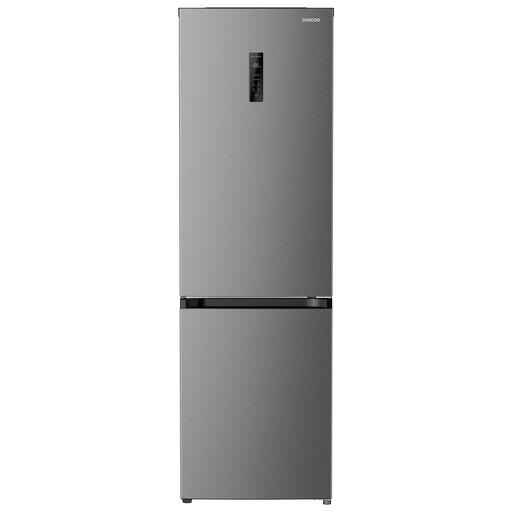
coocaa SRD-489CBEP fridge freezer, 344 l, Total No Frost

coocaa SRD-489CBEP fridge freezer, 344 l, Total No Frost

The stated 109 l of freezer space and three freezer drawers could be useful for storing portions; check that your containers fit in the drawers.

Other listed features include Super-Freezer and energy efficiency class E.

View at Joybuy
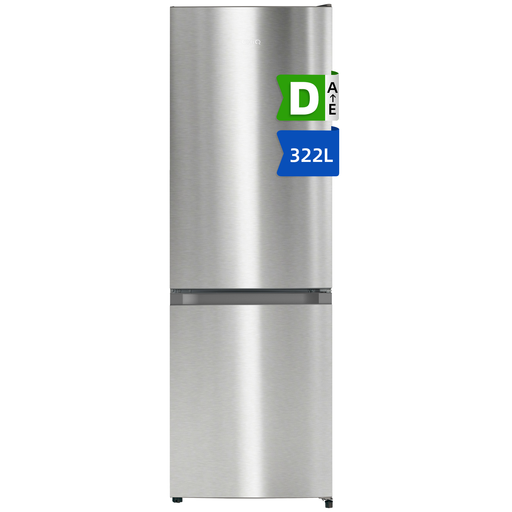
CHiQ JR318WSD fridge freezer, 322 l, Total No Frost

CHiQ JR318WSD fridge freezer, 322 l, Total No Frost

The stated 96 l of freezer space and three freezer drawers give you an idea of the space available for individual portions of soup; check that the drawers fit your containers.

Other listed features include Fast Freeze, annual energy consumption of 196 kWh, energy efficiency class D, a width of 59 cm and a height of 185 cm.

View at Joybuy
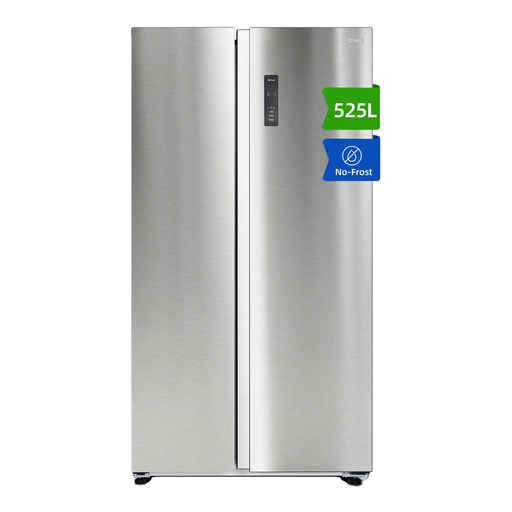
CHiQ JR525WSE side-by-side fridge freezer, 525 l

CHiQ JR525WSE side-by-side fridge freezer, 525 l

With a stated freezer capacity of 192 l, this side-by-side model is an option if you want room for several portions and other frozen food; check the available space in your kitchen first.

The product specifications list 333 l of fridge space, No Frost and energy efficiency class E.

View at Joybuy
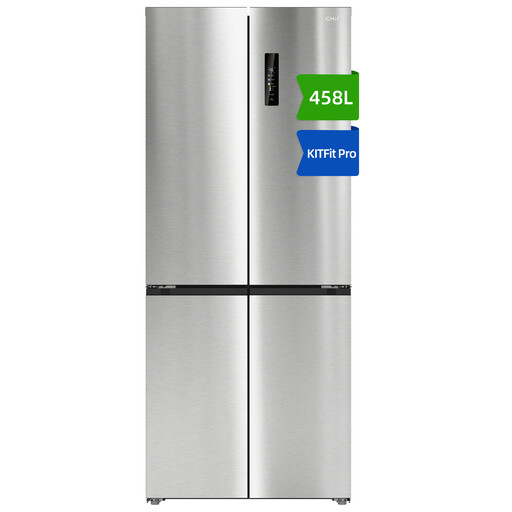
CHiQ JR460WSE cross-door fridge freezer, 458 l

CHiQ JR460WSE cross-door fridge freezer, 458 l

The stated 158 l of freezer space is relevant if you’re storing several portions of soup as well as other frozen food; check that the internal layout suits your containers.

Other listed features include 300 l of fridge space, No Frost and energy efficiency class E.

View at Joybuy

Frequently asked questions

Does vegetable soup need to cool completely before freezing?

For longer storage, hot food should be cooled quickly to below 7 °C. This is the advice of the Federal Institute for Risk Assessment; once the soup has cooled, divide it into suitable portions. A larger freezer doesn’t remove the need to cool food quickly. This is a food hygiene guideline, not a legal temperature requirement for private households claimed here.

How should I pack and organise individual portions of soup?

The Federal Centre for Nutrition recommends using suitable freezer containers or clearly labelled freezer packaging, measuring out individual portions and labelling them with the contents, quantity and date. Before buying an appliance, check that your containers will fit in the drawers.

Will the soup stay safe on the way to work without extra cooling?

You shouldn’t rely on that: the Federal Institute for Risk Assessment recommends keeping perishable foods chilled when you’re travelling too. The freezer at home doesn’t replace suitable arrangements for transporting and storing the soup until you eat it.

Which details on the energy label matter when comparing appliances?

The EU energy label for household refrigeration appliances shows, among other things, the energy efficiency class, annual energy consumption in kWh, fridge and freezer capacity, and noise emissions. The European Commission has used the A to G scale since 1 March 2021. Compare specific models using this current information.

What ongoing and additional costs should I consider?

For appliances of a suitable size, compare the stated annual energy consumption and check which connection or old-appliance removal services are available before placing your order. The Consumer Advice Centre notes that larger fridge freezers can use more electricity. The label value is based on standardised conditions and may differ from the appliance’s energy use in your home.