Families eating meals over several days
If you use up leftovers promptly, you’ll need well-organised fridge space for several separate, shallow portions. The BfR recommends eating leftovers within two to three days.


For cooked chicken you plan to eat within two to three days, easy-to-access fridge space for several shallow containers is essential. Freezer space matters most for portions you’ll eat later. The German Federal Institute for Risk Assessment (BfR) recommends cooling leftovers to below +7 °C within a few hours and eating them within two to three days. So compare fridge and freezer capacity separately, check the appliance dimensions and door clearance, and don’t treat freshness features as a guarantee of how long food will keep.
If you use up leftovers promptly, you’ll need well-organised fridge space for several separate, shallow portions. The BfR recommends eating leftovers within two to three days.
If you cook more than you’ll eat over the next few days, consider not only the fridge space but also the usable freezer capacity and drawer layout.
The appliance’s external dimensions, door clearance and the fridge and freezer compartments you need must all suit the space available. The consumer advice centre recommends considering energy consumption when comparing models, too.
The BfR recommends cooling cooked leftovers to below +7 °C within a few hours, dividing them into shallow containers and eating them within two to three days. When choosing an appliance, the usable shelf space and the separate compartment capacities are therefore key.
| What matters when buying | What to look for | Who it matters most to |
|---|---|---|
| Safe short-term storage | Fridge capacity, adjustable shelves and room for several shallow containers; check the temperature after setting up the appliance. | If I’m chilling leftovers for the next few meals, I need room for several shallow containers and want to be able to check the actual temperature. Around 36% of consumers prioritise short-term storage. |
| Freezer space for later meals | Compare freezer capacity and usable drawers separately from the fridge compartment; check the defrosting system of the specific model. | If I want to save portions for later, I need freezer space that’s easy to access. Around 29% of consumers prioritise frozen food storage. |
| Usable space and kitchen fit | Compare fridge and freezer capacity separately, and check the height, width, depth and door clearance against the space available. | If my kitchen is short on space, the appliance needs to fit and the door must open fully without making containers and drawers difficult to reach. Around 21% of consumers prioritise storage space and appliance dimensions. |
| Energy consumption | Once you’ve found compartments of a suitable size, compare the annual consumption in kWh on the EU energy label; the energy efficiency rating alone isn’t enough. | If I want an appliance that suits my needs for the long term, I look at the stated annual consumption as well as the space it requires. Around 14% of consumers prioritise energy consumption. |
The total capacity in litres doesn’t tell you whether several shallow containers will fit on the shelves. What matters is the stated fridge capacity and the interior layout.
Compare the capacity of both compartments and check the shelves before opting for a larger appliance.
Defrosting convenience and advertised freshness features don’t change the BfR’s recommendations for handling leftovers.
Divide food into portions and chill it promptly. Choose NoFrost to reduce the need to defrost if that matters to you, not as a substitute for careful food handling.
Alongside the efficiency rating, the stated annual consumption in kWh is also relevant to energy use. On the other hand, an appliance that’s too small may not provide the fridge and freezer space you need.
Compare annual consumption across appliances with compartment sizes that suit your needs.
The freestanding KGN36VICT is an example of a fridge-freezer with separate compartment capacities and adjustable shelves.
The iQ500 KG39EAICA is a freestanding fridge-freezer with more stated fridge capacity than freezer capacity, and LowFrost.
The CBNsda 572i is a freestanding NoFrost fridge-freezer, while the ICBNSd 5123 is designed for built-in installation.
According to the manufacturer, the RL38C775CS9/EG is a 203 cm-high fridge-freezer with a total capacity of 390 l.
The GBBS726AEV has an adaptable interior and a stated total capacity of 375 l.
These models cater for different space requirements, from slim appliances to fridge-freezers with plenty of room in both compartments.
 No image available
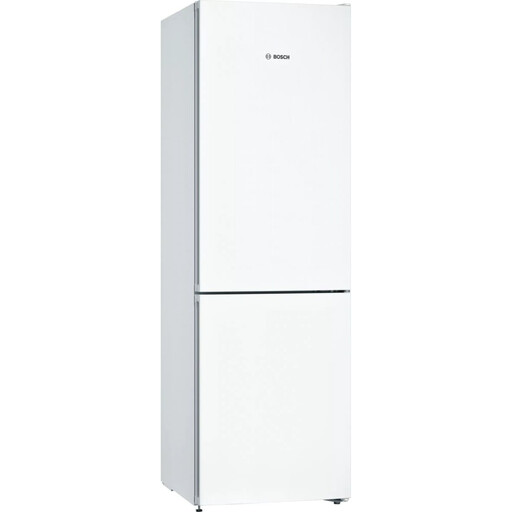
The stated fridge capacity of 237 l is useful if you need to chill several portions.
Fridge: 237 l; freezer: 89 l. Four glass shelves, two of which are height-adjustable; NoFrost. The appliance is 60 cm wide and 66 cm deep, with a reversible door.
 No image available
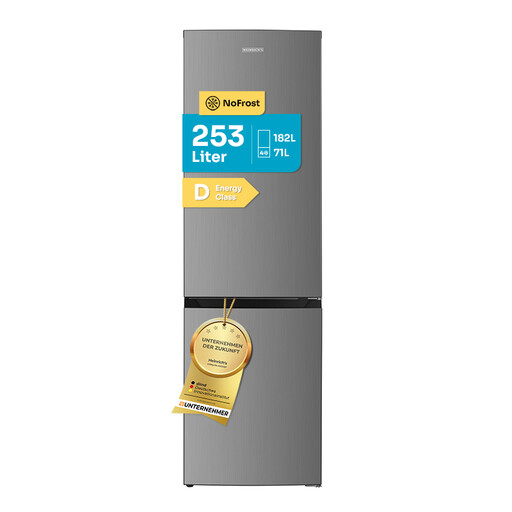
The separate compartment capacities help you weigh up fridge space for portions you’ll eat soon against freezer space for later meals.
Fridge: 182 l; freezer: 71 l. The stated features also include a height of 181 cm, LED interior lighting and a reversible door hinge.
 No image available
With a stated width of 49.5 cm, this model could suit spaces where the appliance’s width is a key consideration.
Fridge: 121 l; freezer: 52 l. The appliance is 142.5 cm high, with three glass shelves, a four-star freezer compartment and a reversible door hinge.
 No image available
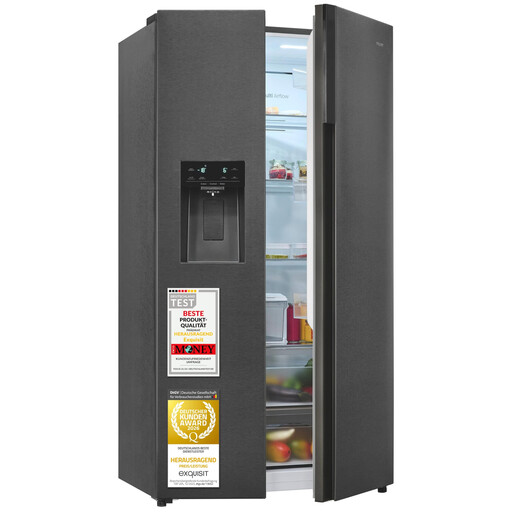
The separately stated capacities of 347 l for the fridge and 181 l for the freezer give you an idea of what’s available for households that need plenty of space in both compartments.
No Frost and four glass shelves are listed. The appliance is 91.1 cm wide; its depth with the door open is 110.5 cm. Check that you have enough room where you plan to install it.
 No image available
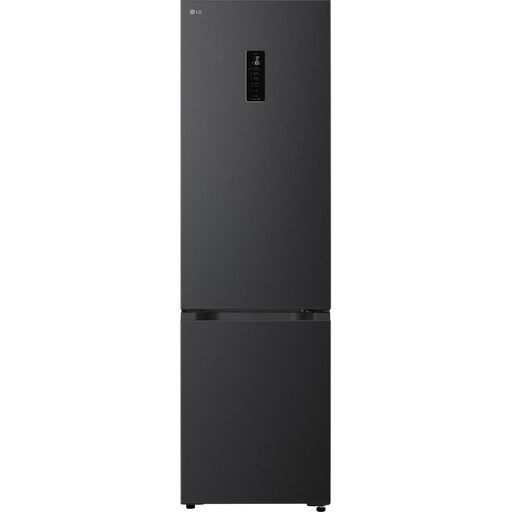
The stated fridge capacity of 262 l is a useful comparison if you need to chill several portions.
Fridge: 262 l; freezer: 113 l. The stated figures include 112 kWh per year, a width of 59.7 cm and Total No Frost. The Zero-Clearance design allows the door to open to 110°.
The BfR recommends eating leftovers within two to three days. First, cool them to below +7 °C within a few hours; larger quantities can be divided between several shallow dishes to help them cool. No appliance feature can guarantee this storage time.
Don’t assume that a freshness compartment advertised for other foods will keep cooked leftovers for longer. The key points are still to cool food promptly, keep it properly chilled and follow the BfR recommendation to eat leftovers within two to three days.
Measure the space available, including the door clearance, and compare fridge and freezer capacities separately. The annual consumption on the EU energy label is a comparison figure based on standardised conditions; actual consumption also depends on how and where the appliance is used.
Retailers must clearly display the energy label, including online, when selling fridges and freezers that require one. The EU efficiency scale runs from A to G; it isn’t a minimum rating that buyers have to choose.
According to the German Federal Ministry for the Environment, online retailers are also required to take back old electrical appliances. Whether a specific old appliance can be collected from your home free of charge depends, among other things, on the relevant conditions and any agreement made when you complete your purchase. Check how to return your old appliance before placing your order.