What should you look for when buying?
First, check that the freezer compartment is suitable for homemade sauce and that your containers will fit. Then consider space for everyone else, the dimensions of the installation space and annual energy consumption.
| What to consider |
What to check |
Who will find this most important? |
| Freezing function and space for portions |
Look for the 4-star rating, check the separate freezer capacity and the internal dimensions of the drawers, and allow room for the supplies already in the freezer. |
If I freeze several portions of sauce, they need to fit in the drawers alongside everyone else’s supplies. That’s why around 33% of consumers prioritise a suitable freezing function and usable space for portions. |
| Shared storage |
Allow space on shelves for covered containers and separate storage areas; agree on shared labelling rules for the kitchen. |
When we share fridge space, I want cooked food to be covered, stored separately and clearly labelled. Around 25% of consumers prioritise organised, hygienic shared storage. |
| Space and door clearance |
Check the appliance’s height, width and depth, as well as the route into the kitchen, door hinges, space to open the doors and clearance to pull out the drawers. |
If kitchen space is limited, the appliance and its open doors need to fit. That’s why around 17% of consumers pay particular attention to floor space and accessibility. |
| Annual energy consumption |
For appliances with a suitable capacity, compare the kWh/year figure on the EU energy label; the Verbraucherzentrale lists annual energy consumption as a point of comparison. |
When choosing between appliances that fit the available space, I want to take the stated electricity consumption into account. Around 17% of consumers put annual energy consumption first. |
| Freezer maintenance |
Check whether NoFrost is specified for the particular model and how accessible the drawers are; continue to consider the layout and annual energy consumption too. |
If it’s difficult to organise defrosting together, I want to keep freezer maintenance to a minimum. That’s why around 8% of consumers prioritise easier-to-manage maintenance. |
Brands and specific models to consider
The details below refer to individual models, not every appliance from each brand. The specifications for the exact version and whether your containers fit remain the most important things to check.
Bosch
Freestanding fridge-freezers with the freezer at the bottom, illustrated by the KGN36VICT.
- Bosch lists 218 l of fridge space, 103 l of freezer space, external dimensions of 1860 × 600 × 665 mm and a noise level of 35 dB(A) for the KGN36VICT.
- These figures apply to this specific model and don’t tell you whether your containers will fit in the drawers.
Liebherr
Freestanding and integrated fridge-freezers; the CBNsda 5223 Plus is an example of a freestanding model.
- Liebherr lists dimensions of 185,5 × 59,7 × 67,5 cm and a total capacity of 320 l for the CBNsda 5223 Plus. The manufacturer describes NoFrost as a feature that removes the need for manual defrosting.
- Total capacity doesn’t tell you whether your containers will fit in the freezer drawers; the NoFrost feature is only available on models specified as having it.
LG
Fridge-freezers with different layouts and installation options, illustrated here by the GBBS726ASW.
- LG lists a total capacity of 375 l, a width of 59,7 cm, a height of 203 cm and annual energy consumption of 112 kWh/year for the GBBS726ASW.
- These specifications apply to this model version. Freshness features alone don’t offer any particular benefit when freezing tomato sauce.
Siemens
Freestanding fridge-freezers, illustrated by the wider KG49NXIBF.
- Siemens lists dimensions of 2030 × 700 × 667 mm, 311 l of fridge space and 129 l of freezer capacity for the KG49NXIBF.
- Siemens marks this model as no longer available on its German website. Its dimensions are included as an example of a model, not as a current buying recommendation.
Miele
Freestanding fridge-freezers with model-specific convenience features, such as the KFN 4898 A-10 D.
- The KFN 4898 A-10 D is an example of a model with Freeze&Cool.
- Miele lists the KFN 4898 A-10 D as no longer available. Don’t assume a differently named version is an identical replacement without checking that it’s the same model.
Joybuy products for different space requirements
This selection includes freestanding fridge-freezers in different designs and with a range of stated capacities. For each specific model, check for a 4-star rating on the freezer compartment and make sure there’s room for your containers.
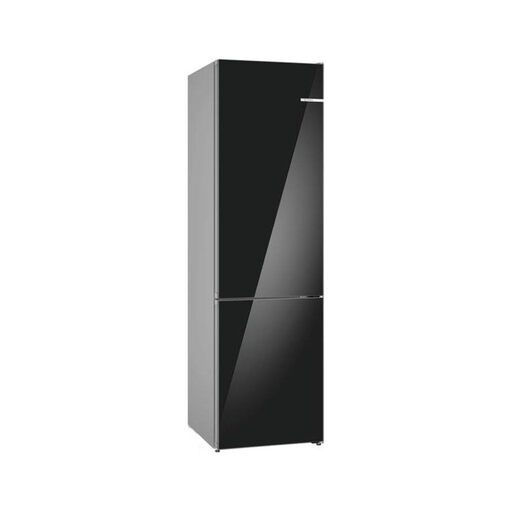 Image unavailable
Bosch Serie 6 KGN39LBCF
This model may suit a shared kitchen, provided its freezer layout and footprint work for your space.
363 l total capacity; colour: C Black.
View at Joybuy
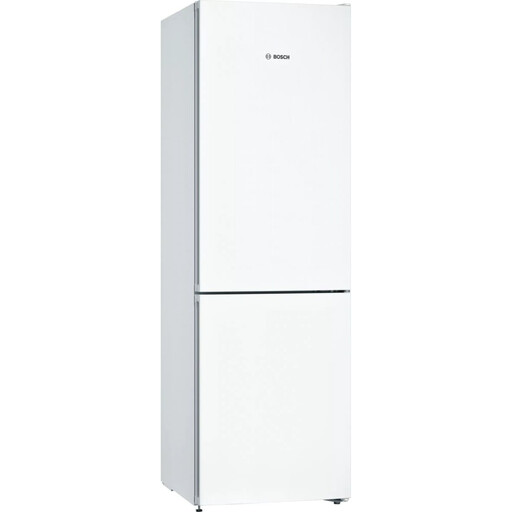 Image unavailable
Bosch Serie 4 KGN36VWED
If you’re looking for a model specifically listed as NoFrost, check whether this appliance and its layout suit your space requirements.
NoFrost; VitaFresh; 326 l total capacity; energy class E; white.
View at Joybuy
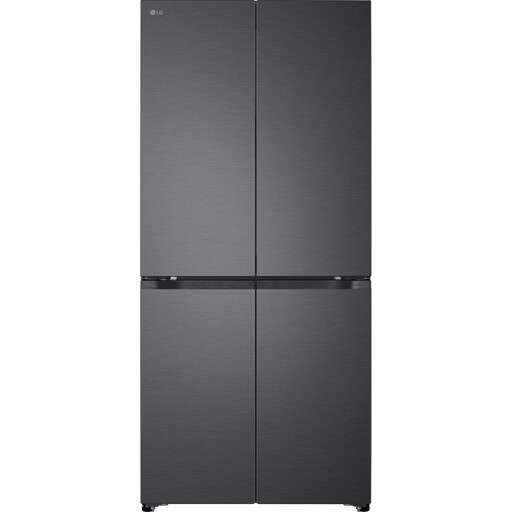 Image unavailable
LG GMBS30SDEP American-style, 4 doors
This design may be useful if you want separate areas for different supplies. Check first that its width and door clearance will work in your shared kitchen.
369 l fridge compartment and 211 l freezer compartment; NoFrost; temperature alarm; display; Essence Black Steel.
If you’re freezing homemade sauce, check that the specific freezer compartment has a 4-star rating.
View at Joybuy
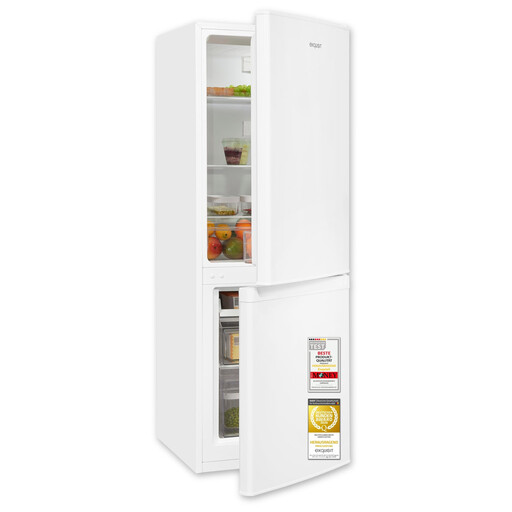 Image unavailable
Exquisit KGC5232-60-E-040E
If floor space is limited, check the appliance dimensions and whether the freezer compartment has enough room for your portions of sauce.
173 l net capacity; temperature control; glass shelves and door shelves; freezer compartment; white.
View at Joybuy
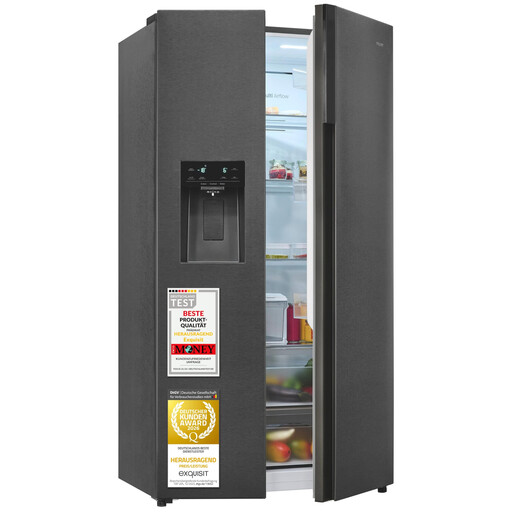 Image unavailable
Exquisit side-by-side, 528 l
If several people are storing frozen supplies, check that this design and its doors will fit in your kitchen.
No Frost; ice and water dispenser; removable 4,5-l water tank; digital temperature control; Multi-Airflow; black.
View at Joybuy
Frequently asked questions
Can I freeze homemade tomato sauce in any freezer compartment?
No. The Verbraucherzentrale recommends a 4-star freezer compartment for freezing; compartments with fewer stars are only suitable for limited storage of products that have already been deep-frozen. The Federal Centre for Nutrition describes how to freeze cooked tomato sauce in portions.
How should I cool and store sauce in a shared kitchen?
If you plan to store hot food for longer, cool it quickly to below 7 °C. This is the advice of the Federal Institute for Risk Assessment; food in the fridge should be covered and stored separately. Label portions for the freezer with their contents and date so they’re easier to identify.
How do I compare energy consumption?
For appliances with a suitable capacity, compare the kWh/year figure on the EU energy label. The Verbraucherzentrale lists annual energy consumption as a point of comparison; actual household consumption may differ from the standardised figure.
What should I check about installation and maintenance?
Follow the installation, ventilation and connection instructions in the manual for the specific model. If it’s difficult to organise defrosting together, check whether NoFrost is explicitly listed for this version; Liebherr describes this feature as removing the need for manual defrosting.
Can I put an old fridge-freezer in the household rubbish in Germany?
No. According to information from the Federal Ministry for the Environment, old electrical appliances must be taken to an authorised collection point or handed to an organisation that is required to take them back. If you’re arranging collection when a new appliance is delivered, check the specific terms in advance.


