Home cooks with limited space
If you want to freeze tomato sauce in portions, the appliance’s width, depth and door clearance may limit your options.


A fridge-freezer is suitable for storing cooled tomato sauce in a small kitchen only if it fits within the fully measured space, including room for the door to open, and has a 4-star freezer compartment. If you want to freeze several portions on the same day, the freezer space and freezing capacity in kg/24 h must also be right for the amount you’re freezing. For occasional small portions, a more compact appliance may be enough, provided it meets these requirements.
If you want to freeze tomato sauce in portions, the appliance’s width, depth and door clearance may limit your options.
If you’re freezing several cooled portions on the same day, check the available freezer space and freezing capacity separately.
If you only need freezer space now and again, the appliance’s dimensions, annual energy consumption and maintenance requirements are all important considerations.
First, measure the space, including the door swing and the clearance specified for the model. Then check that the freezer compartment, freezer capacity and freezing capacity suit your containers and the amount you want to freeze at once.
| What to consider | What to look for | Who it matters most to |
|---|---|---|
| Appliance dimensions and door clearance | Measure the height, width and depth; also check the door swing and the model’s installation requirements. | If every centimetre counts in my kitchen, I want to know whether the appliance will actually fit in the space and whether the door can open. Around 36% of consumers put available space first. |
| Amount to freeze and freezer space | Compare freezer capacity for stored food with freezing capacity in kg/24 h for new portions; choose a 4-star compartment. | If I want to freeze several containers on the same day, I need enough room for stored food as well as enough daily freezing capacity. Around 29% of consumers prioritise the amount they need to freeze and the available freezer space. |
| Energy consumption | Compare annual consumption in kWh and the energy efficiency class across appliances of a similar size; your individual costs will also depend on your electricity tariff. | If the appliance is running all the time, I want to assess its annual consumption in relation to the capacity I need. Around 21% of consumers look at running costs first. |
| Defrosting and cleaning | Check the specific model to see whether it needs manual defrosting, has reduced ice build-up or defrosts automatically. | If I want to spend as little time as possible on maintenance, the exact defrosting method matters. Around 14% of consumers prioritise low maintenance. |
The capacity in litres tells you how much storage space is available, not how much the appliance can freeze in 24 hours.
Compare the freezing capacity in kg/24 h with the amount of sauce in your containers, and make sure the compartment is a 4-star freezer compartment.
Depth, height, door clearance and the manufacturer’s installation requirements all affect whether the appliance can be used in the space you have in mind.
Measure the full space, including room to open the door, and compare it with the instructions for the specific model.
Moving the appliance to a different spot or changing the door hinge can mean extra work.
A feature that reduces ice build-up doesn’t automatically mean you’ll never have to defrost the freezer compartment manually.
Check the product information sheet for the stated defrosting method instead of relying on the feature name alone.
If it needs manual defrosting, allow time for this maintenance.
The RCSA270K40SN is an example of a taller, 54 cm-wide fridge-freezer with the freezer compartment at the bottom.
The CTe 2131 is a shorter option if you have limited height available.
The KGCL 384 155-1 W is a particularly slim option for tight kitchens.
The selection below includes freestanding fridge-freezers and one built-in fridge. For each model, check whether the freezer compartment is rated 4-star and whether the freezing capacity suits the amount you plan to freeze.
 No image available
At 49,5 cm wide, this freestanding model may suit a narrow space.
Total net capacity: 173 l; freezer compartment: 52 l, rated 4-star; freezing capacity: not stated. Energy efficiency class C; annual consumption: 124 kWh. Height: 142,5 cm.
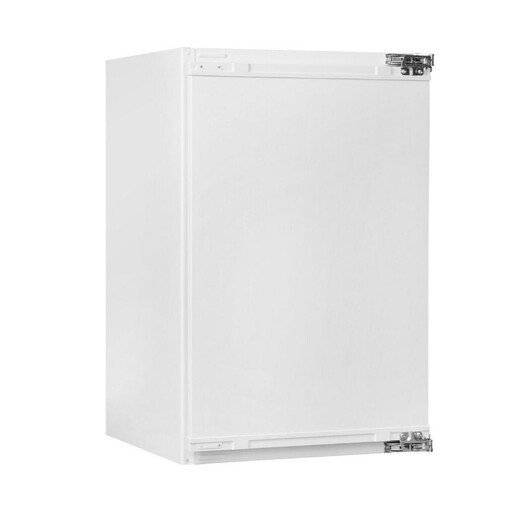 No image available
The integrated freezer compartment may suit smaller freezing needs, provided the model fits the space you have for it.
Total capacity: 110 l; freezer compartment: 13 l, rated 4-star; freezing capacity: 2,6 kg/day. Energy efficiency class E; annual consumption: 141 kWh. Dimensions: 54,5 × 86,6 × 54,5 cm; designed for an 88-cm niche with a fixed-door fitting.
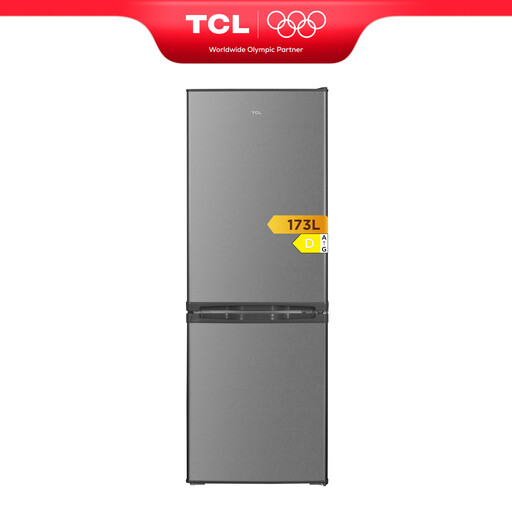 No image available
The separate figures for fridge and freezer capacity make it easier to see whether the layout suits your storage needs.
Total capacity: 173 l; fridge compartment: 121 l; freezer compartment: 52 l. Energy efficiency class D. Before buying, check specifically whether this model’s freezer compartment is rated 4-star.
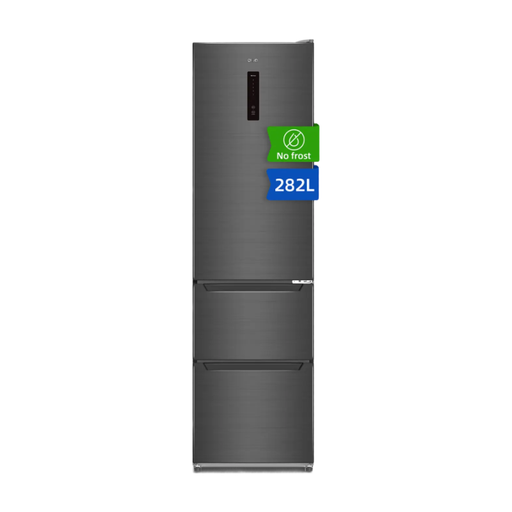 No image available
The product description lists separate fridge and freezer compartments. Before buying, check that the dimensions and door clearance suit your space.
Total capacity: 282 l; width: 54 cm; depth: 58,6 cm; height: 192 cm. Energy efficiency class E; annual consumption: 233 kWh. The product description specifies No Frost. Check that the freezer compartment is rated 4-star.
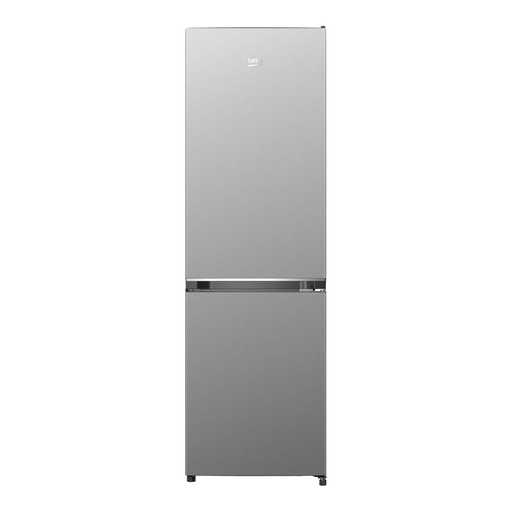 No image available
At 54 cm wide, this appliance may suit a narrow space, provided the depth, height and door clearance also work.
Total capacity: 250 l; fridge compartment: 180 l; freezer compartment: 70 l. Dimensions: 54 × 57,6 × 180 cm. Energy efficiency class D; annual consumption: 172 kWh. The product description specifies No Frost. Before buying, check that the freezer compartment is rated 4-star.
Yes. The German Federal Centre for Nutrition specifically lists freshly cooked tomato sauce as suitable for freezing in portions. You’ll need a 4-star freezer compartment for freshly made sauce.
For longer-term storage, cool cooked food quickly and keep it hygienically covered in suitable containers. The German Federal Institute for Risk Assessment recommends cooling hot food quickly to below 7 °C for longer-term storage. Don’t put in more at once than the appliance’s 24-hour freezing capacity allows.
No. These names refer to features that reduce ice build-up; they don’t automatically mean you’ll never need to defrost the appliance. For the Beko RCSA270K40SN, the EU product register EPREL explicitly specifies manual defrosting. The defrosting method for the specific model is what matters.
Household refrigeration appliances use the EU scale from A to G. The European Commission has used this labelling system since 1 March 2021. The energy label includes information such as annual consumption and compartment capacity.