If you regularly batch-cook several portions, start by looking at usable freezer space and the stated freezing capacity. For the occasional leftovers, a smaller fridge-freezer may be enough. Compare the fridge and freezer capacities, the appliance or niche dimensions, and annual energy use separately, as a larger capacity can mean higher energy consumption, as explained by the Verbraucherzentrale. Whatever appliance you choose, cool cooked sauce quickly before storing it for any length of time; the German Federal Institute for Risk Assessment recommends cooling hot food to below 7 °C.
Who is this choice relevant to?
Households that batch-cook
If you regularly freeze several portions of tomato sauce after shared meals, choose freezer space and freezing capacity to suit the amount you want to store. For longer-term storage, the Federal Centre for Nutrition recommends a storage temperature of −18 °C.
Kitchens with a fixed appliance space
If the appliance has to fit a specific space, its external or niche dimensions matter, as do the door opening and how easy the freezer drawers are to use. The Verbraucherzentrale and Liebherr’s information on installation dimensions show what to consider when planning.
Households mindful of energy costs
If you only freeze leftovers occasionally, check whether you really need the capacity you’re choosing. The Verbraucherzentrale points out that larger fridge-freezers use more energy.
What should you look for when buying?
First check whether your usual portions of sauce will fit in the freezer drawers. Then make sure the appliance’s design and running costs suit your kitchen and needs. The German Federal Institute for Risk Assessment recommends quickly cooling hot food to below 7 °C before longer-term storage; the Verbraucherzentrale gives −18 °C as the optimum temperature for freezers.
| Criteria |
What to check before buying |
Who should pay particular attention |
| Freezer space for portions of sauce |
Compare freezer capacity, drawer layout and stated freezing capacity in kg/24 h separately from fridge capacity. |
If I freeze several containers after an evening meal, they need to fit in the drawers alongside the rest of my frozen food. Around 36% of consumers prioritise freezer space for portions of sauce. |
| Safe handling of cooked sauce |
Cool the sauce quickly to below 7 °C before storing it; label portion-sized containers and set the appropriate storage temperature. |
If I’m storing cooked sauce for later, I want to handle it hygienically before freezing and pack it in suitable portions. Around 29% of consumers put the safe handling of cooked sauce first. |
| Fit and internal layout |
Check the external or niche dimensions, door hinge or door mounting, and the capacity of both compartments. |
If the appliance space or fitted niche is fixed, the appliance and its internal layout need to suit the kitchen. Around 21% of consumers prioritise fit and usable internal layout. |
| Energy use and running costs |
Compare annual energy use in kWh for appliances sized to your needs; calculate your own costs using your electricity tariff. |
If I only freeze sauce occasionally, I don’t want to pay for capacity that goes unused. Around 14% of consumers put energy use first. |
Avoiding common buying mistakes
-
Assuming total capacity means freezer space
The capacities of the fridge and freezer compartments are listed separately. The shape of the drawers also affects whether your containers will fit alongside the frozen food you already have.
Before choosing, think about the containers you use for portions and the amount you usually store. Compare freezer capacity and drawer layout separately.
-
Thinking NoFrost or fast freezing means you don’t need to cool food first
Appliance features don’t change the fact that cooked food needs to be cooled quickly and handled hygienically before longer-term storage.
Cool the sauce quickly before storing it, then divide it into suitable smaller portions.
-
Checking only the appliance width
With built-in appliances, the niche and door mounting need to fit. Freestanding models also need enough room for the door to open.
Check the appliance’s full dimensions and door hinge against your kitchen. For built-in appliances, also check the specified door mounting.
Relevant brands at a glance
Bosch
The KGN392LAG is a useful model to compare if you want to look at fridge and freezer capacity, appliance dimensions and freezing capacity separately.
- Bosch lists 260 l of fridge capacity, 103 l of freezer capacity and Total No Frost for the KGN392LAG. The European Commission gives the model a freezing capacity of 10,0 kg/24 h.
- Its dimensions are 2030 × 600 × 665 mm. These details apply to this model; also check that the drawers suit your containers.
Liebherr
The documented CNsfd 5204 and ICNSd 5103 models represent different designs: freestanding and built-in.
- Liebherr lists a total capacity of 319 l and NoFrost for the freestanding CNsfd 5204; the ICNSd 5103 has a total capacity of 253 l and sliding door mounting.
- Total capacity doesn’t show how much space is available in the freezer compartment. Check the freezer capacity separately, and the niche dimensions for the built-in model.
LG
The GBBS726AEV is a specific model you can use to compare a large total capacity with stated annual energy use.
- LG lists a total capacity of 375 l and energy use of 112 kWh/year for the GBBS726AEV.
- These details apply to this model. The manufacturer’s claims about freshness features don’t show that cooked sauce will cool more safely as a result.
Siemens
The KG39N2IAF iQ300 is a model to compare with other freestanding fridge-freezers.
- The F.A.Z. Kaufkompass featured the Siemens KG39N2IAF iQ300 in its editorial selection on 6 July 2026.
- This editorial selection doesn’t mean the model will suit every portion size or kitchen. Check the appliance dimensions and freezer capacity for the specific model.
Joybuy products for freezing individual portions
These Joybuy products are for freezing individual portions in fridge-freezers. The selection includes freestanding models and one model with a flexible compartment.
 No image available
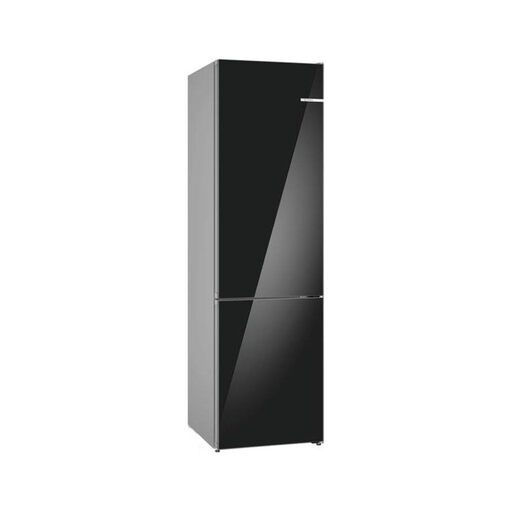
Bosch Serie 6 KGN39LBCF, 363 l, black
If you’re freezing several portions of sauce, the stated freezer capacity and freezing capacity are useful points of comparison.
103 l of freezer space, a freezing capacity of 10 kg/24 h and three freezer drawers; NoFrost and dimensions of 2030 × 600 × 665 mm are also listed.
View at Joybuy
 No image available
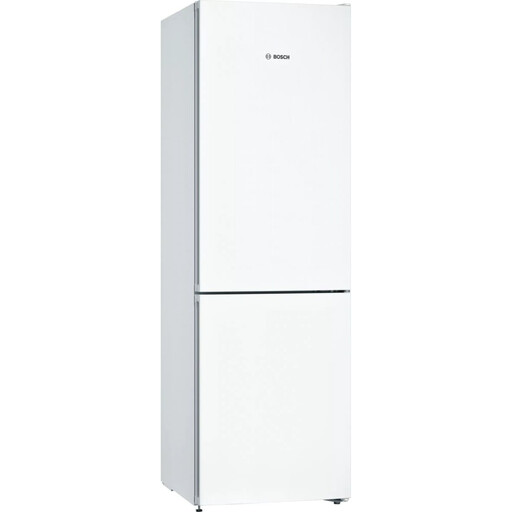
Bosch Serie 4 KGN36VWED, 326 l, white
The stated drawers and freezer capacity give you useful points of comparison if you want to freeze sauce in portions.
89 l of freezer space, three freezer drawers and a four-star freezer compartment; the stated freezing capacity is 10–14 kg/24 h. NoFrost, energy class E and dimensions of 60 cm wide, 186 cm high and 66 cm deep are also listed.
View at Joybuy
 No image available
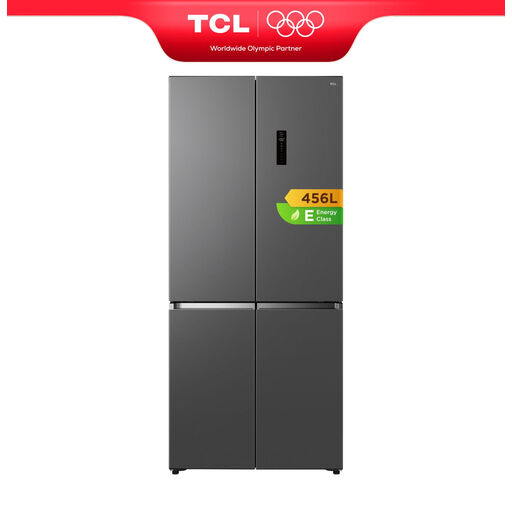
TCL RC593CSE0AM Multi-Door
This model may be worth comparing if you want to consider a flexible compartment as well as freezer space.
It has 66 l of freezer space and a 78 l flexible compartment. According to the product description, this compartment can be used as fridge or freezer space, so it isn’t permanently additional freezer space. Total No Frost is also listed.
View at Joybuy
 No image available
exquisit KGC5232-60-E-040C, 173 l, stainless steel look
If you freeze smaller portions of sauce and have limited space, you can assess this freestanding model by checking its stated freezer capacity and dimensions.
It has 52 l of freezer space, two freezer drawers and a four-star freezer compartment. The appliance is 49,5 cm wide and 142,5 cm high.
View at Joybuy
 No image available
LG GBBS727AEV Fit&Max, 375 l, black
Compare the stated freezer capacity and drawer layout with the amount you usually store in portions.
It has 113 l of freezer space and three freezer drawers. This is a freestanding model with stated dimensions of 59,7 × 67,5 × 203 cm.
View at Joybuy
Frequently asked questions
Can I freeze cooked tomato sauce for later meals?
Yes, cooked food is generally suitable for freezing. The German Federal Institute for Risk Assessment recommends quickly cooling hot food to below 7 °C before longer-term storage. Then divide the sauce into suitable, labelled containers.
What temperature should the freezer compartment be?
The Verbraucherzentrale gives −18 °C as the optimum temperature for freezers. Check the temperature setting on your appliance, and don’t confuse a fast-freeze function with cooling cooked sauce before storing it.
How much space should I leave in containers for liquid sauce?
Leave room for the sauce to expand and use freezer-safe containers. For liquids such as soup, the Verbraucherzentrale recommends filling containers to only three-quarters full. You can also label them with the contents and storage date.
How do I compare the energy use of fridge-freezers?
Compare the stated energy use in kWh/year for appliances with a capacity suited to your needs. Multiply the annual energy use by your own electricity price per kWh to estimate the yearly cost; actual usage may differ from the standardised figure.
How can I tell whether there’s enough freezer space for my portions?
Check the stated freezer capacity and drawer layout separately from the fridge capacity. Compare the size of your usual containers with the drawers, and allow for food already in the freezer. If you’re storing several portions at once, also consider the stated freezing capacity.


