If you regularly freeze vegetable stock, you’ll need a freezer compartment suitable for freezing fresh food. If the compartment is rated by stars, the consumer advice centre says it must have a 4-star rating. Check the usable drawer space, appliance dimensions, operating noise and annual energy consumption against the needs of your shared kitchen. The Federal Institute for Risk Assessment recommends dividing larger quantities between shallow containers to cool them, then chilling them to below +7 °C within a few hours.
Who buys a fridge-freezer for stock?
Regular batch-cookers
If you regularly freeze several portions at once, you’ll need to weigh up freezer capacity and suitability for freezing against floor space and energy consumption. The Federal Institute for Risk Assessment and the consumer advice centre offer practical guidance on chilling and freezing food.
People sharing freezer drawers
You’ll need space for separately packaged and labelled portions. Before you buy, check with anyone else using the freezer how much space will actually be available. The Federal Centre for Nutrition recommends using suitable containers and labelling them.
Buyers with limited kitchen space
When space is tight, appliance dimensions, door clearance and operating noise may matter more than having the largest possible capacity. The consumer advice centre also points out that energy consumption depends on the appliance’s size and the temperature setting.
What should you look for when buying?
First, check whether the freezer compartment can freeze fresh food. Then compare the usable drawer space, installation dimensions and annual energy consumption with how you’ll use it in your kitchen.
| What you need |
What to check before buying |
Who is this important to? |
| Freezing portions of stock |
Whether it can freeze fresh food and how much usable freezer space is available, including suitable drawer dimensions. |
If I freeze several portions at once, I need a suitable compartment and enough usable drawer space; around 36% of consumers put freezer space first. |
| Storing portions separately |
Usable drawer space and internal dimensions for sealed, labelled containers. |
If I store stock alongside other people’s food, I want to be able to identify my sealed, labelled portions; around 29% of consumers prioritise separate, easy-to-find storage. |
| Finding the right fit for your kitchen |
Height, width and depth, room to open the door, and the noise level of the specific model. |
If my kitchen space is tight or sensitive to noise, I want to check the dimensions and operating noise before choosing extra capacity; around 21% of consumers prioritise space and noise. |
| Ongoing energy consumption |
Stated annual energy consumption in kWh and separate fridge and freezer capacities. |
If I’m keeping running costs in mind, I want to compare annual energy consumption with the capacity I actually need; around 14% of consumers put energy costs first. |
Pitfalls to avoid with freezer space and stock
-
Assuming the total capacity is the space available for your portions
The stated freezer capacity doesn’t tell you how much room will actually be free in a shared kitchen once other people have used it. The consumer advice centre recommends carefully matching the appliance size to the space you need.
Work out how many portions you usually make and measure your containers. Agree how the freezer will be shared before comparing drawer space and kWh/year.
An oversized appliance takes up more floor space than necessary and can increase energy consumption.
-
Assuming every small icebox is suitable for freezing fresh food
For freezing fresh food, the consumer advice centre says a compartment must have a 4-star rating if it is rated by stars. A compartment designed only for storing food that is already frozen won’t be suitable.
Check whether the specific model is suitable for freezing fresh food rather than judging by the size of its freezer compartment alone.
-
Thinking No Frost will solve slow cooling
No Frost prevents ice building up in the appliance; it doesn’t safely cool freshly cooked stock. The Federal Institute for Risk Assessment recommends dividing larger quantities between several shallow containers and cooling them to below +7 °C within a few hours.
Divide the stock into shallow portions before chilling it. Choose No Frost for the defrosting convenience you want, not as a substitute for careful food handling.
Brands to consider
The examples below relate to individual model ranges and can help you compare design, freezer space and stated appliance specifications. They aren’t a general assessment of the brands themselves.
Bosch
The freestanding Serie 2 KGN33NWEB has a more compact design, with separate fridge and freezer capacities.
- Bosch lists dimensions of 1760 × 600 × 660 mm, 89 l freezer capacity, 237 kWh/year, 42 dB(A) and Total No Frost for this model.
- These specifications apply to the model named, not the whole range, and don’t demonstrate any particular advantage for freezing vegetable stock.
LG
The freestanding GBV7280BMB is a taller model with Total No Frost and Express Freeze listed as features.
- LG lists a height of 203 cm, total capacity of 387 l and annual energy consumption of 138 kWh for this model.
- Claims about faster or more even cooling come from the manufacturer and aren’t an independent comparison. The right size also depends on how much freezer space will actually be available in your kitchen.
Liebherr
The CBNsda 572i Plus BioFresh NoFrost is an example of a freestanding fridge-freezer with a stated noise level and separate cooling circuits.
- Liebherr lists dimensions of 201.5 × 59.7 × 67.5 cm, total capacity of 360 l and a noise level of 34 dB for this model.
- BioFresh and DuoCooling are features stated by the manufacturer; they don’t establish an independently verified benefit specifically for frozen vegetable stock.
Beko
According to the manufacturer, the range includes different designs, such as models with a bottom freezer, built-in appliances, multi-door models and side-by-side models.
- Beko lists No Frost, two separate cooling systems and a reversible door for the B1RCNE364XB.
- These features apply to the model named, not every appliance from the brand. Check the freezer capacity and annual energy consumption of the specific version.
Samsung
The RB38C607AB1/EF is a 203 cm-high fridge-freezer with separately adjustable temperature zones and No Frost+.
- Samsung lists a total capacity of 387 l and a noise level of 35 dB for this model.
- Any savings with AI Energy Mode are based on a manufacturer comparison under specific conditions and require, among other things, the app, an account and Wi-Fi. They aren’t guaranteed savings in everyday use.
Joybuy products for stock and shared use
The Joybuy range includes freestanding fridge-freezers, including side-by-side models. Check that your chosen appliance is suitable for freezing fresh stock and how much space will be left for your own portions.
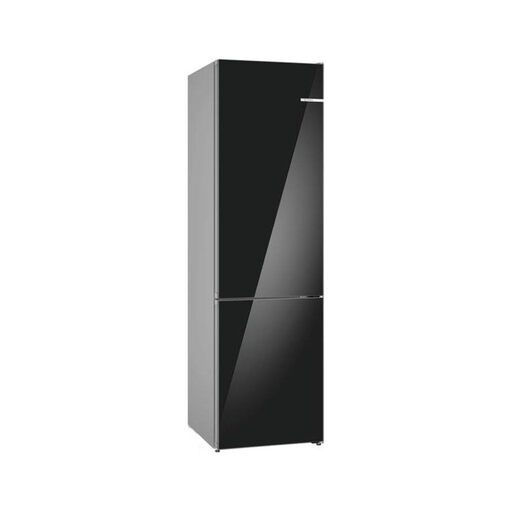 No image available
Bosch Serie 6 KGN39LBCF fridge-freezer, 363 l, class C
If you want to store several portions of stock, check that the appliance is suitable for freezing and how much drawer space will be free in your shared kitchen.
Freestanding; 363 l; energy efficiency class C.
Joybuy
 No image available
LG GBBSJ1CCPY fridge-freezer, 333 l, Total No Frost, class C
If several people share the freezer, compare the space you need for portions of stock with how the drawers are being used before you buy.
333 l; Total No Frost; energy efficiency class C.
Joybuy
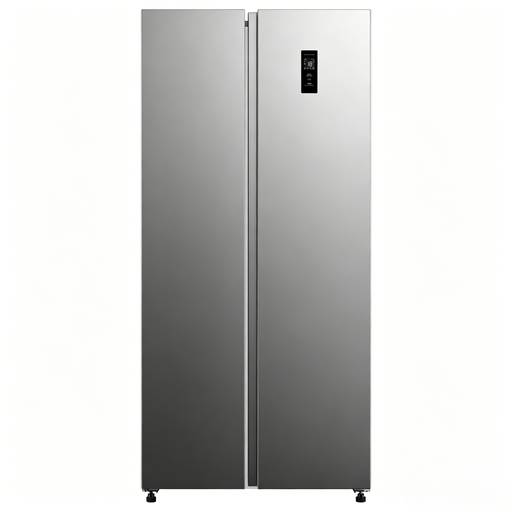 No image available
SONLU CC-520WE side-by-side, 444 l, 83 cm, class E
This design is only suitable if there’s enough width in the space you have available. Also check how much freezer space will be left for your portions.
444 l; 83 cm wide; 276 l fridge capacity and 168 l freezer capacity; No Frost; digital temperature control; 40 dB; energy efficiency class E.
Joybuy
 No image available
CHiQ JR263LGE fridge-freezer, 262 l, Low Frost, 54 cm
The stated width could be useful if space is limited, but make sure the available freezer capacity is still enough for your portions of stock.
262 l; 70/30; 54 cm wide; 176 cm high; Low Frost.
Joybuy
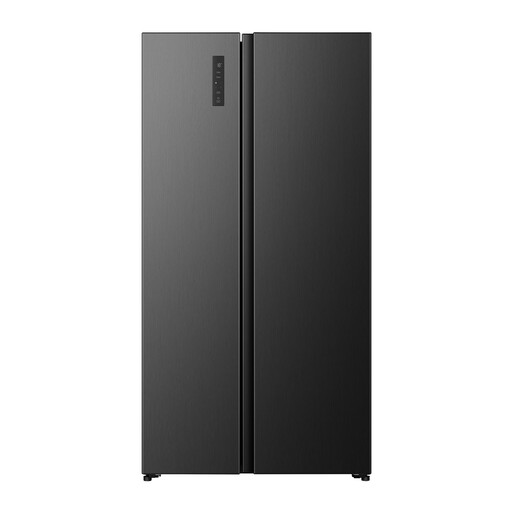 No image available
Hisense RS3P558NEFD side-by-side, 544 l, Total No Frost, 35 dB
If several people store frozen food, check how much space will actually be available for your portions of stock, even with the stated capacity.
544 l; Total No Frost; 35 dB; Fast Cooling.
Joybuy
Frequently asked questions
Can I freeze freshly cooked vegetable stock straight away in a large pan?
No. First divide larger quantities between several shallow containers. The Federal Institute for Risk Assessment recommends cooling leftovers to below +7 °C within a few hours. Then check whether the sealed portions will fit in a freezer compartment suitable for freezing fresh food.
How can I keep my portions of stock separate in a shared freezer?
Use suitable, sealed containers and label your portions. The Federal Centre for Nutrition recommends using suitable containers and labelling them. Agree with anyone else sharing the freezer which drawer you’ll use.
What does the EU energy label tell me when buying in Germany?
The European Commission states that household fridges and freezers have used the A to G scale since 1 March 2021. The label also gives information such as standardised annual energy consumption in kWh, capacity and noise emissions. Actual energy consumption also depends on installation and use.
Who is responsible if the appliance develops a fault, and what should I do with the old one?
For consumer purchases in the EU, Your Europe says you’re generally entitled to at least a two-year legal guarantee from the seller, starting from the date you receive the goods. This is separate from any additional manufacturer’s guarantee. In Germany, the Federal Ministry for the Environment says electrical waste must be taken to authorised collection or take-back points. Check how your old large appliance can be returned or collected before placing your order.


