If you’ll eat cooked portions within two to three days, make sure the fridge compartment is practical to use. For lunchboxes later in the week, you’ll need a four-star freezer compartment suitable for freezing food. The German Federal Institute for Risk Assessment (BfR) recommends eating leftovers within two to three days, while the Federal Centre for Nutrition recommends a four-star compartment for freezing food. Choose fridge and freezer capacities, dimensions and annual energy consumption to suit your supplies, and make separate arrangements to keep food chilled on the go.
Which option suits your needs?
Lunchboxes for the next few days
If you prepare small quantities of cooked beetroot, a practical fridge compartment and an easy-to-organise space for portions you’ll eat soon are key. The BfR recommends keeping leftovers chilled and eating them within two to three days.
Batch cooking and freezing individual portions
If you prepare several lunches in advance, you’ll need a freezer compartment suitable for freezing food, with drawers that fit the containers you plan to use. The Federal Centre for Nutrition recommends measuring out the amount you need and freezing food in individual portions.
Limited space and running costs to consider
If your kitchen and budget are limited, make sure the appliance dimensions, separate fridge and freezer capacities, and stated annual energy consumption suit your actual needs. The German consumer advice centre notes that larger fridges tend to use more electricity.
What should you look for when buying?
First decide whether you’ll eat the portions soon or freeze them for later in the week. Then make sure the compartment layout, dimensions and energy use are right for your household.
| Buying priority |
What should you check? |
Who is it most relevant to? |
| Safe chilling |
For perishable foods, the BfR recommends a temperature of 2 °C to no more than 7 °C. Check the temperature where you’ll store your food, and plan how to keep your lunchbox chilled while you’re out. |
If I prepare cooked portions for the next few working days, I want to keep them chilled in the fridge and on my journey to work. Safe chilling is the top buying priority for around 36 % of consumers. |
| Freezing portions |
The Federal Centre for Nutrition recommends a four-star compartment for freezing food. Choose a freezer capacity and drawers to suit the number of portions and the containers you use. |
If I prepare several lunches for later in the week, I want to be able to freeze individual portions rather than keep them in the fridge for more than a few days. Around 29 % of consumers put freezing meals in advance first. |
| Compartment layout and space |
Compare the fridge and freezer capacities separately, and check the height, width and depth, as well as the space needed to open the door. |
If space in my kitchen is limited, the appliance needs to fit while still holding the containers I actually use. The right layout and dimensions are the top buying priority for around 21 % of consumers. |
| Energy consumption |
For appliances with enough capacity, compare the annual consumption in kWh on the current EU energy label. The scale without plus signs has been used for fridges since 2021. |
When choosing an appliance that runs all the time, I want to compare its energy use with my actual needs and electricity tariff. Running costs are the top buying priority for around 14 % of consumers. |
Avoid mistakes when buying and storing food
-
Applying fresh beetroot storage times to cooked portions
Fresh whole beetroot and prepared leftovers have different storage guidance. The BfR recommends eating leftovers within two to three days.
If you’re planning cooked lunch portions for later in the week, freeze suitable individual portions in good time.
-
Treating three-star and four-star freezer compartments as the same
The Federal Centre for Nutrition distinguishes between storing food that is already frozen and freezing fresh food.
For freshly prepared portions, check that the specific freezer compartment has a four-star rating.
-
Comparing only total capacity or energy rating
A large total capacity doesn’t tell you whether the fridge and freezer compartments are divided in a way that suits you. According to the German consumer advice centre, larger appliances tend to use more electricity, so you should also compare their annual consumption in kWh.
First work out which containers you use, the compartment layout you need and the available space. Then compare the annual consumption of appliances with enough capacity.
-
Assuming model numbers that look alike refer to identical appliances
LG GBBS726AEV and LG GBBS727AEV have different model numbers. Similar names don’t prove that the features and product versions are the same.
Before ordering, check the full model number and the specifications for the exact version.
Brands and specific model examples
Bosch
The freestanding KGN39OCAF fridge-freezer is an example of a model with separately listed fridge and freezer capacities.
- For this model, Bosch lists a 260 l fridge capacity, a 103 l freezer capacity, Total No Frost, and alerts if the fridge door is left open or the temperature rises.
- At 203 cm high and 60 cm wide, it needs to fit your available space. These details about one model don’t demonstrate that the brand as a whole is superior.
Samsung
According to Samsung, the RB38C607AB1/EF model variant has a total capacity of 387 l, with separate fridge and freezer functions.
- Samsung lists Twin Cooling+ and No Frost+ for this variant, along with a width of 595 mm and a height of 2030 mm.
- The dimensions and total capacity don’t tell you whether the compartments will fit in every kitchen or suit the lunchboxes you plan to use.
LG
The GBBS726AEV, listed in Germany, is a fridge-freezer with adjustable interior fittings.
- LG lists a total capacity of 375 l, an A energy rating and annual consumption of 112 kWh for this model.
- The adjustable settings for the fridge zone for meat, fish or cheese don’t mean that cooked beetroot is guaranteed to keep for longer. GBBS726AEV and GBBS727AEV are different model numbers.
Siemens
The KG39N2IAF is a documented model example with a 260 l fridge capacity and a 103 l freezer capacity.
- Siemens lists annual consumption of 104 kWh, a noise level of 29 dB(A) and a four-star freezer compartment for this model.
- Siemens lists this specific model as no longer available, so these details aren’t a guide to an appliance currently on sale.
Miele
The KFN 4898 A-10 D is an example of a fridge-freezer with NoFrost and additional freshness features.
- These features relate to this specific model and shouldn’t be assumed to apply to other Miele appliances.
- Miele Germany lists the KFN 4898 A-10 D as no longer available.
Joybuy products for freezing individual portions
These fridge-freezers are for households that want to freeze cooked portions for later in the week. Compare freezer capacity, the split between fridge and freezer space, dimensions and annual energy consumption with your actual needs.
 No image available
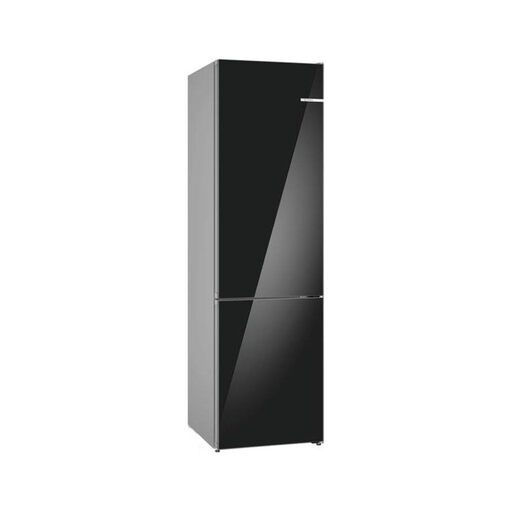
Bosch Serie 6 KGN39LBCF, 363 l, energy class C, black
The four-star freezer compartment is suitable for planning frozen lunch portions.
The product name lists a total capacity of 363 l and NoFrost. Product details also list adjustable shelves and a freezing capacity of 10 kg in 24 hours.
Joybuy
 No image available
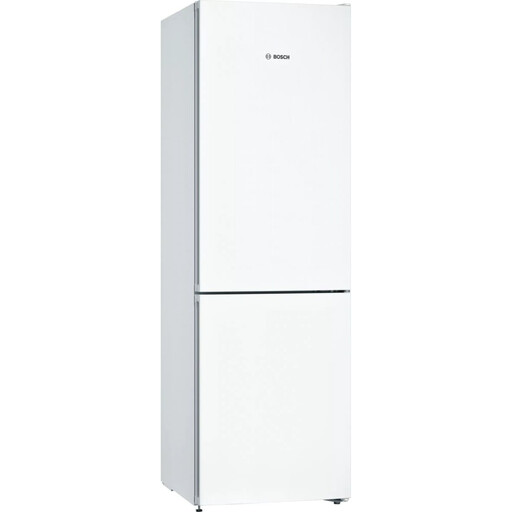
Bosch Serie 4 KGN36VWED, 326 l, energy class E, white
The four-star freezer compartment is a good option if you want to freeze lunch portions yourself.
Product details list a 237 l fridge capacity and an 89 l freezer capacity, along with adjustable shelves and freezer drawers. Other features listed include NoFrost, VitaFresh and SuperFreezing.
Joybuy
 No image available
LG GBBSJ1CCPY, 333 l, energy class C
The four-star freezer compartment and three freezer drawers are useful if you’re planning to freeze individual portions for later.
Product details list a 220 l fridge capacity and annual consumption of 169 kWh. Other features include Total No Frost, Fast Freezing and a reversible door.
Joybuy
 No image available
exquisit KGC5232-60-E-040C, 173 l, stainless steel look, silver
The compact total capacity may suit smaller households, as long as there’s enough fridge and freezer space for the portions you have in mind.
Product details list a 121 l fridge capacity and a 52 l freezer capacity, a four-star freezer compartment and two freezer drawers. The stated freezing capacity is 3,7 kg in 24 hours, and the door is reversible.
Joybuy
 No image available
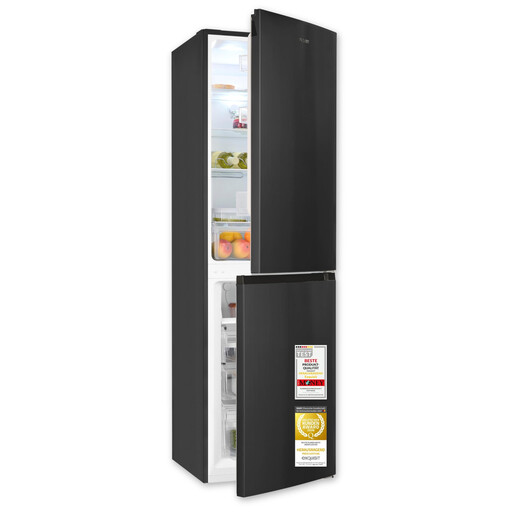
exquisit fridge-freezer, 247 l, No Frost, black
The four-star freezer compartment and three freezer drawers are useful if you want to freeze several portions for later.
Product details list a 165 l fridge capacity and an 82 l freezer capacity, four glass shelves and a Quick-Freeze function. The stated freezing capacity is 3,7 kg in 24 hours, and the door is reversible.
Joybuy
Frequently asked questions
Can I keep beetroot cooked on Sunday in the fridge until Friday?
That isn’t a suitable general plan for the week: the BfR recommends eating leftovers within two to three days. For later in the week, you could freeze individual portions appropriately. Remember to keep them chilled after defrosting and on your journey to work. This is food hygiene advice, not a legal time limit specifically for beetroot.
Is a three-star compartment enough to freeze freshly cooked portions?
The Federal Centre for Nutrition recommends a four-star compartment for freezing food. Three-star compartments are suitable for storing food that’s already frozen, so check the rating of the specific freezer compartment.
How should I pack and transport prepared portions?
The Federal Centre for Nutrition recommends using freezer-safe containers or bags, and freezing food in individual portions labelled with the contents and date. The BfR recommends keeping perishable food chilled when you’re out, too; your fridge at home won’t keep your lunchbox at the right temperature on your journey to work.
What should I check before positioning my fridge-freezer?
Check the external dimensions, space for the door to open and separate compartment capacities against your kitchen space and containers. Refer to the instructions for your chosen model for the required clearances and guidance on setting it up after transport.
How do I compare the energy use of fridge-freezers?
Compare the annual consumption in kWh on the current EU energy label for appliances that are the right size for your needs. The scale without plus signs has been used for fridges since 2021. To work out your own costs, you can use your electricity tariff.


