Choose a fridge with an easy-to-reach salad drawer and plenty of usable fridge space. Keep grapes in their packaging, unwashed, in the salad drawer until just before serving. If several people store ingredients and leftovers at different times, separate, accessible storage areas matter more than overall capacity alone. A freezer compartment takes up some of the capacity, and a larger appliance may also use more electricity.
Who should consider this?
Households that buy grapes in advance
If you don’t eat grapes straight away, you’ll need an easy-to-reach salad drawer and enough space to check the fruit regularly. The Federal Centre for Nutrition recommends keeping grapes in their packaging in the salad drawer and washing them just before eating.
Households with a shared cooking routine
If several people put ingredients and prepared food away at different times, usable fridge space and separate storage areas are important. The consumer advice centre recommends storing fruit and vegetables separately from other foods.
Households with limited space or an energy budget
When choosing between a fridge and a fridge-freezer, make sure the external dimensions, fridge capacity and annual energy consumption suit your actual needs. The consumer advice centre notes that larger appliances can use more electricity.
What should you look for when buying?
Fridge without a freezer compartment
A good fit if: you already have a freezer, or your shared cooking routine mainly involves fresh ingredients and chilled leftovers.
The trade-off: You’ll need a separate appliance for frozen food, which also takes up space and uses electricity.
Fridge-freezer
A good fit if: your household also needs to store frozen ingredients or portioned meals, and you don’t already have a separate freezer.
The trade-off: The freezer compartment takes up some of the total capacity, so compare fridge and freezer capacity separately. Larger appliances may use more electricity, as the consumer advice centre explains.
| What you need |
What to look for |
Who it matters to most |
| Keeping grapes fresh |
Check the size and accessibility of the salad drawer. The Federal Centre for Nutrition recommends storing grapes in their packaging and unwashed in the drawer. |
If I’m serving grapes later, I want to be able to reach them easily and check on them in the salad drawer. Around 29% of consumers put grape freshness first. |
| Organising fridge space for everyone |
Compare fridge capacity rather than just total capacity, and check for adjustable shelves and space for containers of different heights. |
If groceries and prepared food go into the fridge at different times, I need clearly organised storage areas that can be used separately. Around 29% of consumers prioritise organising fridge space for shared use. |
| Storing food separately |
Check that there’s room for covered containers and that drawers are easy to reach. The consumer advice centre recommends storing fruit and vegetables separately from other foods. |
If grapes, raw ingredients and cooked food are all in the fridge at the same time, I need separate, covered spaces for them. Around 24% of consumers put hygienic separation first. |
| Balancing energy use and space |
Compare the external dimensions, including the clearance needed around the appliance, as well as kWh/year and the separate capacity figures. The consumer advice centre notes that larger appliances may use more electricity. |
If my kitchen is short on space, I want an appliance with suitable external dimensions and no more fridge space than I need. Around 18% of consumers prioritise running costs and floor space. |
Common selection mistakes
-
Confusing total capacity with fridge capacity
With a fridge-freezer, only part of the stated total capacity is available for chilling. A larger appliance may also use more electricity, as the consumer advice centre explains.
Compare the fridge and freezer capacities separately with your shopping habits and cooking routine.
-
Assuming a freshness zone guarantees grapes will keep for longer
A dedicated compartment feature describes the appliance, not how long grapes are guaranteed to stay fresh. The condition of the fruit and how you store it still matter.
Keep grapes in their packaging and unwashed in the salad drawer. Check for damaged fruit and remove any condensation.
-
Assuming LowFrost and NoFrost are the same
Defrosting requirements can vary by model and freezer compartment. The name alone doesn’t tell you what you’ll still need to do.
Check the defrosting information for the full model number, specifically for the freezer compartment.
Depending on the model, you may still need to defrost the freezer compartment manually.
Brands to consider
Bosch
Bosch home appliances lists 260 l of fridge capacity, 103 l of freezer capacity, VitaFresh and flexible door shelves for its freestanding KGN39AIBT fridge-freezer.
- The stated capacities and shelves make it easier to compare the appliance with your own storage needs.
- The VitaFresh claims don’t prove that grapes last longer in independently conducted tests, and they don’t apply to every Bosch appliance.
Liebherr
For the CBNdgc 5723, Liebherr lists a Fruit & Vegetable-Safe, a separate compartment for meat and dairy products, and a freezer compartment.
- The dedicated compartments offer a practical way to store different types of food separately.
- These features are specific to this model, which is 201,5 cm tall. The manufacturer’s freshness claims are not based on independent grape testing.
LG
LG Germany lists two salad drawers, 138 kWh/year, 33 dB(A) and external dimensions of 595 × 2030 × 675 mm for the GBV7280BMB fridge-freezer.
- You can compare energy use, dimensions and salad drawers with your available kitchen space and storage needs.
- The claim of more even cooling comes from the manufacturer; it doesn’t prove that grapes will last for a specific length of time.
Samsung
For the RB38C607AS9/EF, Samsung Germany lists 387 l of total capacity, Twin Cooling+ and a dedicated freshness compartment.
- The information helps you compare total capacity and the listed compartment features.
- Features vary by model, and they don’t independently prove that grapes will last longer.
Joybuy products for shared shopping
The Joybuy products shown here are fridge-freezers. Compare fridge and freezer capacity separately, and check that the listed features suit the way you plan to store fresh ingredients.
 No image available
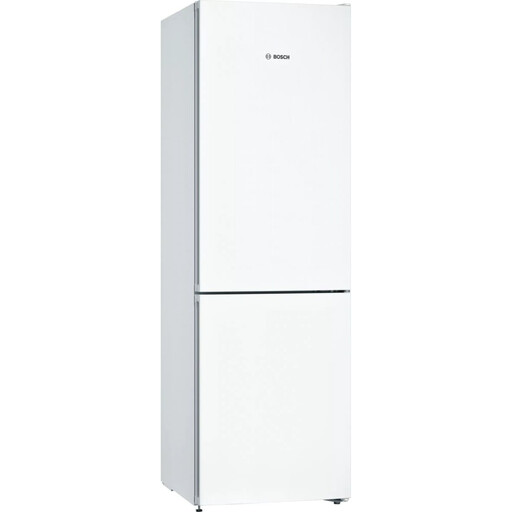
Bosch Serie 4 KGN36VWED fridge-freezer, NoFrost, VitaFresh, 326 l, energy class E, white
For households that want to store frozen food as well as fresh ingredients; compare the stated capacity with your actual needs.
Total capacity: 326 l. Energy class E. NoFrost and VitaFresh are listed in the model name.
Joybuy
 No image available
LG GBBSJ1CCPY fridge-freezer, 333 l, No Frost, LinearCooling™, DoorCooling+™, energy class C
An option for households that want to keep chilled ingredients and frozen food in one appliance; check how much fridge space you can use for your groceries.
Total capacity: 333 l. No Frost, LinearCooling™ and DoorCooling+™ are listed in the model name.
Joybuy
 No image available
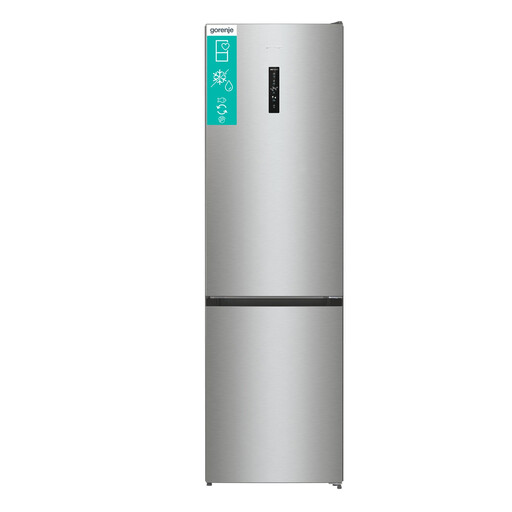
Gorenje NRK620CA2XL4 fridge-freezer, 331 l, CrispZone, Convert FreshZone, NoFrost Plus, energy class C, 35 dB
For households that want to store fresh and frozen food together; check that the compartment layout suits your ingredients and containers.
Total capacity: 331 l. CrispZone, Convert FreshZone and NoFrost Plus are listed in the model name, along with a noise level of 35 dB.
Joybuy
 No image available
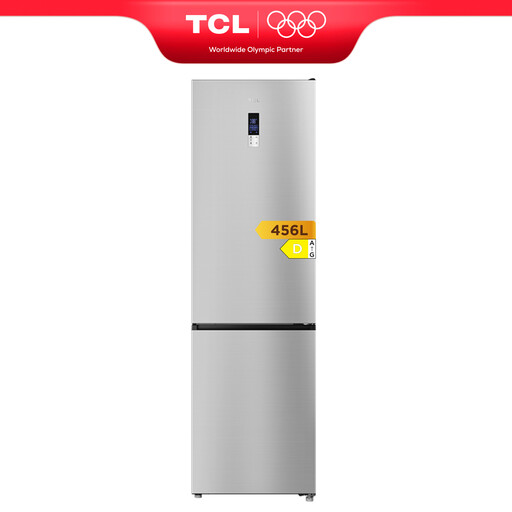
TCL MEGA SPACE Series RP593BLD0 fridge-freezer, 456 l, fridge 314 l, freezer 142 l, Total No Frost, Variable Zone, energy class D
For a shared cooking routine involving fresh ingredients and frozen food; the separate capacity figures help you compare the appliance with your needs.
Total capacity: 456 l; fridge: 314 l; freezer: 142 l. Total No Frost and Variable Zone are listed in the model name.
Joybuy
 No image available
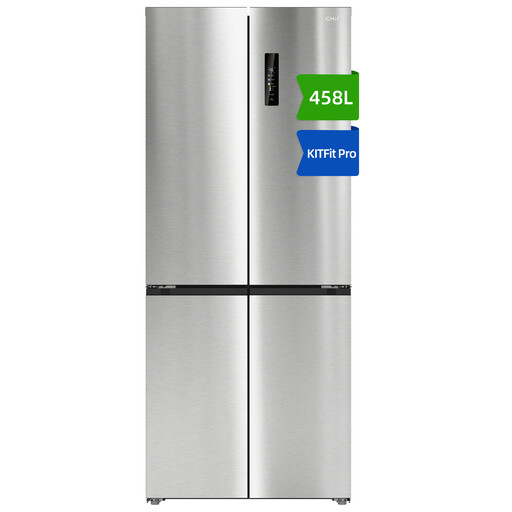
CHiQ JR460WSE cross-door fridge-freezer, 458 l, fridge 300 l, freezer 158 l, No-Frost, KITFit Pro, energy class E
An option if you want to store fresh and frozen groceries together; remember to allow enough space around the appliance when planning your kitchen layout.
Total capacity: 458 l; fridge: 300 l; freezer: 158 l. The description specifies a 4 mm side clearance for the KITFit Pro flush design; check the required installation dimensions and clearances.
Joybuy
Frequently asked questions
When should I wash grapes, and how long will they keep in the fridge?
Wash grapes just before eating and keep them in their packaging in the salad drawer. The Federal Centre for Nutrition says they may stay fresh for up to 14 days, but this isn’t a guarantee for every bunch. Check for damaged grapes regularly.
How should I store cooked food if several people use the fridge?
Keep leftovers covered and separate from raw food. The Federal Institute for Risk Assessment recommends cooling them to below +7 °C within a few hours and eating them within two to three days. You can divide larger quantities between shallow dishes.
How can I compare the energy use of different fridges?
Compare the energy labels and kWh/year figures for appliances with a similar purpose and capacity. You’ll also need your own electricity tariff to work out the cost. The consumer advice centre notes that larger appliances can use more electricity.
Which energy label applies when buying a fridge in Germany?
Household refrigeration appliances covered by the rules are subject to EU energy-labelling and product information requirements. The current scale runs from A to G; A+++ belongs to the old scale. Compare the current label and the energy use of the specific appliance, as recommended by EU rules and the German Environment Agency.
Can I put my old fridge in the household rubbish?
No. Electrical appliances must be collected separately and taken to an authorised collection point, as the German Federal Ministry for the Environment explains. Check with the retailer whether they offer a take-back or collection service for your purchase.


