Lunch-preppers
If you prepare dressing for several working days, you’ll need room for sealed portions alongside your other food. Make separate plans for keeping it chilled on your commute.


Choose a fridge based on the space available for sealed dressing containers and other food, as well as the temperature you can actually achieve where you plan to store them – not on a freshness feature alone. A model without a freezer compartment will do if you don’t need to store frozen food; if you do, compare fridge and freezer capacities separately. The German Federal Institute for Risk Assessment recommends 2 °C to no more than 7 °C for highly perishable foods. If your lunch needs to be kept chilled, you’ll also need to plan for cooling it while you’re out.
If you prepare dressing for several working days, you’ll need room for sealed portions alongside your other food. Make separate plans for keeping it chilled on your commute.
You want to chill dressing and your regular groceries, but you’ll need to make sure the appliance’s dimensions and door opening suit the space you have available.
If you regularly store frozen food alongside fresh lunch ingredients, assess the fridge and freezer compartments separately.
If you’re choosing a fridge for homemade dressing to go with weekday lunches, focus on the feature that matters most to you.
| Purchase priority | What to check when buying | Who is this particularly important to? |
|---|---|---|
| Suitable cooling | Check the temperature where you plan to store the dressing, and make sure there’s room for sealed containers. | If I’m preparing delicate dressing, I want to check the temperature where the jar will actually sit and keep the portions covered. Around 36% of consumers would put suitable cooling first. |
| Space for containers and kitchen dimensions | Measure your containers and shelves; check the appliance’s external dimensions and door opening, as well as the space available for a built-in model. | When space is limited, I need to fit jars alongside my regular groceries without the fridge or its door hitting the furniture. Around 29% of consumers would consider space and fit first. |
| Annual energy consumption | Compare kWh/year for models of a similar type and size, and check the current EU energy label. | When choosing an appliance for continuous use, I want to compare the stated annual consumption for a suitable size. Around 21% of consumers would prioritise running energy use. |
| Additional freezer capacity | Work out how much freezer space you regularly need; check fridge and freezer capacity, as well as the space the appliance will take up, separately. | If I regularly store frozen food, I need enough freezer space without having to move the dressing out of the fridge compartment. Around 14% of consumers would consider freezer capacity first. |
A drawer described as being for fruit and vegetables doesn’t tell you how long prepared dressing will keep.
Take the ingredients and the actual temperature where it’s stored into account, and keep the container covered.
Dressing belongs in the fridge compartment. Whether a freezer compartment is useful depends on the rest of your household’s food storage needs.
First decide whether you regularly need freezer space, then compare fridge and freezer capacities separately.
A freezer compartment can take up extra space without being necessary for storing dressing.
According to the German Environment Agency, the old and new energy label classes can’t be directly converted from one to the other.
Compare the current EU energy label and the stated kWh per year for each model.
According to the German Federal Institute for Risk Assessment, inadequate cooling in transit can encourage the growth of harmful bacteria.
If your ingredients need to be kept chilled, plan how to keep them cool until you eat, regardless of your household appliance.
You may need a separate cooling solution for the journey.
These examples relate to the models and appliance types listed; their features and dimensions won’t apply to every appliance from the same manufacturer.
The KTR15NWEB and KGN39VXBT are examples of a tabletop fridge without a freezer compartment and a fridge-freezer respectively.
The Rc 1400 Pure is a freestanding tabletop fridge for households that mainly need fridge space.
The KI31RADD1 is a built-in fridge designed to fit a suitable kitchen recess.
The BSSA210K4SN is a built-in option with a small freezer compartment.
The freestanding VKS 15623-1 M is a compact model without a freezer compartment, for those who don’t need one.
Here you’ll find fridges and fridge-freezers for keeping lunch ingredients chilled. Whether you need extra freezer space depends on how much frozen food you store.
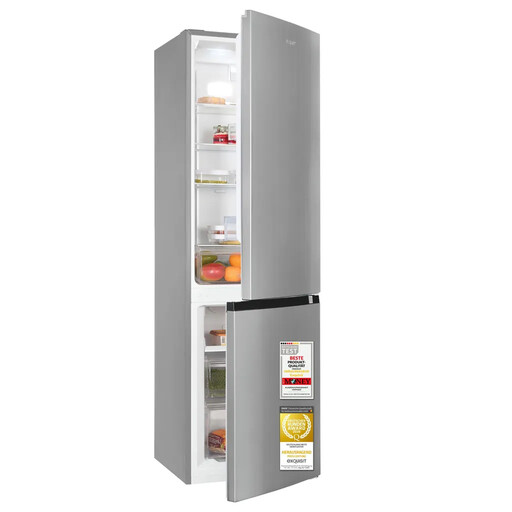 No image available
A good fit if you need freezer space as well as room for chilled lunch ingredients; for dressing, it’s the fridge compartment that matters, not the total capacity.
253 l total capacity, energy class C and 39 dB according to the product name. The freezer compartment holds 71 l.
The product name specifies No Frost cooling and freezing, as well as electronic temperature control.
 No image available
Could suit a smaller kitchen if you need both fridge and freezer space; check that the fridge compartment is large enough for your containers.
The product name and details list 173 l of total usable capacity and three glass shelves. The freezer compartment holds 52 l.
The product name specifies a freestanding design and a 4-star freezer compartment.
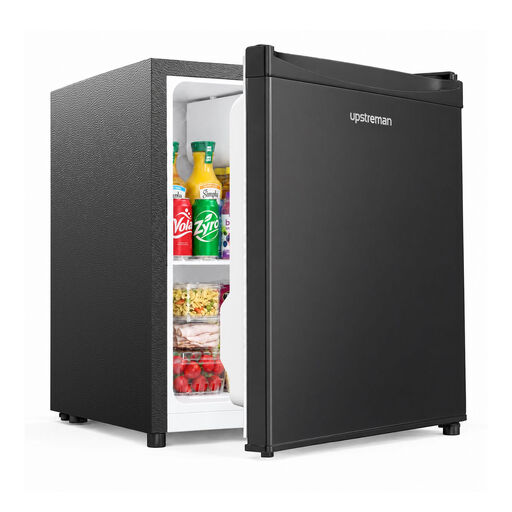 No image available
Described as a compact tabletop appliance for smaller spaces; check in advance that your containers and shelves will fit.
46 l capacity and five temperature settings, with a stated range of 0–12 °C.
The product name also lists 41 dB, a reversible door and adjustable feet. Check the actual temperature where you store highly perishable ingredients.
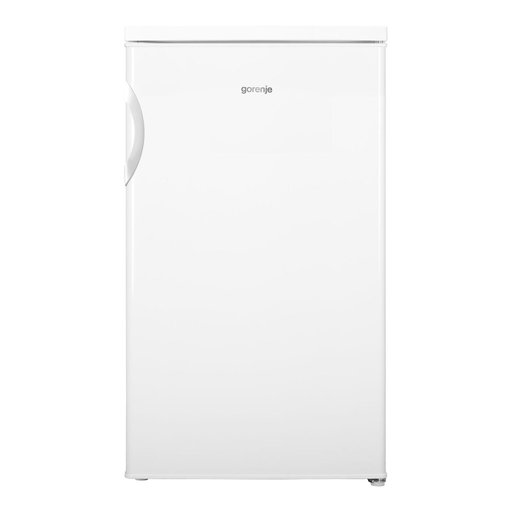 No image available
An option if you don’t need a freezer compartment and want fridge space for dressing and other food.
This model is listed with 133 l of fridge capacity, five shelves and 72 kWh/year; its energy class is D.
The product details state that the door is reversible.
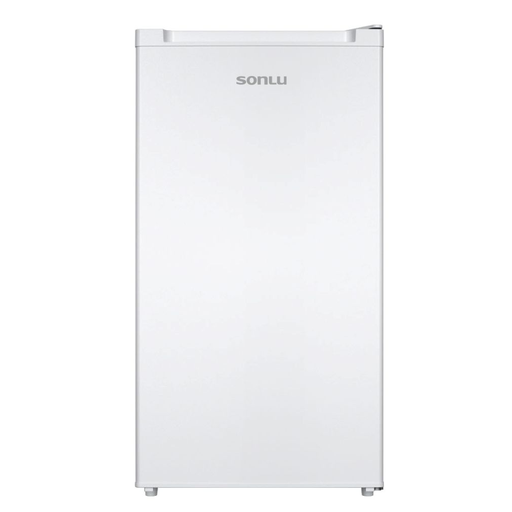 No image available
The compact fridge compartment could work well for prepared portions; check that your containers and other groceries will fit together.
The product name lists an 82 l capacity and energy class E.
The product name describes a single-door model. The product details list mechanical temperature control, interior lighting and a vegetable compartment.
The German Federal Institute for Risk Assessment recommends keeping highly perishable foods in the fridge at 2 °C to no more than 7 °C. The ingredients and the actual temperature where the dressing is stored are key, so check the spot where you keep it.
You can’t assume it will keep for five days in every case: the German Federal Centre for Nutrition says that simple homemade salad dressing in a screw-top jar will keep in the fridge for two to three days. The recipe and ingredients can affect how long it keeps, and extra care is needed if it contains raw egg.
No. If the dressing needs to be kept chilled, the German Federal Institute for Risk Assessment advises keeping it cool while you’re out, too. A household fridge can’t keep it at the same temperature once you take it out.
Check that the recess dimensions, appliance dimensions and door fixing all match the specific model before choosing a built-in fridge. For example, Siemens specifies a recess 1025 mm high and 560 mm wide for the KI31RADD1.
For models of a suitable size, compare the stated kWh per year and the current EU energy label. According to the German Environment Agency, old A++ ratings can’t be directly converted to the current scale.