Who is this fridge-buying guide for?

Households that freeze vegetables in portions

If you want to chill leafy greens before preparing them and then freeze them in portions, you’ll need enough space in the salad drawer as well as a suitable freezer compartment. The Federal Centre for Nutrition recommends storing leafy greens in the salad drawer.

Households with an existing freezer

If you already have enough freezer space, you can choose your new fridge based on the amount of refrigeration space you need and a suitable spot for delicate leaves, without assuming you need another freezer compartment. For fresh lettuce, the Federal Centre for Nutrition recommends keeping it in the salad drawer for a short time.

Households with limited space or an energy budget

Here, the usable fridge and freezer space needs to suit both your available floor space and your running costs. The consumer advice centre points out that larger fridges tend to use more electricity.

Which buying criteria matter for leafy greens and frozen portions?

Fridge plus existing freezer

A good fit if: you already have enough freezer space and mainly need the new appliance to keep leafy greens chilled until you’re ready to prepare them.

Consider: you’ll need to check the capacity and suitability of your existing freezer separately.

Fridge freezer

A good fit if: you want one appliance to handle both temporary storage and freezing.

Consider: compare the fridge and freezer space separately with your needs, rather than looking only at the total capacity.

What matters What to look for when buying Who is it important to?
Keeping greens fresh until you’re ready to prepare them Check the usable space, humidity control and ease of cleaning of the salad drawer. Remove condensation regularly. If I want to store delicate leaves until I’m ready to prepare them, I need a practical salad drawer that’s easy to check and clean. Around 33% of consumers put freshness first.
Freezing portions in the same appliance Check the freezer capacity and whether it’s suitable for the fresh portions you plan to freeze. Consider the type of vegetable and how you’ll use it later. If I want to freeze prepared portions in the same appliance, the freezer compartment needs to suit the amount I plan to store. Around 27% of consumers prioritise freezing in the appliance.
Usable space and room to fit the appliance Compare fridge and freezer capacity separately, along with the external dimensions and the space needed to open the door. If my kitchen and available space are limited, I want enough room for chilled food and, if needed, frozen food, without losing sight of the dimensions. Around 20% of consumers focus mainly on finding the right fit.
Ongoing electricity use For appliances that fit your available space, compare annual energy consumption and usable capacity on the EU energy label. The consumer advice centre points out the link between appliance size and energy use. If I want to keep ongoing energy use down, I compare the annual consumption of appliances that are the right size for my needs. Around 20% of consumers give ongoing electricity costs top priority.

Mistakes to avoid

  • Assuming all leafy greens are suitable for freezing

    A suitable fridge won’t change how a particular vegetable behaves after thawing. The Federal Centre for Nutrition points out that lettuce goes mushy.

    Before freezing, check which types you actually want to use and whether they’re suitable.

  • Assuming a humidity-controlled drawer means you don’t need to check your greens

    A freshness drawer doesn’t guarantee a particular storage time for every type of leafy green. The consumer advice centre recommends removing condensation.

    Check the leaves regularly, remove any damaged pieces and keep the drawer clean.

  • Comparing only total capacity or the energy efficiency rating

    Total capacity doesn’t show how much space is available for chilled and frozen food. The consumer advice centre also points out the link between appliance size and electricity use. The European Commission lists fridge and freezer capacities separately, along with annual energy consumption, on the energy label.

    Work out your fridge and freezer needs separately, then compare suitable appliances by their stated usable capacities and annual energy consumption.

A guide to relevant brands and model ranges

Bosch

Bosch lists the KGN39VLCT as a freestanding fridge freezer with a 260 l fridge compartment and a 103 l freezer compartment.

  • Bosch lists VitaFresh XXL, separate cooling circuits and Total No Frost among its features.
  • These features don’t prove how long every type of leafy green will keep, based on independent testing. At 203 cm tall, the appliance also needs to fit your available space.

Samsung

Samsung says the RB34C605CB1/EF is 185 cm tall, has a total capacity of 344 l and features Humidity Fresh+.

  • Samsung lists No Frost+ and freshness drawers among its features.
  • The advertised savings from AI Energy Mode are based on the manufacturer’s own tests under specific conditions, so they don’t represent typical household energy use.

Liebherr

The CBNdgc 5723 Plus combines a BioFresh salad drawer with a NoFrost freezer compartment.

  • Liebherr describes the model as featuring a Fruit & Vegetable-Safe with higher humidity.
  • The feature description isn’t an independently verified storage time for every type of leafy green. The external dimensions of 201,5 × 59,7 × 67,5 cm also need to suit the space available.

Siemens

The KG39NEIAF is a freestanding fridge freezer with 260 l of fridge space and 103 l of freezer space.

  • Siemens lists an energy efficiency rating of A, a noise level of 29 dB(A) and external dimensions of 203 × 60 × 66,5 cm for this model.
  • These are product specifications, not a guarantee of your actual energy use or how noisy the appliance will seem in every kitchen.

Fridges for leafy greens and frozen portions on Joybuy

The Joybuy products below include fridges to use with a separate freezer, as well as fridge freezers for storing and freezing food in one appliance.
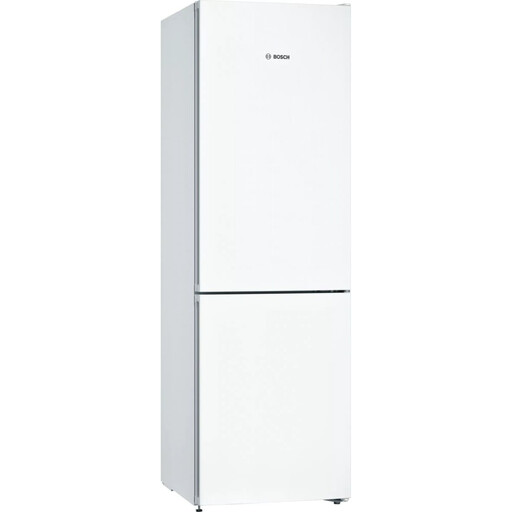
Bosch Serie 4 KGN36VWED fridge freezer

Bosch Serie 4 KGN36VWED fridge freezer

For households looking to combine refrigeration and freezing in one appliance.

326 l total capacity; energy efficiency rating E; VitaFresh and NoFrost.

Joybuy
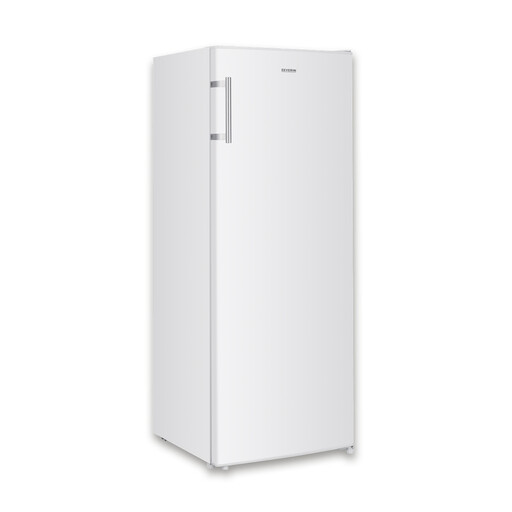
Severin VKS 8817 fridge with salad drawer

Severin VKS 8817 fridge with salad drawer

For households with a separate freezer that mainly need fridge space for leafy greens.

242 l capacity; energy efficiency rating D; annual energy consumption of 83 kWh; 143 cm tall.

Joybuy

LG GBBSJ1CCPY fridge freezer

LG GBBSJ1CCPY fridge freezer

For households looking to chill vegetables and freeze portions in the same appliance.

333 l total capacity; energy efficiency rating C; Total No Frost; LinearCooling™.

Joybuy
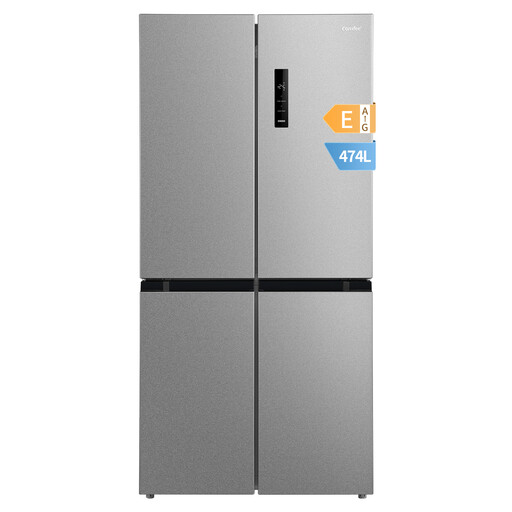
COMFEE RCF470LS2EU(E) four-door fridge freezer

COMFEE' RCF470LS2EU(E) fridge freezer

For households looking to store chilled and frozen food in one appliance.

474 l capacity; energy efficiency rating E; four doors; salad drawer with three temperature settings.

Joybuy
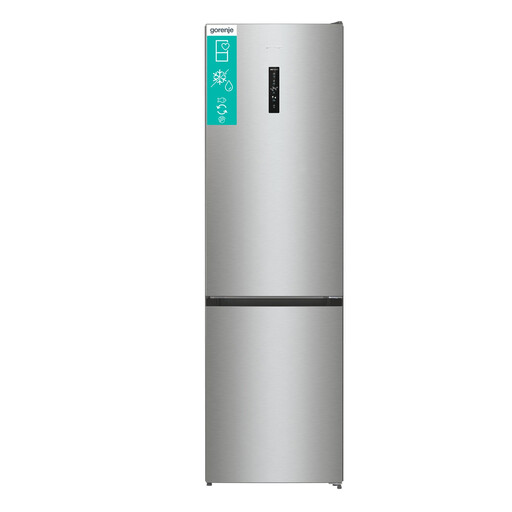
Gorenje NRK620CA2XL4 fridge freezer

Gorenje NRK620CA2XL4 fridge freezer

For households looking for a humidity-controlled drawer and freezer compartment in one appliance.

331 l total capacity; energy efficiency rating C; CrispZone with humidity control; FastFreeze; 35 dB.

Joybuy

Frequently asked questions about storage and choosing an appliance

Can I freeze any leafy greens after storing them in the fridge?

No, not all types are suitable. The Federal Centre for Nutrition points out that lettuce goes mushy after thawing. For suitable vegetables, it recommends washing them before freezing and, where appropriate, briefly blanching them. The type of vegetable and how you plan to use it later are key.

How should I store delicate lettuce until I’m ready to prepare it?

For fresh lettuce in the salad drawer, protected in a container, bag or damp cloth, the Federal Centre for Nutrition gives a storage time of around one to two days. Remove any damaged leaves and regularly clear away any condensation.

What does the EU energy label tell me when buying a fridge?

According to the European Commission, the label shows details including the efficiency class, annual electricity consumption, fridge and freezer capacities, and noise emissions. Compare these details for appliances with enough usable space for your needs. The label doesn’t guarantee the amount of energy an appliance will use in your home.

What are my rights if my fridge is faulty?

For goods bought in the EU from a trader, the official EU consumer information states that you have a legal guarantee of at least two years from the date you receive them. This is separate from any additional manufacturer’s guarantee. These EU rules don’t apply to purchases from private individuals.