Lunchbox meal-preppers
You cook lentils for the next few working days and need space for sealed portions, as well as a fridge temperature you can keep an eye on.


For pre-cooked lentils, choose a fridge with enough usable chilled space for sealed lunchboxes. If you want to store portions for later in the week, a freezer compartment may also be useful. The BfR recommends eating refrigerated leftovers within two to three days; a freshness system does not mean cooked lentils can be stored safely for longer. Keep your lunchbox cool while you’re out and check the temperature where you store it.
You cook lentils for the next few working days and need space for sealed portions, as well as a fridge temperature you can keep an eye on.
You cook a larger batch and want to freeze some portions for later in the week, rather than relying on fridge storage for the whole week.
You need an appliance that fits your kitchen while still offering enough room for lunchboxes and other food.
First decide whether you’ll only be chilling portions for the next few days or also freezing some for later. Then compare the fridge space, layout and dimensions with what works for your day-to-day needs.
| What you need | What to look for | Who is this important to? |
|---|---|---|
| Safe chilling | Check the temperature controls and how easy it is to reach the shelves for sealed containers. Check the temperature where you’ll actually store them. | If I’m storing cooked portions for the next few working days, I want to keep an eye on the temperature where they’re stored. Around 29% of consumers say safe chilling is their top buying priority. |
| Space for lunchboxes | Look at the fridge capacity separately from the freezer capacity, and check that the shelves fit your containers. | If I need to fit several lunchboxes and other food in the fridge at the same time, I need a layout that works for me, not just a large total capacity. Around 23% of consumers say space and organisation are their top buying priority. |
| Freezing portions for later | Check the freezer capacity and the defrosting information for the exact model. LowFrost and No Frost are not the same. | If I want to save portions for later in the week, I need freezer space and want to factor in how much room it takes up. Around 18% of consumers say freezing food for later is their top priority. |
| Energy use | Once you’ve found a suitable capacity, compare the annual energy consumption in kWh on the EU energy label. | If the appliance is running all the time, I want to estimate its annual energy use for the size I need. Around 18% of consumers place the most importance on running costs. |
| Space for installation | Check the external dimensions, door opening and required clearances against the space where you plan to install it. | If my kitchen is short on space, the appliance needs to fit its intended spot while still leaving enough room inside for the portions I need. Around 12% of consumers say fitting the available space is their top priority. |
The BfR recommends eating refrigerated leftovers within two to three days. Information about freshness drawers does not mean cooked lentils can be stored safely for longer.
Keep lunch portions for the first few days in the fridge, and consider freezing portions for later in the week.
In a fridge freezer, some of the stated capacity is taken up by the freezer compartment. The EU energy label lists fridge and freezer capacities separately.
Compare the fridge capacity and shelves with your containers, rather than looking only at the total number of litres.
For the Siemens and Bosch models mentioned, “Never defrost again” is listed as “No”. By contrast, the manufacturer states that the Hisense model mentioned has Total No Frost.
If avoiding defrosting is important to you, check the details for the exact model number.
The BfR advises keeping perishable food cool while you’re out, too. Chilling it at home won’t automatically keep it cool until you eat it.
Remember to plan how you’ll keep it cool between taking it out of the fridge and your lunch break.
The KG39EAICA and KG39EAWCA models are freestanding fridge freezers with separate fridge and freezer capacities, making them useful options to compare.
According to Bosch, the freestanding KGE39AICA fridge freezer has 249 l of fridge space and 94 l of freezer space.
The RB440N4AFA is a freestanding fridge freezer for households that need freezer space as well as room to chill food.
The TS190030N under-counter fridge is an example of a compact appliance with no stated freezer compartment.
The freestanding fridge range also includes appliances without a dedicated freezer compartment, which may suit households with a separate freezer.
These product examples are fridge freezers for households that want to chill lunchboxes and freeze extra portions for later.
 No image available
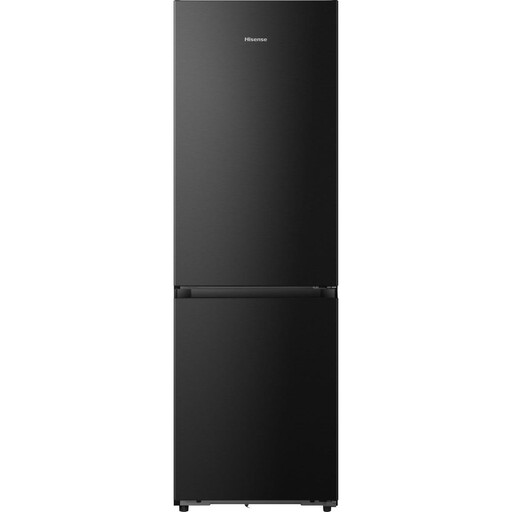
For lunchboxes in the fridge and portions you want to freeze for later.
It has 220 l of fridge space and a separate 113 l freezer compartment, with three fridge shelves. It is listed with Total No Frost, energy class C and an annual energy consumption of 169 kWh.
The door is reversible.
 No image available
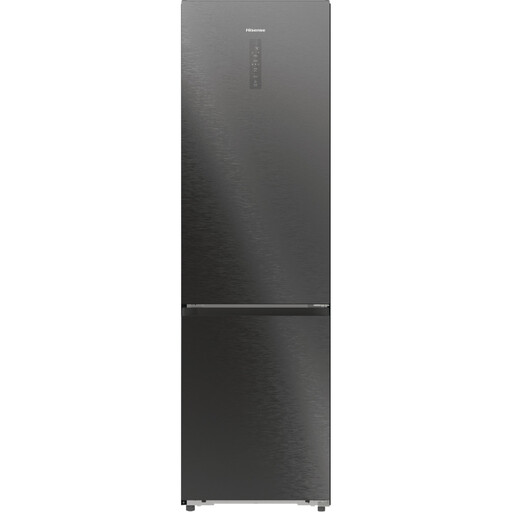
For lunch portions in the fridge and extra food in the separate freezer compartment.
It has 190 l of fridge space, a separate 25 l chill compartment and 115 l of freezer space. It is listed with four glass shelves, NoFrost Plus, a digital temperature display and energy class C.
The door is reversible.
 No image available
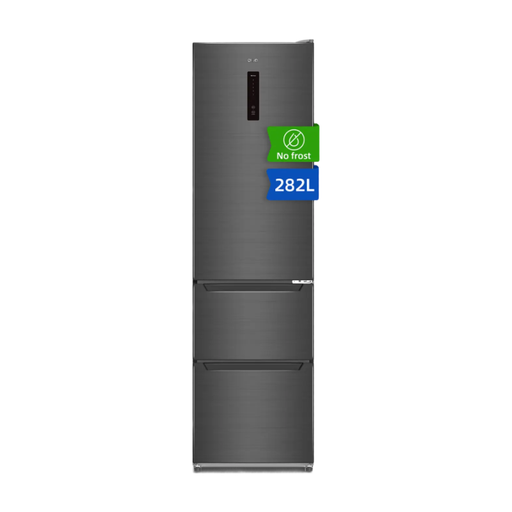
For several lunchboxes in the fridge and portions you want to freeze for later in the week.
It has 283 l of fridge space and a separate 130 l freezer compartment. It is listed with Total No Frost and electronic controls.
The product description suggests temperatures of +4 °C for the fridge and −18 °C for the freezer.
 No image available
For lunchboxes in the designated fresh-food compartment and extra supplies in the freezer.
The fresh-food compartment is listed as 197 l. The specifications also include No Frost, energy class E, a width of 54 cm and a height of 192 cm.
When installing it, allow for the additional ventilation and door-opening clearances set out in the manual.
 No image available
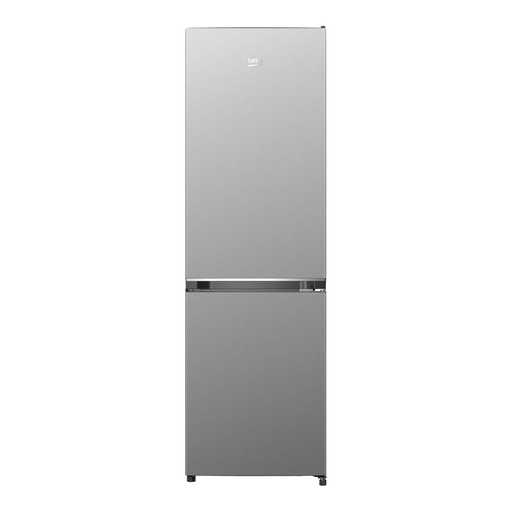
For lunchboxes and other fresh food in the fridge, with frozen portions stored separately.
It has 180 l of fridge space and 70 l of freezer space. It is listed with No Frost, energy class D and four adjustable glass shelves.
The door hinges are reversible, and the temperature can be controlled using an external display.
The BfR recommends keeping leftovers in the fridge and eating them within two to three days. For lunches later in the week, you could freeze individual portions; choosing a particular fridge does not extend this recommendation.
No. The BfR advises keeping perishable food cool while you’re out, too. So plan how you’ll keep it cool between taking it out of the fridge and eating it.
Check that the external dimensions and door opening work for the space you have, and follow the clearance requirements in the manual for your specific model. Once it’s running, check the temperature where food is stored. If the fridge is not cooling as well as it should, the Verbraucherzentrale recommends checking the door seal, among other things.
For appliances with a suitable capacity, compare the annual kWh figure on the EU energy label. To estimate your own costs, multiply the annual energy use by your electricity price in euros per kWh. Purchase and, where applicable, delivery costs are separate.