
Lieferung heute & morgen

Qualitätsgarantie

Willkommens-Angebote freischalten: KOSTENLOSE Lieferung | Bis zu 80 % RABATT | Kostenlose 30-Tage-JoyPlus-Testphase
App herunterladen
A full fridge is often a cluttered one. Food gets lost in the back corners, expiry dates are forgotten, and space runs out. A well-designed fridge organisation system can solve this problem. It not only provides a clearer overview and quicker access but also helps to reduce food waste.
This guide introduces different types of fridge organisers and offers practical advice on what to look for when choosing. Our goal is to provide you with an informed basis for making your food storage more efficient and structured.
Before you decide on a fridge storage container, a few practical considerations will help. The right organisers make optimal use of the available space and adapt to your specific needs.
Most fridge bins are made from durable plastics like polystyrene (PS), PET, or acrylic. These materials are food-safe and have the advantage of being transparent. A clear fridge bin allows you to see the contents at a glance without having to pull out each container. Pay attention to the manufacturer's care instructions. Many organisers are not dishwasher-safe and should be washed by hand to ensure the material's longevity.
Measure the internal dimensions of your fridge shelves (width, depth, height) carefully before buying organisers. This ensures the bins will fit perfectly. Stackable bins are particularly efficient as they make use of the often-wasted vertical space in the fridge. A modular system, consisting of various elements like a fridge bottle holder, a dedicated egg container, and universal bins, can be flexibly adapted to your shopping habits.
Small details can significantly enhance usability. Integrated handles make it easier to pull out the bins, especially when they are fully loaded. Some models feature slanted fronts or special openings for easier access. For fruit and vegetables, organisers with vents are beneficial as they promote air circulation and can help maintain freshness.
Here is a selection of different organiser types designed for specific uses within the fridge.
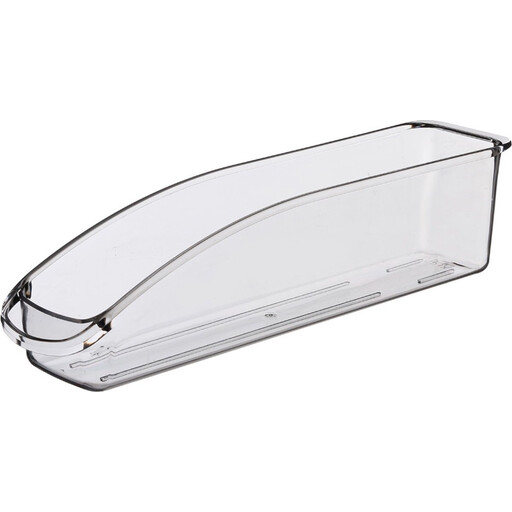
Why it stands out This narrow storage bin is specially designed to fill gaps and organise small items. With a width of just 7 cm, it fits perfectly next to larger containers or in the fridge door. The slanted design and integrated handle allow for easy access to the contents.
Advantages
Who is it for? This bin is ideal for anyone looking to sort small bottles, drink cartons, spreads, or individual vegetables like carrots or cucumbers. It's excellent for bringing order to otherwise hard-to-use areas of the fridge.
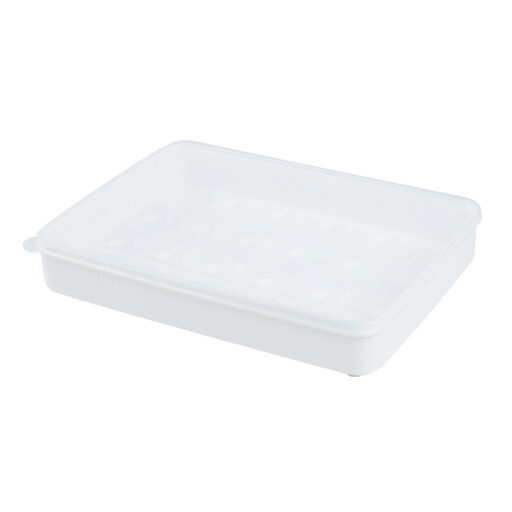
Why it stands out This egg container from JORDAN&JUDY offers a sturdy and hygienic alternative to standard egg cartons. Each container holds 24 eggs, protecting them securely from impacts. The set includes three containers that are stackable thanks to their sturdy lids, making efficient use of vertical space.
Advantages
Who is it for? This egg container is an excellent choice for families, keen bakers, or anyone who buys and stores eggs in larger quantities. It provides protection and a clear overview, and is more durable than supermarket cardboard packaging.

Why it stands out This fridge bottle holder is a clever solution for storing wine or drink bottles horizontally without them rolling around. Its key feature is its stackability: multiple holders can be placed securely on top of each other to create a vertical storage structure.
Advantages
Who is it for? This holder is perfect for anyone who regularly chills bottles and wants to maximise fridge space. It prevents bottles from rolling around and creates stable, organised storage. According to the manufacturer, no more than 3 units should be stacked on top of each other.
The products featured here cover specific needs. If you are looking for other sizes, shapes, or features to build your custom fridge organisation system, you can find a wider selection of solutions.
Discover more models and variations in our Plastic Organiser Tray category.
A proven approach involves four steps:
Yes, organisers designed for food storage are made from plastics like PET, PP, or polystyrene, which are tested and certified as safe for food contact. They are typically free of plasticisers like BPA. Look for the relevant labels from the manufacturer.
In theory, yes, but dedicated fridge organisers offer significant advantages. They are designed for the low temperatures inside a fridge, are less likely to crack, and are often transparent for a better overview. Furthermore, their designs (e.g., stackability, handles, ventilation) are specifically tailored to the requirements of a refrigerator.