Families preparing a bowl of fruit in advance
You cut up fruit before the meal and need somewhere reliably cool to keep a covered bowl until it’s time to serve.


Choose a fridge with enough space in the fridge compartment for a covered bowl of fruit alongside your other food. Keep cut fruit chilled until you’re ready to eat it. A fridge without a freezer compartment is a good choice if you don’t need freezer space, while a fridge-freezer gives you both. Compare fridge capacity, external dimensions and annual energy consumption separately. There’s no need to replace a working appliance just for one family meal.
You cut up fruit before the meal and need somewhere reliably cool to keep a covered bowl until it’s time to serve.
You need room for other food as well as the bowl of fruit. Usable fridge space and shelves that suit your needs are therefore important.
You’re weighing up the space available, whether you need a freezer and ongoing electricity consumption before choosing a new appliance or fridge-freezer.
A good choice if: you already have freezer space or don’t need any, and shelf space for the bowl and meal is your priority.
The trade-off: there’s no freezer compartment in the same appliance.
A good choice if: you need freezer space as well as fridge space for everyday family life.
The trade-off: the freezer compartment takes up some of the appliance’s total capacity. Check that its size suits your actual needs.
A good choice if: the covered bowl fits and the appliance can reliably maintain the temperature you need.
The trade-off: have the appliance checked if it’s damaged or the door doesn’t close properly.
The German Federal Institute for Risk Assessment recommends storing perishable foods at between 2 °C and 7 °C. What matters is the temperature at the actual storage location.
| Priority | What to check when buying | Who it matters most to |
|---|---|---|
| Cooling and storage | Check that the cooling temperature can be adjusted and there’s room for a covered bowl. | If I cut the fruit salad in advance, I want to keep it covered and chilled until mealtime. Around 36% of consumers put safe storage in the meantime first. |
| Usable space | Compare the fridge compartment’s capacity and shelf height with the dimensions of your bowl. | I need a shelf that can accommodate a large bowl and the rest of the food, not just a high overall capacity in litres. Around 29% of consumers prioritise usable fridge space. |
| Energy consumption | Compare annual consumption in kWh and the fridge and freezer capacities on the energy label. | I don’t want to pay for more space and energy consumption than our household needs. For around 21% of consumers, ongoing electricity costs are the main concern. |
| Appliance dimensions and freezer compartment | Check the external dimensions and the space needed to open the doors; consider how much freezer space you actually need. | If kitchen space is limited or I don’t need a freezer compartment, the appliance design needs to suit. Around 14% of consumers focus mainly on the space available or whether to have a freezer compartment. |
With a fridge-freezer, some of the total capacity is taken up by the freezer compartment. A capacity in litres also doesn’t tell you whether a particular covered bowl will fit on a shelf.
Measure your container and check the fridge compartment capacity and shelf layout of the specific model.
Freshness drawers or lighting for fruit and vegetables don’t prove that ready-cut fruit salad can be stored safely for longer.
Keep the salad covered and chilled. Consider extra features only for the uses they’re actually designed for.
Size and energy consumption are linked, so extra capacity should suit your household’s regular needs.
Before choosing a fridge-freezer, compare your freezer needs with the annual energy consumption shown on the energy label.
The KGN39VXAT is a freestanding fridge-freezer for households that need freezer space as well as room for chilled food.
The RBsfd 5221 Plus BioFresh is a freestanding fridge without an integrated freezer compartment, suitable, for example, for households with a separate freezer.
The B7RCNE408HG is a freestanding fridge-freezer with a freezer compartment at the bottom.
The RB38C607AS9/EF is a fridge-freezer with separate cooling functions.
This Joybuy selection includes freestanding fridge-freezers for households that need space for a covered bowl and other food, as well as a freezer compartment.
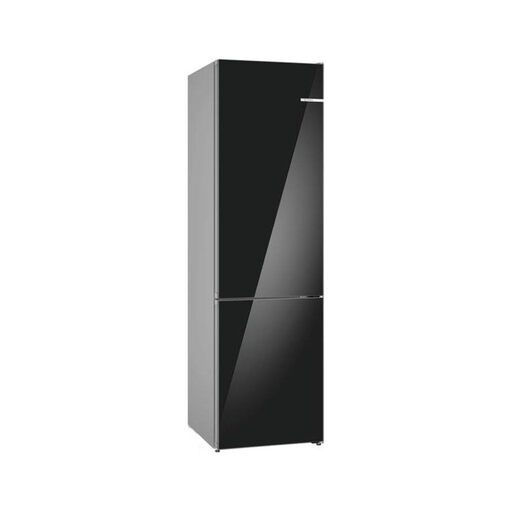 No image available
The separately specified fridge compartment has room for a bowl and other food, and three shelves are height-adjustable.
Fridge capacity: 260 l; freezer capacity: 103 l.
Energy class C; 162 kWh/year; dimensions: 203 × 60 × 66,5 cm.
 No image available
The separately specified 262 l fridge compartment has room for food and a covered bowl.
Energy class A; 112 kWh/year; dimensions: 59,7 × 203 × 67,5 cm.
The product description mentions adjustable temperature control and a FRESHConverter+ zone.
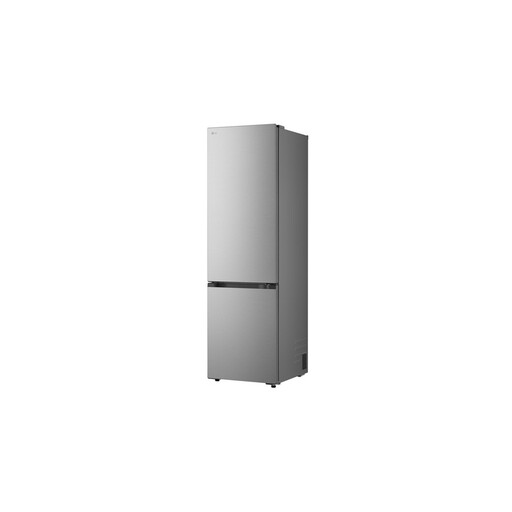 No image available
The fridge capacity is listed separately from the freezer compartment, with 262 l to plan around for a bowl and other food.
Freezer capacity: 113 l; energy class C; 175 kWh/year.
The description mentions electronic temperature control and a FRESHConverter+ zone with selectable temperature settings.
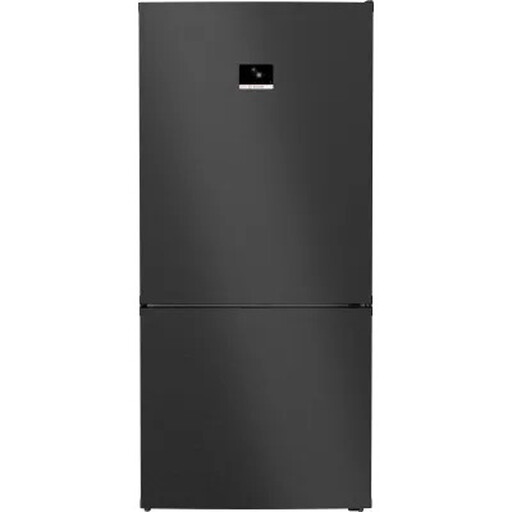 No image available
With 419 l of fridge space, this model has room for a bowl and other food. Check first that its width will fit the space available.
Freezer capacity: 202 l; energy class B; 172 kWh/year.
Dimensions: 186 × 86 cm. According to the description, the freezer compartment can be converted into extra fridge space.
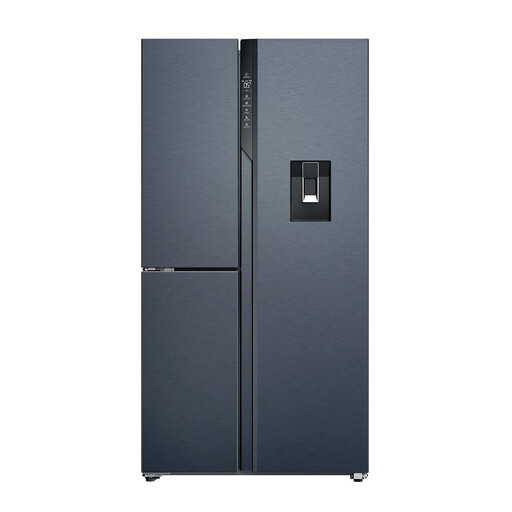 No image available
The separately specified fridge capacity of 384 l has room for a large bowl and other food.
Freezer capacity: 189 l; energy class E; approximately 302 kWh/year.
Dimensions: 905 × 1775 × 707 mm. According to the description, the Switch Zone can be set as additional fridge or freezer space.
No. The German Federal Institute for Risk Assessment recommends keeping cut fruit, especially pieces of melon, in the fridge until you’re ready to eat it, in a closed container or fully covered. For perishable foods, it recommends a fridge temperature of between 2 °C and 7 °C; the temperature at the storage location is what matters.
Yes, if young children, pregnant women or people with weakened immune systems will be eating the fruit salad. The German Federal Institute for Risk Assessment notes that they face a higher risk of illness. It advises at-risk groups to avoid pre-cut fruit and vegetable products, or to prepare thoroughly washed fresh ingredients shortly before eating.
Compare the stated annual consumption in kWh and the size of the appliance. The consumer advice centre recommends measuring the energy consumption of an existing fridge and calculating the equivalent for a year. This makes it easier to compare running an old appliance with a new one.
For household refrigeration appliances covered by the scheme, the energy label gives information including the efficiency class, annual consumption, the capacity of the fridge and freezer compartments, and noise emissions. The European Commission describes classes A to G, while EPREL provides model information for comparison. The label doesn’t guarantee the temperature on a particular shelf.
Old electrical appliances must not go in household rubbish; they need to be taken to an authorised collection point. Germany’s Electrical and Electronic Equipment Act sets out the conditions under which retailers must take appliances back. Before ordering, check whether collection can be arranged when your new appliance is delivered and what the service includes.