
Lieferung heute & morgen

Qualitätsgarantie

Willkommens-Angebote freischalten: KOSTENLOSE Lieferung | Bis zu 80 % RABATT | Kostenlose 30-Tage-JoyPlus-Testphase
App herunterladen
A well-organised fridge not only saves time during meal prep but also helps reduce food waste. However, the market for fridge storage solutions can be overwhelming, with many products overpromising and underdelivering. As your Joybuy Product Recommendation Officer, I'm here to help you identify the common pitfalls and make an informed decision.
Many people invest in storage containers only to find they create more problems than they solve. Watch out for these three widespread issues:
To avoid these problems, you should check three core parameters before buying. These determine the durability, safety, and functionality of your fridge storage.
The material is the foundation of any good storage solution. Look for clear labelling:
A good seal is crucial for keeping food fresh longer and preventing odour transfer.
For maximum fridge organisation, a thoughtful design is essential.
Instead of a one-size-fits-all recommendation, we've identified products tailored to specific user profiles.
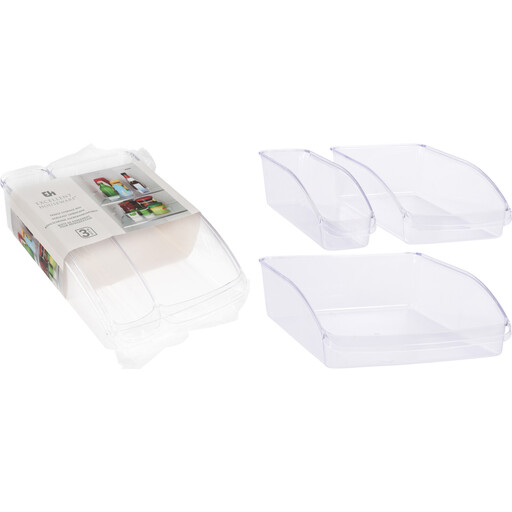
Why This Fits Their Persona: Ideal for anyone who wants to quickly and easily create zones in their fridge. Perfect for grouping yoghurts, vegetables, or sauce bottles to instantly improve visibility.
These organisers bypass the problem of inefficient design. Instead of trying to seal everything, they focus on a single task: creating structure. The transparent polystyrene (PS) is robust and clear for this purpose.
Maximises visibility and access to food items. The set of three boxes allows for a flexible, modular organisation system.
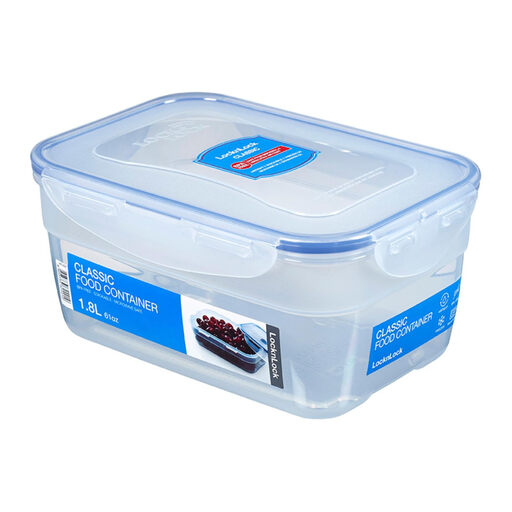
Why This Fits Their Persona: For those who prep meals in advance and need to store or transport them securely. The containers are freezer- and microwave-safe and completely leak-proof.
This set solves the problem of poor seals. The patented 4-sided locking system with a silicone gasket provides a proven airtight and watertight seal. The durable, BPA-free polypropylene won't become brittle.
Reliably leak-proof, even for liquids. Versatile use (freezer to -20°C, microwave to 120°C, dishwasher-safe). The stackable design saves space.
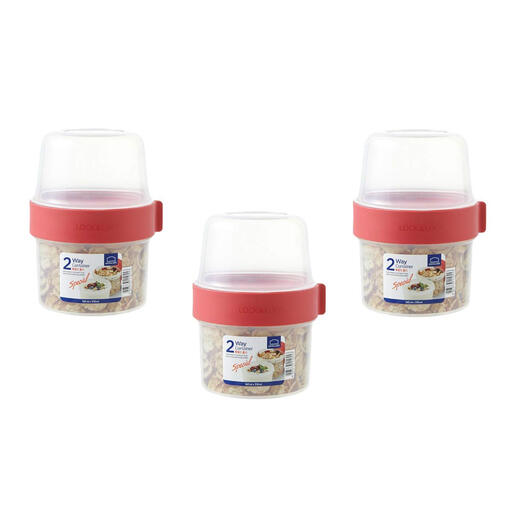
Why This Fits Their Persona: Perfect for breakfast or snacks on the go. The 2-in-1 system keeps yoghurt and granola, or vegetables and dip, separate and fresh until you're ready to eat.
This product solves a specific design problem: the mixing of wet and dry ingredients. The secure screw-top lid with a divider insert is a thoughtful solution that standard containers don't offer.
Smart 2-in-1 design with separate compartments (360 ml + 310 ml). Compact, leak-proof, and ideal for carrying in a bag. Microwave- and dishwasher-safe.
We have compiled a complete, up-to-date list of products that fully meet these strict selection criteria and rigorous safety standards.
No, not all plastics are designed to withstand the high temperatures and harsh detergents of a dishwasher. Always check the manufacturer's instructions. PET containers should generally be washed by hand, while many products made from PP (Polypropylene) are dishwasher-safe, often with the recommendation to place them on the top rack.
BPA (Bisphenol A) is a chemical compound that was used in the manufacturing of certain plastics. It is suspected of being harmful to health as it can leach into food. The "BPA-free" label guarantees that the food container was made without this substance, making it safe for food contact.
Wash the containers and lids with warm, soapy water immediately after use. For stubborn odours, it can help to fill the container with a mixture of water and vinegar or baking soda and let it sit for a few hours. Furthermore, a truly airtight storage container with a high-quality silicone gasket will prevent strong-smelling foods like onions or cheese from spreading their aroma throughout the fridge in the first place.