
Lieferung heute & morgen

Qualitätsgarantie

Willkommens-Angebote freischalten: KOSTENLOSE Lieferung | Bis zu 80 % RABATT | Kostenlose 30-Tage-JoyPlus-Testphase
App herunterladen
A fridge freezer is one of those appliances that runs every day and often stays in the kitchen, utility room or garage for many years. Even so, many shoppers make their choice mainly based on price or appearance. This can later lead to unnecessarily high electricity costs, unsuitable dimensions or insufficient storage space.
The Joybuy Product Recommendation Officer selection therefore focuses on clear, practical criteria: usable capacity, energy consumption, noise level, defrosting system, door hinge and intended location.
A large fridge may look spacious from the outside, but that does not automatically mean it offers plenty of usable interior space. The split between the fridge and freezer compartments is what matters. A model with around 250 litres may be enough for two people, while families or house shares often need more fridge and freezer capacity.
Before ordering, you should also check the niche width, appliance height and depth. With a freestanding fridge, you also need to allow space for opening the door, ventilation and safe positioning. Even if the width is suitable, an appliance may still protrude significantly beyond the kitchen units.
The terms Low Frost, MinFrost and No Frost describe different systems. No Frost removes moisture from the freezer compartment, largely preventing ice from forming. With Low Frost or MinFrost systems, occasional manual defrosting may still be necessary.
If you want to avoid maintenance, look specifically for the term No Frost fridge freezer or for an automatic defrosting system in the technical specifications.
The EU energy label ranges from A to G. The class should always be considered alongside the annual consumption in kilowatt hours. A very large appliance with class D may use more electricity overall than a smaller class E fridge freezer.
For a fair comparison, check:
A class D energy-efficient fridge or a class E energy-efficient fridge may be a sensible choice depending on its size and features. The letter alone is not decisive: what matters is the balance between storage capacity and consumption.
A traditional fridge freezer with the freezer compartment at the bottom makes it easier to reach frequently used food in the fridge section. A separate freezer is a better option if you want to store supplies, frozen meals or seasonal food.
A side-by-side fridge usually provides wide interior compartments and a clear separation between the fridge and freezer sections. A multi-door fridge with four doors can make it easier to access individual zones, but it requires more floor space. Large households may want to consider models with a total capacity well above 400 litres. Also measure the route into your home, including doorways, corridors and staircases.
The fast-freezing function temporarily lowers the temperature further when larger quantities of fresh food are added. This means existing frozen food is exposed to the higher temperature caused by loading for less time. Once the food has frozen, the function should be switched off again in accordance with the operating instructions.
A fast-cooling function is useful for large shops or drinks. However, it does not replace correct storage: hot food should be allowed to cool before being placed inside, and air circulation within the appliance must not be blocked.
The noise level is stated in dB(A). Values of around 35 to 40 dB(A) can be particularly relevant for open-plan kitchens, living areas or home offices. A quiet fridge will not be completely silent, as the compressor, fan and automatic defrost cycles may still be audible.
Pay attention to:
A reversible door hinge is especially practical in small kitchens, holiday homes and utility rooms.
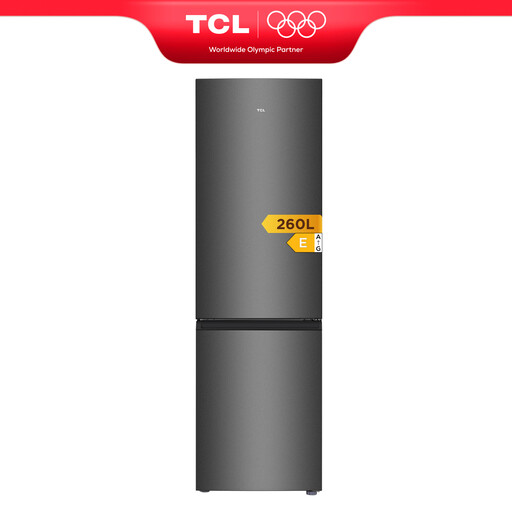
Why this product suits this profile: With a total capacity of 260 litres, including 187 litres of fridge space and 73 litres of freezer space, this model is suitable for couples and smaller households. Its 55 cm width can be helpful where space is limited.
The stated dimensions and separate usable capacities make planning easier. The reversible door hinge supports flexible positioning.
260 litres of usable capacity, LED lighting, Fresh Zone, three freezer drawers and energy efficiency class E.
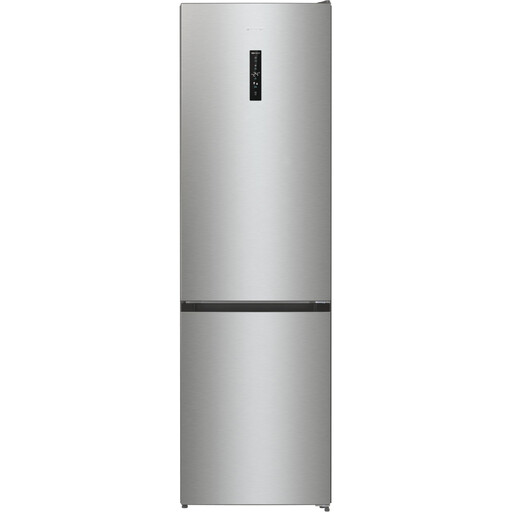
Why this product suits this profile: The combination of 331 litres of usable capacity, No Frost and multiple temperature functions is aimed at households that shop regularly and want organised storage.
No Frost reduces the need for manual defrosting. The specifications of 35 dB, 60 cm width and reversible doors help with precise kitchen planning.
Energy efficiency class C, 235 litres of fridge capacity, 96 litres of freezer capacity, plus Super Cool and Fast Freeze.
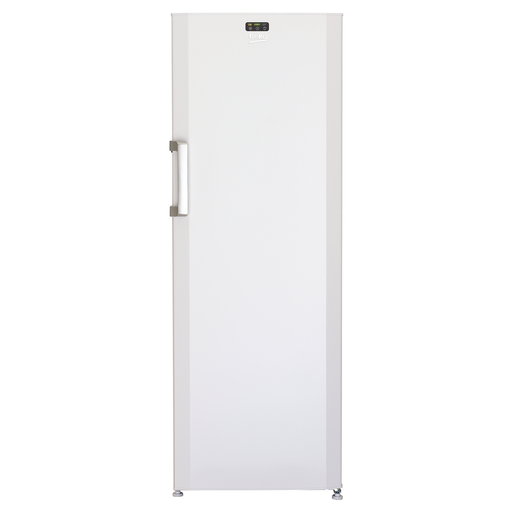
Why this product suits this profile: As a separate 244-litre freezer, this appliance is aimed at families, bulk shoppers, house shares and anyone needing additional freezer space.
Five drawers and two flap compartments keep everything organised. The reversible door hinge makes positioning easier, while MinFrost can reduce ice build-up.
244 litres of usable capacity, fast-freezing function, temperature alarm, 36 dB and energy efficiency class E.
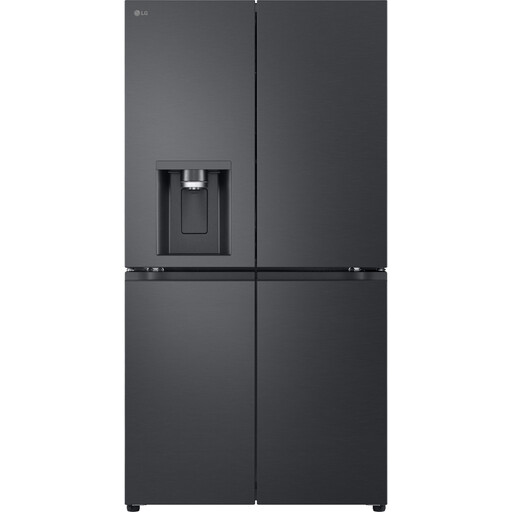
Why this product suits this profile: A total capacity of 645 litres provides plenty of room for families and frequent large shops. The four-door design keeps the fridge and freezer compartments clearly separated.
Before buying, check the dimensions: approximately 91 cm wide, 73 cm deep and 179 cm high. No Frost reduces the need for defrosting.
384 litres of fridge capacity, 261 litres of freezer capacity, automatic defrosting, ice and water dispenser, plus 40 dB.
We have put together a complete, regularly updated list of products that fully meet these strict selection criteria and the safety regulations applicable in the EU.
As a general guide, couples can plan for around 200 to 300 litres. Depending on their shopping habits, families and house shares often need 300 litres or more. If you regularly batch-cook or store frozen supplies, you should consider the freezer capacity separately.
The actual lifespan depends on usage, ventilation, cleaning and the strain placed on the compressor. Positioning the appliance on a level surface, keeping ventilation openings clear and cleaning the door seal regularly all help support proper operation. If you notice unusual noises, damaged cables or unusual heat, stop using the appliance and contact customer service.
For a rough calculation, multiply the stated annual consumption in kWh by your electricity price per kWh. Actual consumption may vary depending on room temperature, how full the appliance is, how often the door is opened and the settings used. Always compare annual consumption, usable capacity and appliance size together.