
Lieferung heute & morgen

Qualitätsgarantie

Willkommens-Angebote freischalten: KOSTENLOSE Lieferung | Bis zu 80 % RABATT | Kostenlose 30-Tage-JoyPlus-Testphase
App herunterladen
A fridge-freezer needs to work reliably every day, make efficient use of space and suit your shopping habits. Even so, many buyers focus first on appearance or eye-catching extra features. This can lead to common mistakes: the appliance does not fit through the kitchen door, the freezer compartment is too small for the household or energy consumption is higher than expected.
The stated appliance dimensions are not the only measurements that matter. Many models also need clearance from the wall and neighbouring furniture so that heat can escape. With a freestanding fridge-freezer, you should also check whether the door can be opened fully.
Before buying, measure:
A compact model measuring 54 or 55 cm wide may be suitable for a small kitchen. A side-by-side fridge-freezer, on the other hand, often requires considerably more space. The CHiQ JR318WSD, for example, is listed as 59.5 cm wide, 185.5 cm high and 63.5 cm deep. Its depth may mean that the appliance protrudes beyond the kitchen units.
A large total capacity does not automatically mean that the storage space is divided in a practical way. For couples, a fridge with a freezer compartment and around 200 to 260 litres may be sufficient. Families often need a larger freezer section, particularly if they regularly freeze food for later.
Pay attention to the separate figures for:
A fridge-freezer with the freezer compartment at the bottom often provides easy access to the fridge section. A top-freezer model, by contrast, may be a sensible choice where ceiling height is limited or the kitchen has a more traditional layout.
No Frost, water dispensers, app controls and ice makers can be useful, but they are not essential for every household. Depending on the model, a fridge with a water dispenser may require a water tank or a permanent water connection. You should also consider cleaning the dispenser and the possibility of having to replace a filter.
According to the relevant product information, No Frost fridges eliminate the need to manually defrost the freezer compartment. Low Frost appliances reduce ice build-up but still require occasional defrosting. The key consideration is therefore not just the feature name, but the specific equipment included with the model you choose.
The EU energy label scale ranges from A to G. However, you should always consider the energy class alongside the stated annual consumption. A larger appliance may use more electricity than a smaller model, even if it has a good energy rating.
Compare:
According to the product information, the homeX CFSN2531C-B uses 141 kWh per year, with a total capacity of 253 litres and energy class C. The Gorenje RF4142PW4 is listed at 176 kWh per year, 206 litres and energy class E. These figures should be understood as values measured under the relevant test conditions and should not be treated as identical to the actual consumption of every household.
A quiet fridge is particularly important in open-plan kitchens, studio flats and kitchen-diners. Several of the models considered here are listed at around 37 to 40 dB(A). Actual perceived noise also depends on the flooring, distance from the wall and the compressor’s operating condition.
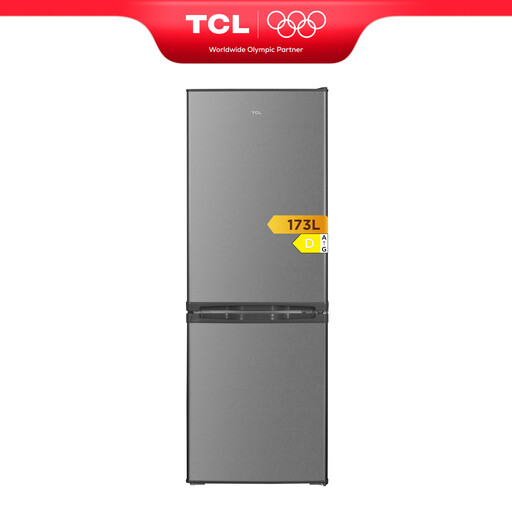
Why this product suits this profile: According to the product information, this model offers 121 litres of fridge capacity and 52 litres of freezer capacity with energy class D. Its width and internal layout make it suitable for smaller households with modest storage needs.
Adjustable shelves and a separate salad drawer help you organise the limited interior space. Check the exact external dimensions before buying.
LED interior lighting, height-adjustable shelves and a separate freezer compartment.
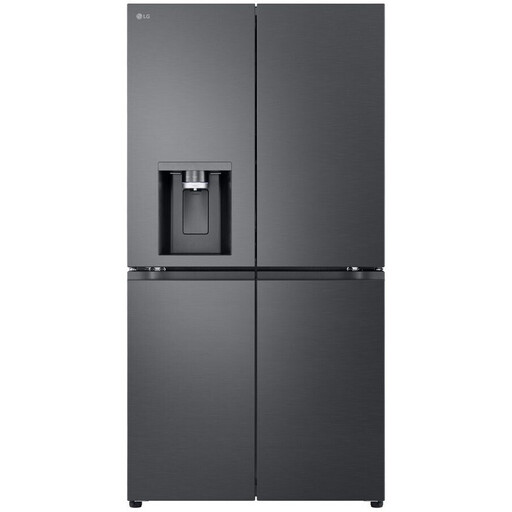
Why this product suits this profile: According to the product information, it provides 384 litres of fridge capacity and 261 litres of freezer capacity. No Frost, multiple drawers, app compatibility, and an ice and water dispenser are designed for households seeking a high level of convenience.
The separate capacity figures show whether the large total storage space actually matches your preferred freezer layout. Allow for an installation width of more than 90 cm.
645 litres of total capacity, automatic defrosting according to the product information, and multiple convenience features.
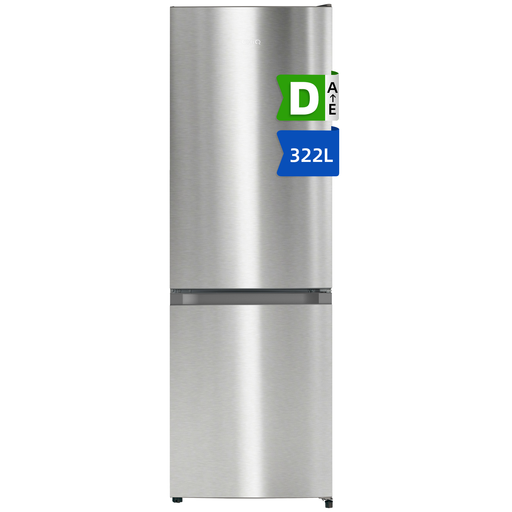
Why this product suits this profile: According to the product information, this appliance offers 226 litres of fridge capacity and 96 litres of freezer capacity, energy class D and a noise level of 37 dB(A). Its stated climate range of 10 to 43 °C may be relevant for suitable utility rooms.
The No Frost feature reduces maintenance. At the same time, depth and door-opening clearance are explicitly identified as points to check.
322 litres of capacity, Total No Frost, a fast-freeze function and a stated noise level of 37 dB(A).
We have put together a complete, regularly updated list of products that fully meet these strict selection criteria and the safety regulations applicable in the EU.
As a general guide, couples can plan for around 200 to 300 litres. Families often need more, particularly when storing lots of fresh food and frozen goods. The right size depends on shopping frequency, how much food you store and the space available for the appliance.
Its lifespan depends on factors including usage, maintenance, ventilation and the compressor. Regularly cleaning the door seals, leaving sufficient clearance from the wall and ensuring the appliance is level can help support reliable operation. If you notice unusual noises or the appliance is no longer cooling properly, stop using it and consult the manual or contact customer service.
For a realistic estimate, multiply the stated annual consumption in kilowatt-hours by your electricity tariff. This gives you an approximate figure. Ambient temperature, how fully the appliance is loaded, the temperature setting and how often the door is opened all affect actual consumption.