
Lieferung heute & morgen

Qualitätsgarantie

Willkommens-Angebote freischalten: KOSTENLOSE Lieferung | Bis zu 80 % RABATT | Kostenlose 30-Tage-JoyPlus-Testphase
App herunterladen
A fridge-freezer needs to do more than simply cool and freeze your food. The right dimensions, a well-organised interior, low noise levels and energy consumption suited to your household are all important considerations. Focusing only on capacity or eye-catching extra features can mean overlooking crucial details.
The litre capacity alone says little about how practical the layout is. For example, a fridge-freezer may offer plenty of space in the freezer compartment, while leaving very little room in the fridge for bottles, fresh food and supplies. Always check the separate figures for fridge capacity and freezer capacity.
For couples, a fridge-freezer between around 200 and 270 litres is often sufficient. Depending on their shopping habits, families are more likely to need 300 litres or more. A 250-litre fridge may be enough for two or three people, while a 300-litre fridge provides extra room for larger shops.
No Frost uses air circulation and automatic defrosting to prevent ice from forming in the freezer compartment. Low Frost produces less ice, but the appliance still needs to be defrosted manually from time to time. Appliances with manual defrosting require even more maintenance.
A No Frost fridge-freezer is therefore not automatically more energy-efficient. The specific energy efficiency class and annual consumption in kilowatt-hours provide a more meaningful indication of running costs.
A low decibel rating is particularly relevant in open-plan kitchens, studio flats or kitchen-diners. However, the figure is measured under standardised conditions. Operating noise can be perceived differently depending on the room, floor and distance from the wall. Pay attention to the stated dB(A) rating and ensure the appliance is placed securely and level.
Measure not only the available space, but also the route into your home, the doorway width and the clearance required to open the door. A freestanding fridge-freezer also needs sufficient space at the sides and rear for ventilation. The exact requirements are set out in the instruction manual.
A reversible door hinge makes it easier to install the appliance in small kitchens. Adjustable feet help compensate for uneven floors and reduce vibrations. For a compact kitchen, models measuring around 54 to 55 cm wide are particularly worth considering.
The EU energy efficiency scale runs from A to G. You should also check the stated annual consumption in kWh. Two appliances in the same efficiency class can have different running costs if their capacities differ.
For comparison, the CHiQ JR318WSD is listed with energy efficiency class D and annual consumption of 196 kWh, while the Gorenje NRK620CA2XL4 is assigned to class C with annual consumption of 158 kWh. These figures come from the respective product details and should be compared with your own usage requirements before buying.
Look for:
A fridge-freezer with several drawers makes it easier to organise your food. If you regularly freeze fresh food, the freezing capacity in kg per 24 hours is also relevant.
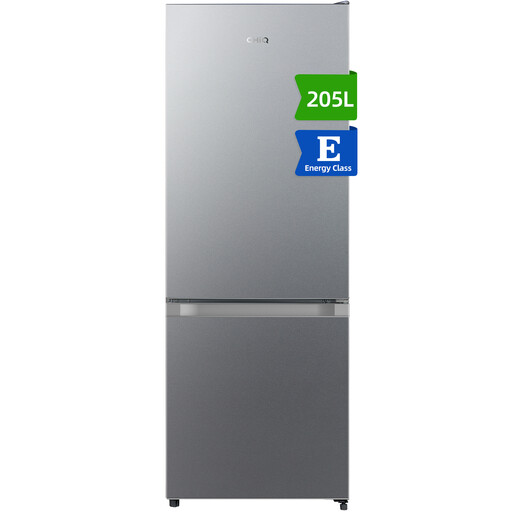
Why this product suits this profile: With 153 litres of fridge capacity, 52 litres of freezer capacity and a width of 54 cm, this model is suitable for couples and kitchens with limited space.
The product details specify the separate capacities, dimensions, Low Frost technology and a noise level of 39 dB.
205-litre total capacity, five cooling modes according to the product description and a reversible door hinge.
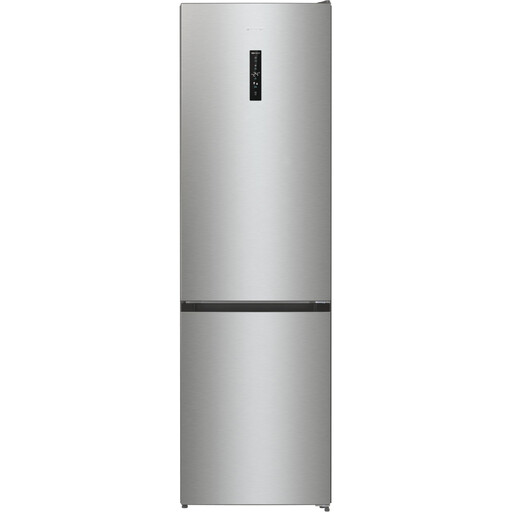
Why this product suits this profile: This appliance is designed for households looking to combine 331 litres of storage space with automatic defrosting and a versatile interior layout.
No Frost in both the fridge and freezer compartments reduces the need for manual defrosting. Before buying, check the width of 60 cm, height of 200 cm and depth of 59.2 cm.
235 litres of fridge capacity, 96 litres of freezer capacity, energy efficiency class C and 35 dB.
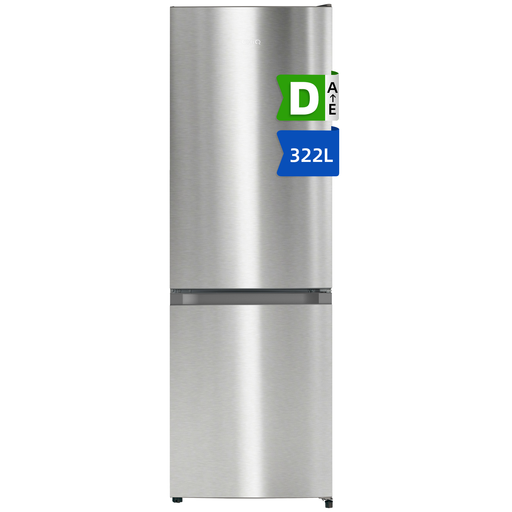
Why this product suits this profile: The 70/30 split, with 226 litres of fridge capacity and 96 litres of freezer capacity, is designed for larger shops and regular stockpiling.
According to the product details, Total No Frost prevents ice from forming. Its depth of 63.5 cm should be checked against your worktop and access route in advance.
Energy efficiency class D, annual consumption of 196 kWh, 37 dB and climate classes N, SN, ST and T.
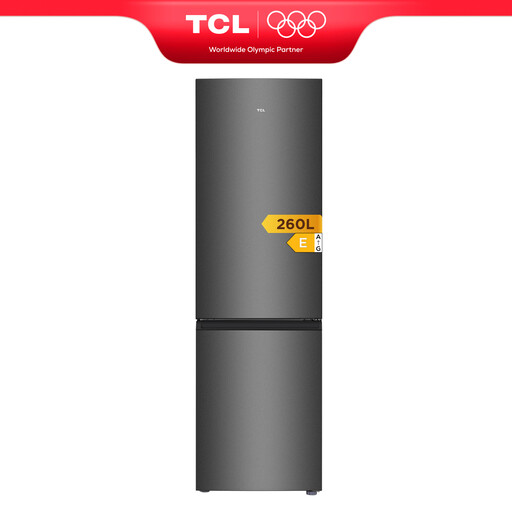
Why this product suits this profile: This 55 cm-wide model offers 260 litres of total capacity and a reversible door hinge for different kitchen layouts.
The compact width is specified as 545 mm. Important: according to the data sheet, the appliance uses manual defrosting and is therefore not a No Frost fridge-freezer.
187 litres of fridge capacity, 73 litres of freezer capacity, LED lighting and an operating noise level of 40 dB.
We have put together a complete, regularly updated list of products that fully meet these strict selection criteria and the safety regulations applicable in the EU.
Before connecting the appliance, it should be left standing upright; the exact waiting time depends on how it was transported and the manufacturer’s instructions. Place the fridge-freezer on a firm, level surface and keep the ventilation openings clear. A socket with an earth connection and avoiding extension leads are both important for safe installation.
Simple habits can help reduce energy consumption:
Around 200 to 270 litres may be suitable for one person or a couple. Families often benefit from 300 litres or more. The key factors are how often you shop, how much food you store and how much freezer space you need.
No Frost significantly reduces the need for manual defrosting. Whether the higher purchase price is worthwhile depends on how often you freeze food and how important low-maintenance use is to you. Also compare energy consumption, noise levels and dimensions.
Service life depends on usage, ventilation, maintenance and the strain placed on the compressor. There is no reliable blanket lifespan that can be applied to every model. Check the warranty terms, availability of spare parts and the manufacturer’s guidance.