
Lieferung heute & morgen

Qualitätsgarantie

Willkommens-Angebote freischalten: KOSTENLOSE Lieferung | Bis zu 80 % RABATT | Kostenlose 30-Tage-JoyPlus-Testphase
App herunterladen
A fridge freezer is one of those appliances used every day and expected to work reliably for many years. However, eye-catching advertising claims do not automatically lead to the right purchasing decision. The key factors are the actual dimensions, usable capacity, energy consumption and features required for the intended location.
This buying guide helps households, singles, couples and families choose a suitable fridge freezer or compact fridge for the kitchen, office, guest room and smaller spaces.
An appliance measuring 60 cm wide will not automatically fit every kitchen unit. You also need to take depth, door-opening angle, clearance from the wall and ventilation space into account. The stated total capacity is not always the same as the actual usable internal space.
You should therefore check the following before buying:
A fridge with a reversible door can be more practical in small kitchens or when positioned next to a wall.
A NoFrost fridge freezer removes the moisture produced in the fridge and freezer compartments differently by design, which can reduce the need for manual defrosting. LowFrost or MinFrost models reduce ice formation, but do not eliminate it completely.
This is an important distinction: according to the product description, MinFrost in the Beko TSE1284N reduces ice formation in the 13-litre freezer compartment. This compartment still needs to be defrosted manually if visible ice forms. By contrast, NoFrost is specified for both the fridge and freezer compartments in the Bosch KGN36VWED and COMFEE RCB310WH2EU(E).
EU energy classes range from A to G. However, the specific consumption in kWh per year is what determines annual running costs. Two appliances in the same energy class may use different amounts of electricity depending on their size and features.
For a rough estimate:
Annual consumption in kWh × your electricity price per kWh = estimated annual electricity costs
Actual consumption also depends on room temperature, how fully the appliance is loaded, the temperature setting and how often the door is opened.
A freestanding fridge can be positioned relatively flexibly. Models around 55 to 60 cm wide are often suitable for standard kitchen areas, but they need sufficient space for heat dissipation.
An integrated fridge is fitted into a kitchen unit. The recess height, ventilation and furniture door must match the appliance exactly. The Beko B1804N is described as an integrated under-counter fridge with 126 litres of fridge capacity.
A mini fridge with a freezer compartment is suitable for individuals, offices, guest rooms or occasional use. Its limited capacity cannot replace a large family fridge. With compact appliances, you should also check whether the freezer compartment is intended for frozen food or only for ice cubes and short-term storage.
As a practical guide, consider your household’s needs, shopping habits and available space together:
A 300-litre fridge freezer, for example, can offer a balanced split between fridge and freezer capacity. According to the product data, the Bosch KGN36VWED has 326 litres of net total capacity, including 237 litres in the fridge and 89 litres in the freezer. The COMFEE RCB310WH2EU(E) is specified as having 310 litres of total usable capacity.
Noise levels are stated in dB(A). Values of around 36 to 40 dB are a useful comparison point for open-plan kitchens, work areas and kitchen-diners. A lower measured value does not mean the appliance operates completely silently; compressor and defrosting noises may be audible depending on the operating phase.
On a 4-star fridge freezer, the star rating indicates the freezing performance and suitable storage temperature. You should also check the freezing capacity in kg per 24 hours and the storage time in the event of a power cut. For example, the SEVERIN DT 8760 is specified as having a freezing capacity of 2 kg per 24 hours and 22 hours of storage time during a power cut.
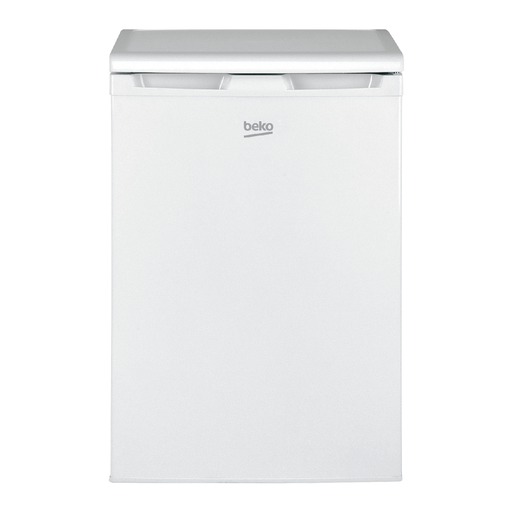
Why this product suits this profile: This compact appliance offers 114 litres of total capacity, a 13-litre 4-star freezer compartment and a width of 54 cm, making it suitable for small kitchens or single-person households.
The product data lists the net capacity separately for the fridge and freezer compartments. MinFrost is also not presented as eliminating the need for defrosting altogether.
36 dB noise level, reversible door and LED lighting.
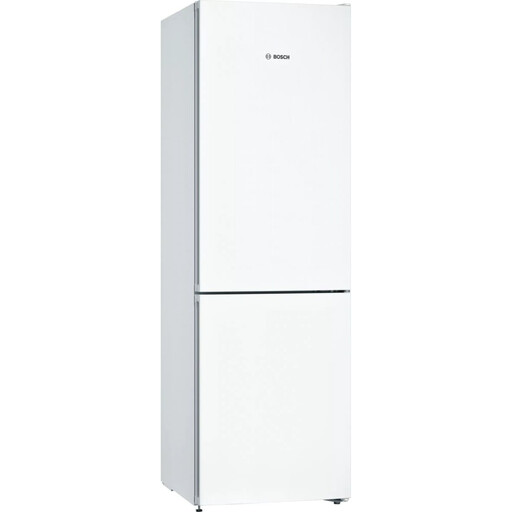
Why this product suits this profile: This fridge freezer is aimed at households that need 326 litres of usable capacity, separate cooling circuits and a comprehensive range of features.
NoFrost is specified for both compartments. The fridge and freezer temperatures can also be controlled independently using two separate cooling circuits.
237 litres of fridge capacity, 89 litres of freezer capacity, 39 dB and a reversible door.
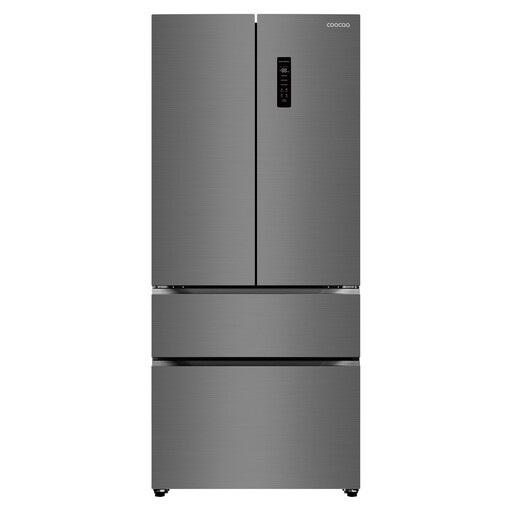
Why this product suits this profile: With 493 litres of effective total capacity, this appliance is suitable for large households and regular stockpiling.
The specifications list the fridge and freezer capacities separately. Total No Frost and Multi Air Flow are stated as specific features.
320 litres of fridge capacity, 173 litres of freezer capacity, 4-star freezer compartment and 40 dB.
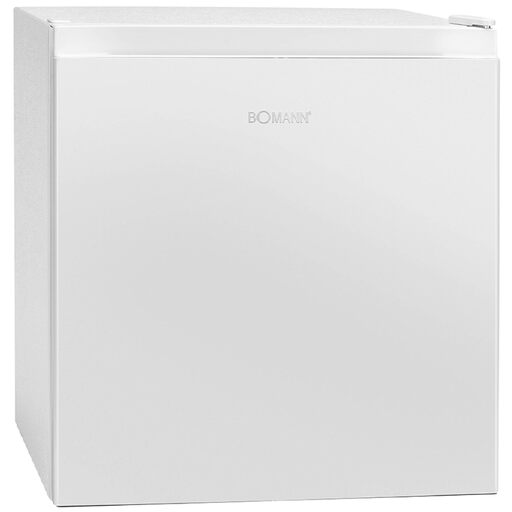
Why this product suits this profile: 45 litres of net capacity and a 4-litre freezer compartment are suitable for drinks, snacks and small quantities of frozen food.
The separately stated freezer compartment makes it clear that this is not a replacement for a large fridge freezer.
Annual consumption of 80 kWh according to the product data, 39 dB and a reversible door.
We have put together a complete, regularly updated list of products that fully meet these strict selection criteria and the safety regulations applicable in the EU.
Before switching it on, a fridge should be left upright after transport in accordance with the manufacturer’s instructions. The appliance must stand on a level, stable surface. Ventilation openings must not be covered, and heat sources such as cookers or radiators should be kept at a distance.
The following measures can help ensure efficient operation:
Service life depends on build quality, usage, ventilation, care and maintenance. It is therefore not possible to give a reliable general figure in years for every model. If you notice unusual noises, damaged cables or inadequate cooling performance, disconnect the appliance from the power supply and contact customer services.
For one person, compact models of up to around 120 litres may be sufficient. Couples often need more storage space, while families generally benefit from a fridge freezer with around 250 to 300 litres or more. The most important factors are how often you shop, whether you stock up and how much frozen food you store.
A 4-star freezer compartment is designed for storing frozen food at suitably low temperatures. You should also compare freezing capacity, usable volume and storage time during a power cut. A small 4-star compartment does not automatically provide plenty of storage space.
Noise-level specifications are particularly relevant for kitchen-diners and open-plan layouts. Models with noise levels of around 36 to 40 dB are often described as comparatively quiet. However, the figure should always be considered in relation to the appliance’s size, design and features.