
Lieferung heute & morgen

Qualitätsgarantie

Willkommens-Angebote freischalten: KOSTENLOSE Lieferung | Bis zu 80 % RABATT | Kostenlose 30-Tage-JoyPlus-Testphase
App herunterladen
A new fridge freezer should work reliably for many years. However, some product claims can lead to disappointing purchases: a low purchase price says little about future electricity consumption, large external dimensions do not automatically mean plenty of usable storage space, and a water dispenser can involve additional cleaning and installation work.
This buying guide from the Joybuy Product Recommendation Officer explains what households, families, couples and individuals in Germany should consider.
The EU energy efficiency scale ranges from A to G. However, the stated annual consumption in kWh per year is also important for ongoing costs. A larger appliance in energy class C may use more electricity than a smaller model in class E. That is why energy class, usable capacity and annual consumption should always be considered together.
A simple calculation can help: multiply the annual consumption in kWh by your electricity tariff. This gives you a more realistic idea of the running costs of a fridge freezer than advertising claims such as “energy-saving”.
A freestanding fridge with a freezer compartment may look compact, even though doors, hinges and the required ventilation clearance take up additional space. Before buying, make sure you check width, height, depth and door-opening area.
The layout also matters: a 70/30 model offers more fridge space and is suitable for households that regularly store fresh food. If you keep lots of frozen food, on the other hand, you will need a larger freezer compartment.
A No Frost fridge freezer reduces ice build-up in the freezer compartment and usually eliminates the need for manual defrosting. However, the technology does not replace regular cleaning or sensible loading. Air vents should be kept clear.
A fridge freezer with a water or ice dispenser requires particular attention. Appliances with a water tank need to be cleaned regularly. Models connected to the mains water supply require suitable pipes, sufficient space and checks for leaks.
A usable capacity of around 200 to 270 litres may be sufficient for one person or a couple. A fridge freezer for families often offers around 300 litres or more, depending on shopping habits and freezer requirements.
Practical guidelines:
A side-by-side fridge freezer, French-door fridge freezer or multi-door fridge freezer usually offers plenty of storage space, but is often more than 70 cm wide and over 70 cm deep. Check the doors and delivery route in advance.
Compare annual consumption in kWh rather than looking only at the energy class. The noise level in dB(A) is also relevant. Levels between 35 and 40 dB(A) can be suitable for open-plan kitchens, living areas or offices. However, the perceived noise also depends on the room acoustics, flooring and distance from the wall.
Also look for adjustable glass shelves, flexible door compartments, a salad crisper, interior lighting and a reversible door.
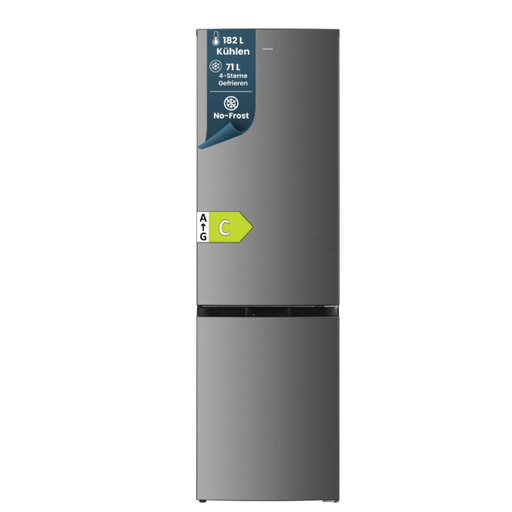
Why this product suits the profile: With 182 litres of fridge space and 71 litres of freezer space, this freestanding appliance is suitable for couples and smaller households. No Frost, LED lighting and a reversible door combine essential features with flexible positioning.
The stated annual consumption of 141 kWh makes running costs easier to estimate than a general advertising claim about efficiency. Nevertheless, the dimensions of 54,5 × 61,6 × 181 cm should still be checked.
Energy efficiency class C, No Frost system and a noise level of 39 dB(A).
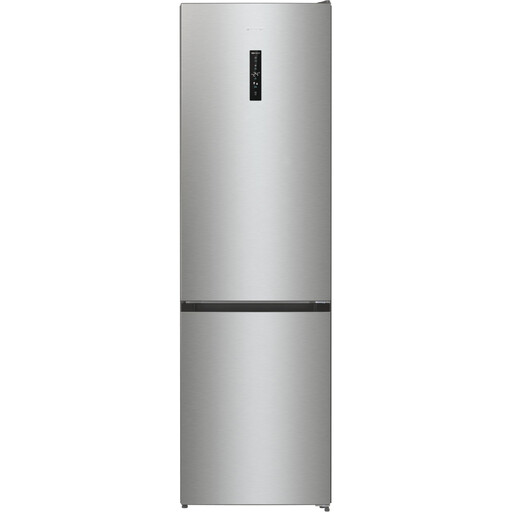
Why this product suits the profile: With 235 litres of fridge space and 96 litres of freezer space, the layout provides families with a well-balanced amount of storage. Five shelves, four door compartments and three freezer drawers help keep everything organised.
No Frost is specified for both the fridge and freezer compartments. The annual consumption of 158 kWh is listed alongside energy efficiency class C, enabling an objective comparison.
35 dB(A), fast freezing, rapid cooling and a reversible door.
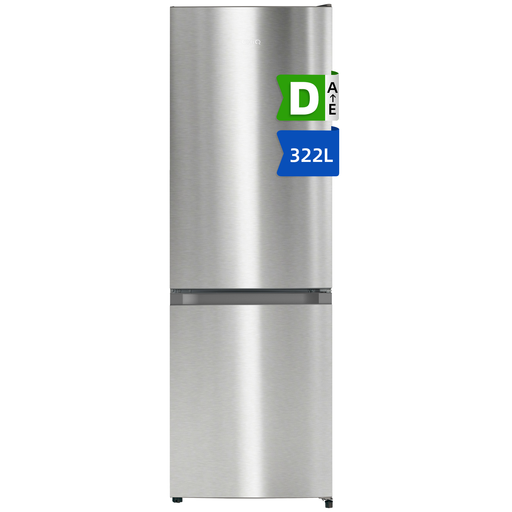
Why this product suits the profile: With 226 litres of fridge space and 96 litres of freezer space, this model is designed for regular family shopping. The stated climate classes N, SN, ST and T allow operation at ambient temperatures from 10 to 43 °C.
The precise depth of 63,5 cm prevents incorrect planning for a flush-fitting kitchen run. Total No Frost reduces maintenance compared with a conventional freezer compartment.
322 litres of usable capacity, annual consumption of 196 kWh, 37 dB(A) and a Fast Freeze function.
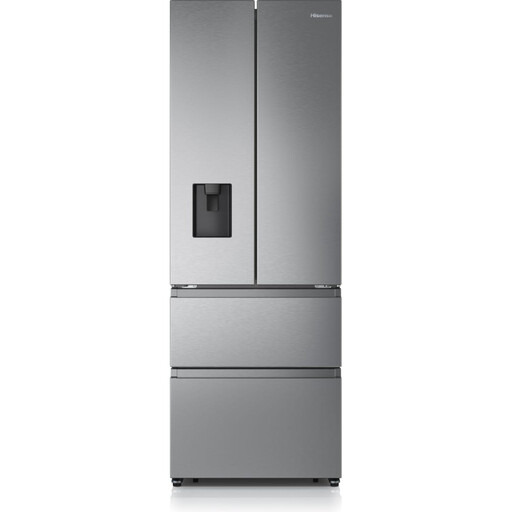
Why this product suits the profile: The French-door design combines 336 litres of fridge space with 149 litres of freezer space. An integrated water dispenser, FreshZone and CrispZone appeal to households that regularly store fresh food and drinks.
The width of 70 cm, height of 200 cm and depth of 69,4 cm must be taken into account before ordering. The water dispenser also requires attention to tank and cleaning requirements.
No Frost Plus, 38 dB(A), 485 litres of usable capacity and Holiday mode.
We have put together a complete, regularly updated list of products that fully meet these strict selection criteria and the safety regulations applicable in the EU.
Before delivery, measure the door width, stairwell, lift and available floor space. After transport, leave the appliance standing upright for the period specified in the manufacturer’s instructions before connecting it. Sufficient clearance must be left around the appliance for ventilation.
Position the fridge freezer on a level surface and adjust the feet. Hot food should be allowed to cool before being placed inside. An overfilled interior can restrict air circulation and increase electricity consumption.
As a general guideline, individuals and couples can plan for around 200 to 270 litres. For families, around 300 litres or more is sensible, depending on shopping routines and how much food they store. The capacity you actually need depends more on the type of food you buy and how often you shop than on the size of your household alone.
Consumption is shown on the energy label in kWh per year. Multiply this figure by your electricity tariff to estimate the annual running costs. Compare appliances with a similar usable capacity, as larger models naturally cool more space and often require more energy.
A noise level of around 35 to 40 dB(A) is often chosen for open-plan kitchens and living areas. Alongside the stated figure, flooring, distance from the wall and the position of the compressor affect how the noise is perceived. Adequate ventilation and a level installation can help reduce operating noise.