
Lieferung heute & morgen

Qualitätsgarantie

Willkommens-Angebote freischalten: KOSTENLOSE Lieferung | Bis zu 80 % RABATT | Kostenlose 30-Tage-JoyPlus-Testphase
App herunterladen
A fridge freezer combines a fridge and freezer compartment in one appliance. This saves space and makes kitchen planning easier. However, models vary considerably in terms of dimensions, usable capacity, energy consumption, noise levels and maintenance requirements.
When choosing a freestanding appliance, three common purchasing misconceptions can easily lead to the wrong decision:
The most suitable type depends mainly on your kitchen, household size and shopping habits.
Before buying, measure the available space in three places: width, height and depth. Also check whether the door can open fully and whether the stairwell, lift or front door allows the appliance to be transported in. A model with a reversible door can provide extra flexibility in rooms with limited space.
The relevant figure is the stated usable capacity in litres. For a single household or office, 80 to 150 litres may be sufficient. Couples and small families often look for around 200 to 300 litres, while a fridge freezer for families who do larger shops may need considerably more capacity.
Also pay attention to how the capacity is divided between the fridge and freezer compartments. A total capacity of 250 litres is of little use if the freezer is too small for your supplies. For many households, a split of approximately 70/30 is a practical starting point.
The EU energy label for refrigeration appliances ranges from A to G. The energy class should always be considered together with the annual consumption in kWh. A larger appliance may use more electricity than a smaller model, even if it has a better energy class.
For a rough estimate of running costs, multiply the annual consumption by your electricity price. At 200 kWh per year and 0.35 euros per kWh, this works out at around 70 euros in annual electricity costs, for example. The actual amount depends on your individual tariff.
An energy-efficient fridge freezer should therefore not be chosen based on the letter alone. Compare the size, annual consumption and features directly.
For open-plan kitchens, rooms near bedrooms or offices, the noise level in dB(A) is important. Many users find levels of around 37 to 40 dB(A) pleasantly quiet, although the acoustics of the room will affect how the appliance sounds.
A No Frost fridge freezer uses circulating air to remove moisture and prevents significant ice build-up in the freezer compartment under normal conditions. With Low Frost, the need for defrosting is usually lower than with static systems, although manual defrosting may still be necessary.
A fridge freezer with an inverter compressor adjusts the compressor output to match the cooling requirement. This can help provide more consistent operating cycles. Any specific energy saving can only be assessed using the particular energy label and considering how the appliance is used.
The following models have been matched to different usage situations based on their type, usable capacity, dimensions, consumption and features.
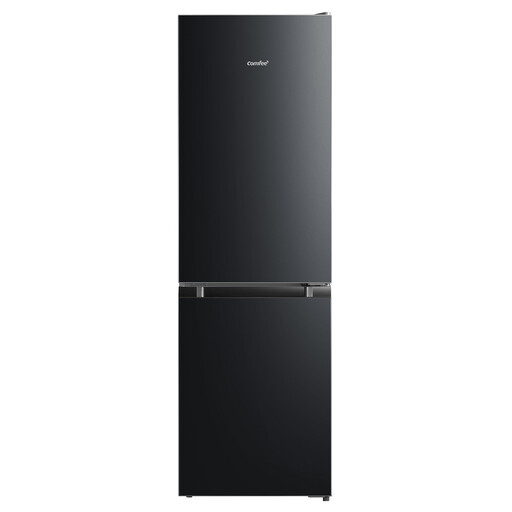
Why this product suits this profile: With 115 litres of fridge capacity and 59 litres of freezer capacity, this appliance is suitable for smaller households, offices and bedrooms. Its width of 47 cm makes it easier to plan for spaces where room is limited.
Low Frost limits ice build-up without suggesting that the appliance uses a full No Frost system. The reversible door is useful for awkward room layouts.
115/59 litres, 47 cm width, adjustable thermostat and LED lighting.
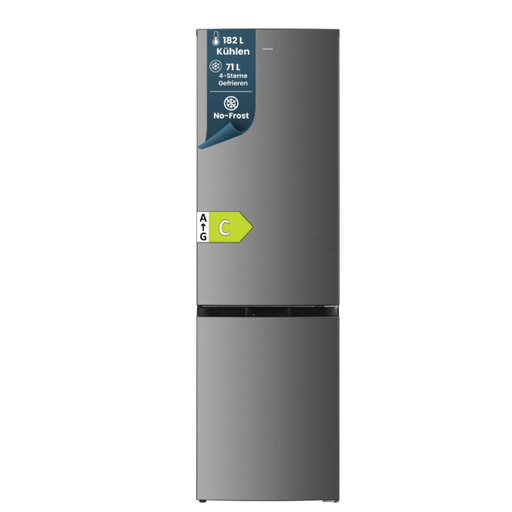
Why this product suits this profile: This model combines 182 litres of fridge capacity and 71 litres of freezer capacity with No Frost, energy efficiency class C and annual consumption of 141 kWh.
The technical specifications state both the energy class and annual consumption. This makes it easier to assess running costs than relying on advertising claims alone.
No Frost, 39 dB(A), 253 litres and reversible door.
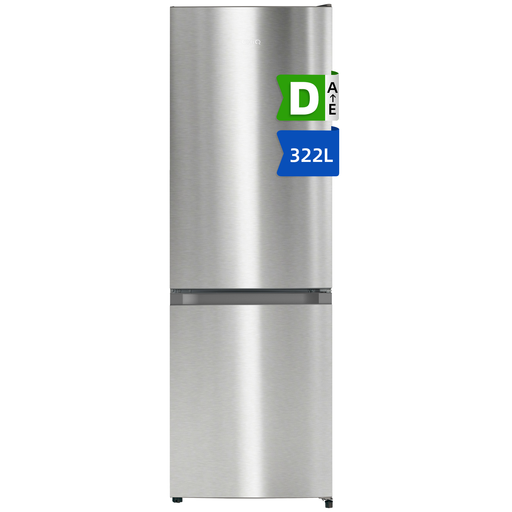
Why this product suits this profile: With 226 litres of fridge capacity and 96 litres of freezer capacity, it offers plenty of storage space for larger shops. The appliance is 59.5 cm wide, 185.5 cm high and rated for ambient temperatures from 10 to 43 °C.
The stated dimensions show the possible depth of 63.5 cm. This helps prevent the appliance from protruding unexpectedly into the kitchen.
322 litres, Total No Frost, 37 dB(A) and 196 kWh per year according to the product specifications.
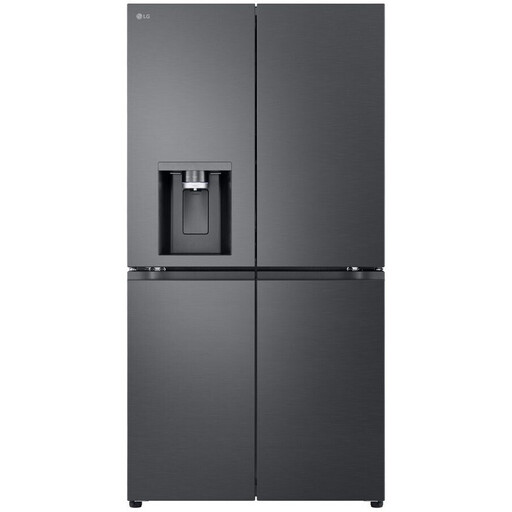
Why this product suits this profile: This multi-door appliance offers 384 litres of fridge capacity and 261 litres of freezer capacity. It is aimed at large households that regularly buy in bulk.
The generous usable capacity is complemented by precise dimensions of 91.4 × 179.2 × 73.3 cm. Before buying, check that your doors, access routes and available space are suitable.
645 litres, No Frost, energy class C, 34 dB(A), water and ice dispenser, plus app compatibility.
We have put together a complete, regularly updated list of products that fully meet these strict selection criteria and the safety regulations applicable in the EU.
A usable capacity of around 100 to 200 litres may be sufficient for one person. Couples often need more space, while families may benefit from 250 litres or more, depending on their shopping habits. The split between the fridge and freezer compartments and the available floor space are the key considerations.
The service life depends on the compressor, how the appliance is used, where it is installed, cleaning and maintenance. Good ventilation, correct levelling and keeping the ventilation areas clear can help ensure reliable operation. Check the warranty and manufacturer’s information before buying.
Multiply the stated annual consumption in kWh by your electricity price. At 150 kWh and 0.35 euros per kWh, the calculated cost is around 52.50 euros per year. Actual consumption may vary depending on room temperature, how full the appliance is, how often the door is opened and the temperature setting.