
Lieferung heute & morgen

Qualitätsgarantie

Willkommens-Angebote freischalten: KOSTENLOSE Lieferung | Bis zu 80 % RABATT | Kostenlose 30-Tage-JoyPlus-Testphase
App herunterladen
A new refrigeration appliance should work reliably for many years. Even so, buyers often make their decision based on appearance or a single advertising claim. With fridges and freezers, however, small differences in energy consumption, dimensions and features can make a noticeable difference later on.
Three common buying misconceptions are particularly widespread:
A fridge-freezer combines refrigeration and freezer compartments in a single appliance. This design can be practical for couples or families, while a single-person household often needs less capacity and may be better served by a fridge with freezer compartment or a mini fridge.
Before buying, measure:
A freestanding fridge can be positioned flexibly. A reversible door is useful if the room layout may be changed later. For small kitchens, offices or holiday homes, a compact freezer, a tabletop freezer or a mini fridge may be suitable.
The EU energy efficiency scale ranges from A to G. You should also compare annual consumption in kWh. An appliance with a larger usable capacity may use more electricity than a more compact model, even if both have the same efficiency rating.
Examples from our selection:
Always compare similar appliance types and usable capacities. Low consumption can help reduce running costs, but it does not replace checking the purchase price, warranty terms and features.
For living kitchens or rooms with sleeping areas, the noise level is particularly important. The technical specifications state it in dB. The difference between 32 dB and 40 dB is not merely a marketing figure in everyday use; it may be noticeable in quiet rooms.
When choosing a freezer, you should also consider the following figures:
NoFrost prevents ice build-up through an automatic defrosting system. With appliances without NoFrost, including some compact freezers, you should allow for occasional manual defrosting.
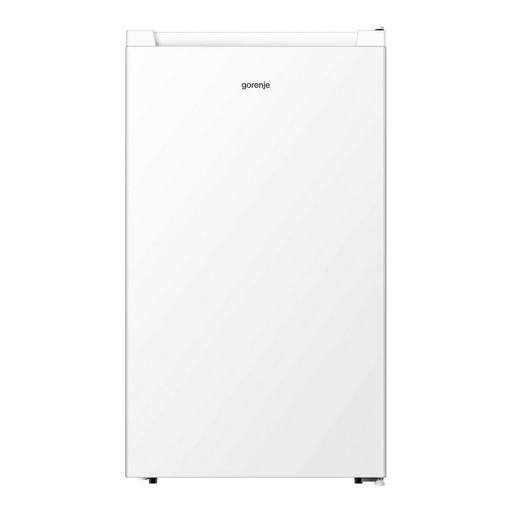
Why this product suits the profile: This compact freezer offers 61 litres of usable capacity, making it suitable for single-person households, small flats or additional freezer space where floor space is limited.
The dimensions of 84.2 × 47.5 × 44.8 cm make the space required clear. Mechanical controls do away with additional functions that not every household needs.
61 litres of usable capacity, 4-star freezer compartment, freezing capacity of 3 kg per 24 hours and reversible door.
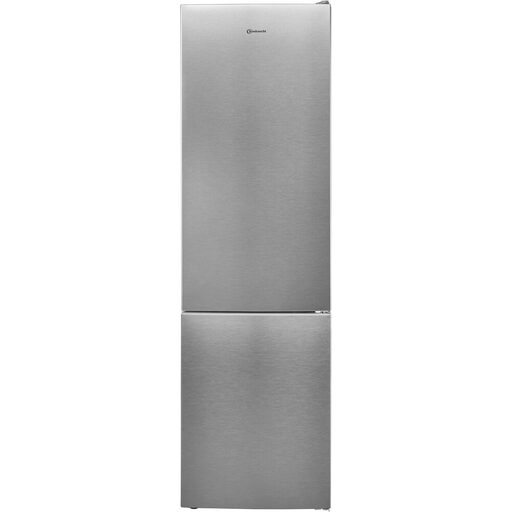
Why this product suits the profile: This fridge-freezer combines 249 litres of fridge space and 106 litres of freezer space with NoFrost, an inverter compressor and a switchable Multi Zone.
The technical specifications state 32 dB, annual consumption of 112 kWh and a 90-degree door-opening angle. This makes it easier to assess whether it is suitable for open-plan kitchens and tight spaces.
355 litres of usable capacity, energy efficiency class A, NoFrost and freezing capacity of 10 kg per 24 hours.

Why this product suits the profile: This portable compressor cool box is designed for camping, motorhomes, boats, cars and off-grid use.
Rather than considering capacity alone, it also takes power supply and the intended environment into account: AC, a 12/24-volt vehicle connection and solar charging are supported.
45 litres of usable capacity, two temperature zones, a temperature range down to -20 °C and app support.
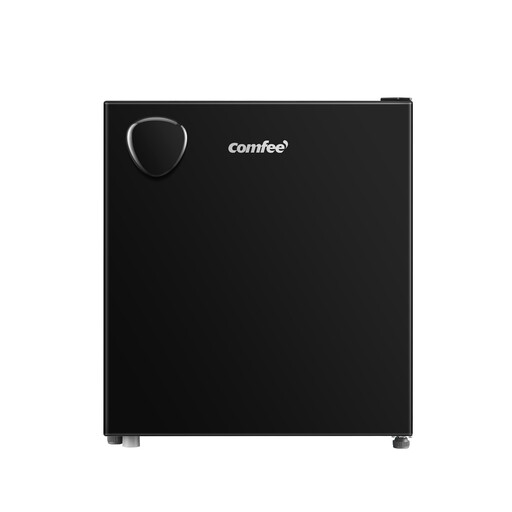
Why this product suits the profile: At 44.5 cm wide, this slimline mini fridge fits into small kitchens, offices, guest rooms or holiday accommodation.
The compact width and clearly stated capacity make it easier to weigh up the space required against the available storage realistically. The appliance has three temperature settings and a separate chiller compartment.
43-litre capacity, annual consumption of 110 kWh, height-adjustable shelves and a salad crisper.
We have put together a complete, regularly updated list of products that fully meet these strict selection criteria and the safety regulations applicable in the EU.
This depends on shopping habits, cooking routines and the space available. Single-person households can often manage with a small fridge or compact fridge-freezer. Families are more likely to benefit from separate compartments with greater usable capacity. Usable capacity is what matters, not the appliance’s external gross volume.
NoFrost can reduce maintenance because the freezer compartment does not need to be defrosted manually on a regular basis. Whether the feature is worthwhile depends on how often you freeze food and how important low maintenance is to you. Also compare annual consumption and noise level.
Choose an appliance suited to the size of your household, do not place it next to heat sources and allow hot food to cool first. Good ventilation, clean door seals and keeping the door-opening time as short as possible all help ensure efficient operation. The stated annual consumption in kWh remains the decisive figure.