
Lieferung heute & morgen

Qualitätsgarantie

Willkommens-Angebote freischalten: KOSTENLOSE Lieferung | Bis zu 80 % RABATT | Kostenlose 30-Tage-JoyPlus-Testphase
App herunterladen
A high-performance cable router is the foundation of a modern household. Whether for seamless 4K streaming, latency-free online gaming, or a stable home office, choosing the right device is crucial. However, the market is full of technical promises that don't always hold up in practice. This guide will help you avoid common purchasing pitfalls and identify the features that truly matter for future-proof performance on your cable connection.
Before you invest in new hardware, you should be wary of three common misconceptions that often lead to frustration and unnecessary expenses.
To make an informed decision, you should examine three core parameters. These define the actual performance and longevity of a modern cable router.
For gigabit-range internet connections, the DOCSIS 3.1 standard is a fundamental requirement. Compared to the older DOCSIS 3.0, it not only enables higher download and upload speeds but also uses the available frequency spectrum in the cable network much more efficiently. The result is a more stable connection, especially during peak hours when many users are active in the same network segment. A good FRITZ!Box for cable connections should support this standard while also being backward compatible.
Cable routers with Wi-Fi 7 represent the next evolution for the wireless home network. The key advantage of Wi-Fi 7 is not just the higher theoretical speed, but Multi-Link Operation (MLO). This technology allows devices to send and receive data simultaneously across multiple frequency bands (e.g., 2.4 GHz and 5 GHz). This drastically reduces latency and increases connection reliability—a tangible advantage for online gaming, VR applications, and uninterrupted video calls.
Physical ports are just as important as wireless performance. A router with a 2.5 Gbit LAN port is essential for passing the full speed of a gigabit internet connection to a wired device like a PC or a network-attached storage (NAS) device. Additionally, a smart home router with Zigbee and DECT ULE support becomes the central control unit for your home. It eliminates the need for separate bridges or hubs for many smart lights, thermostats, or sensors, creating a clean, unified system.
Based on the criteria above, we have compiled a selection of products tailored to specific user needs.
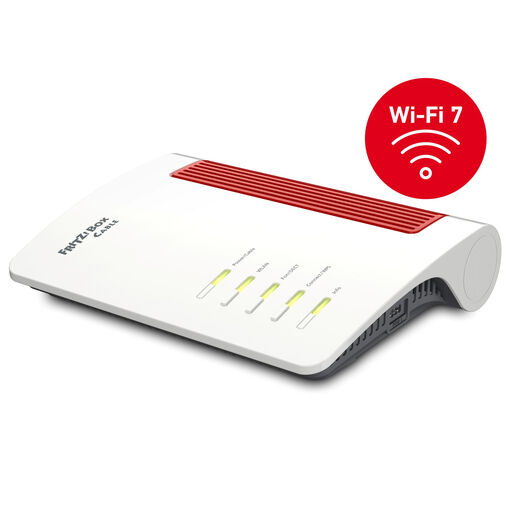
Why This Fits Their Persona: Ideal for users who need maximum performance for data-intensive applications like 8K streaming, online gaming, and a demanding home office, while also wanting to centrally manage their smart home.
This device bypasses the future-proofing trap. With Wi-Fi 7, a 2.5 Gbit LAN port, and an integrated Zigbee hub, you are perfectly equipped for upcoming technologies and devices.
Combines high-speed internet via DOCSIS 3.1 with state-of-the-art network and smart home technology in a single device. The proven FRITZ!OS software offers extensive configuration options and regular updates.
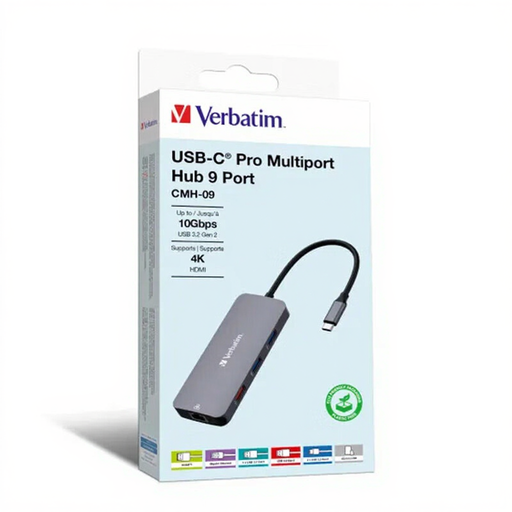
Why This Fits Their Persona: Perfect for users who work from home with a modern laptop and need to connect a variety of peripherals such as monitors, external hard drives, memory cards, and a stable wired network connection.
Solves the problem of missing ports on laptops. Instead of relying on potentially unstable Wi-Fi, the integrated Gigabit Ethernet port provides a rock-solid connection to the router—crucial for important video conferences.
Offers a comprehensive docking solution with 4K HDMI, fast USB-A and USB-C data ports, and card readers. It transforms a single USB-C port into a full-fledged workstation.
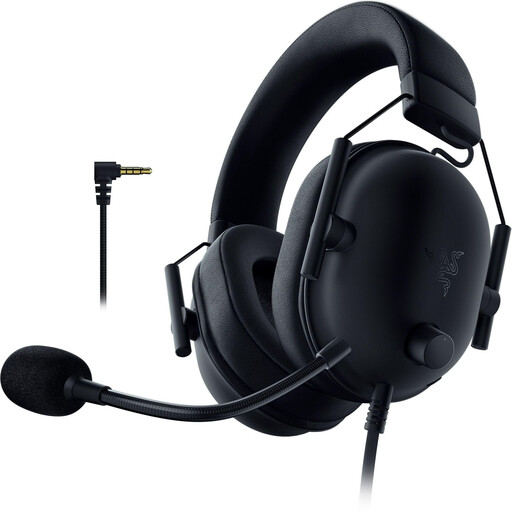
Why This Fits Their Persona: Designed for gamers who value precise audio for locating opponents and crystal-clear microphone quality for team communication, without sacrificing comfort during long sessions.
Avoids the pitfall of poor audio quality. Instead of relying on imprecise sound, the Razer TriForce 50mm drivers provide clear separation of highs, mids, and lows for an immersive sound experience.
The Razer HyperClear Cardioid Mic ensures excellent voice capture while suppressing ambient noise. The lightweight design with memory foam ear cushions guarantees high comfort.
We have compiled a complete, up-to-date list of products that fully meet these strict selection criteria and German safety regulations.
In principle, the AVM FRITZ!Box 6670 Cable is designed for use in all German cable networks thanks to its support for the DOCSIS 3.1 standard. However, final compatibility and the activation process depend on the respective provider. On networks like Vodafone's (formerly Kabel Deutschland), self-activation by the customer is typically required, where the device's CM-MAC address and serial number must be entered into the provider's customer portal. It is recommended to check your provider's current guidelines for using third-party devices before purchasing.
No, you don't necessarily need it right away. The FRITZ!Box 6670 Cable is fully backward compatible with older Wi-Fi standards like Wi-Fi 6 (802.11ax), Wi-Fi 5 (802.11ac), and Wi-Fi 4 (802.11n). Your current devices will connect without any issues. However, buying a WLAN Mesh router with Wi-Fi 7 is an investment in the future. When you purchase new smartphones, laptops, or other devices in the coming years that support the new standard, you will be able to take immediate advantage of its benefits, such as higher speeds and lower latency, without having to replace your router again.
A standard Gigabit LAN port transmits data at a maximum of 1 Gbit/s (approx. 125 MB/s). A 2.5 Gbit LAN port offers 2.5 times that speed, up to 2.5 Gbit/s (approx. 312 MB/s). This speed advantage is particularly relevant when you connect a high-performance device via cable that processes large amounts of data. Typical use cases include connecting a Network Attached Storage (NAS) for fast backups and streaming high-resolution media on your home network, or connecting a gaming PC to utilize the full bandwidth of a multi-gigabit internet connection without a bottleneck.