
Lieferung heute & morgen

Qualitätsgarantie

Willkommens-Angebote freischalten: KOSTENLOSE Lieferung | Bis zu 80 % RABATT | Kostenlose 30-Tage-JoyPlus-Testphase
App herunterladen
Selecting a new front-load washing machine requires an analysis of technical specifications and practical needs. The most decisive criteria are capacity, energy efficiency class, spin speed, and specialised programmes designed to simplify your daily routine. An informed decision must consider a household's unique profile, from its size to its specific laundry requirements. This guide focuses on objective parameters to help structure your selection process.
The choice of a model should be based on a careful balance of performance, efficiency, and functionality. The following technical aspects are central to making a rational assessment.
The nominal capacity, specified in kilograms (kg), defines the maximum amount of dry laundry that can be washed efficiently in a single cycle.
The new EU energy label, in effect since March 2021, classifies appliances from A (highest efficiency) to G (lowest efficiency). A Class A energy-rated washing machine is distinguished by its exceptionally low energy and water consumption. The label specifies this as weighted energy consumption in kilowatt-hours (kWh) per 100 wash cycles and weighted water consumption in litres per cycle (in the Eco 40-60 programme). An energy-saving washing machine in this class helps to reduce running costs.
The spin speed, measured in revolutions per minute (RPM), indicates how fast the drum rotates during the spin cycle. A higher speed extracts more water from the laundry.
The operating noise, measured in decibels (dB(A)), is a crucial comfort factor, especially in homes with open-plan living spaces or when running the machine at night. The energy label displays the noise emission during the spin cycle, along with a corresponding noise emission class (A to D). A quiet washing machine with a Class A or B rating and a value below 72 dB(A) during the spin cycle is considered exceptionally quiet. Inverter motors often contribute to quieter, low-vibration operation.
Modern appliances offer a range of additional features with practical benefits:
The following models have been selected based on their technical specifications and feature sets.
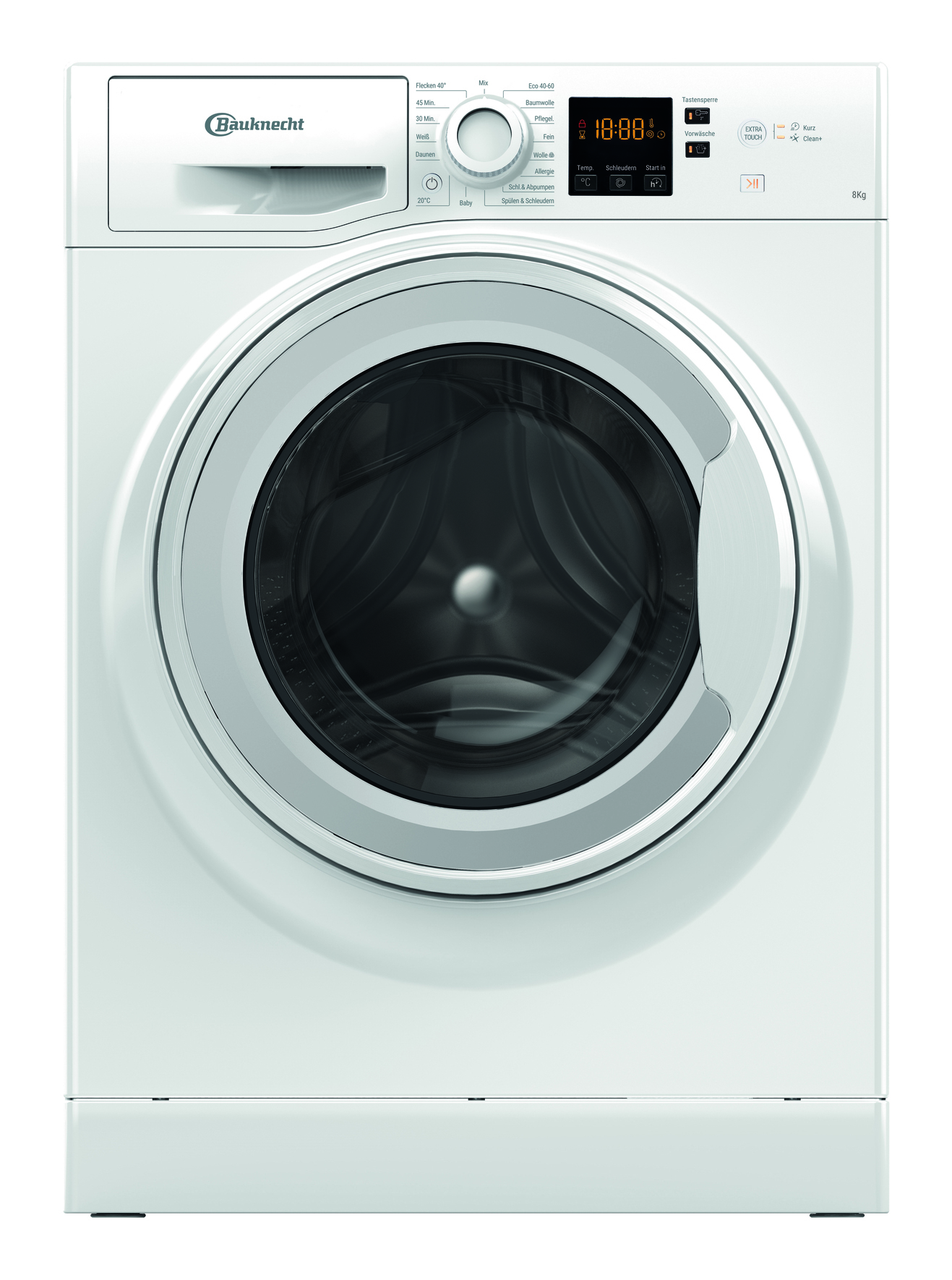
Why we recommend this product: The Bauknecht WAM 814 A is a freestanding washing machine with a Class A energy rating that stands out for its specialised programmes designed for everyday challenges. According to the manufacturer, the "Stain 40°" programme removes common stains at low temperatures, which is gentle on fabrics. The Digital Motion Technology ensures effective yet gentle cleaning through precise drum movements.
Pros:
Who it's for: This 8 kg capacity model is ideal for couples and small families who value energy efficiency and specialised programmes for stain and allergen removal.
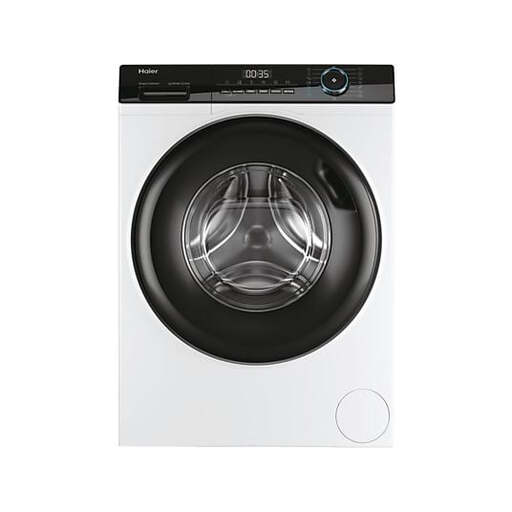
Why we recommend this product: The Haier I-PRO SERIES 3 combines a 9 kg capacity with exceptionally quiet operation. The Direct Motion Motor is attached directly to the drum, which reduces vibrations and noise (Noise Emission Class A). The "Refresh" steam function freshens up clothes and smooths out wrinkles without a full wash cycle.
Pros:
Who it's for: Suitable for families and those living in apartment buildings for whom a quiet washing machine is a priority. The steam function offers added convenience for professionals or for treating delicate clothing.
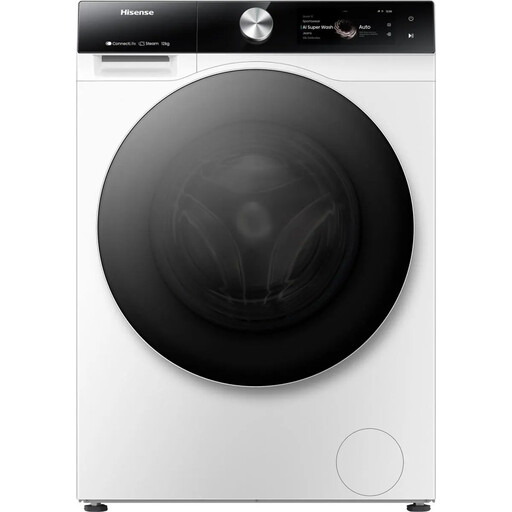
Why we recommend this product: This Hisense model is designed as a smart washing machine with a very large capacity. Its 12 kg capacity is ideal for large households. Key features include the automatic dosing system (Auto Dose), which independently adds detergent and fabric softener based on the load, and control via Wi-Fi (ConnectLife).
Pros:
Who it's for: The optimal choice for large families or households with very high laundry volumes. The smart features and automatic dosing provide maximum convenience and efficiency in daily life.
If the models featured here don't perfectly match your requirements, you can find a wider selection of appliances with different specifications in our Washing Machines category.
1. What exactly does a Class A energy rating mean for a washing machine? A washing machine with a Class A energy rating belongs to the most efficient category under the current EU standard. This means that, compared to models in lower classes (B to G), it consumes significantly less electricity over 100 wash cycles in the standardised Eco programme. The exact value in kWh per 100 cycles is specified on the energy label, allowing for a direct comparison of running costs.
2. Is a washing machine with a steam function worth it? The value of a washing machine with a steam function depends on your individual needs. The feature is beneficial for quickly refreshing lightly worn clothes, neutralising odours, and reducing the need for ironing. For allergy sufferers, steam programmes can also be helpful, as the high temperatures can effectively reduce allergens like pollen and mites.
3. How important is a spin speed of 1400 RPM? A spin speed of 1400 RPM is an excellent benchmark for modern washing machines. It ensures low residual moisture in the laundry. This is particularly advantageous if the laundry will be dried in a tumble dryer, as the dryer will require less time and energy. It also shortens the drying time for air-drying. For most households, this speed represents an optimal balance between drying performance and fabric care.