
Lieferung heute & morgen

Qualitätsgarantie

Willkommens-Angebote freischalten: KOSTENLOSE Lieferung | Bis zu 80 % RABATT | Kostenlose 30-Tage-JoyPlus-Testphase
App herunterladen
For drivers in Germany, ensuring you're protected against unforeseen events on the road is a primary concern. A front and rear dash cam can play a crucial role by providing a complete record of traffic incidents. In the event of an accident or parking damage, such recordings can be instrumental in clarifying what happened.
This article serves as a guide to help you navigate your options. It explains the key technical features to consider when making your selection and presents a curated list of models with different specialisations. Our goal is to provide you with an objective basis for your purchasing decision.
The right model for you will depend on your individual needs. However, there are three central criteria you should always consider.
Video resolution is critical for the level of detail in your recordings. A high resolution makes it easier to identify licence plates or road signs, which can be vital for securing evidence.
Equally important is the dash cam's night vision. Technologies like WDR (Wide Dynamic Range) or HDR (High Dynamic Range) compensate for extreme differences in brightness, ensuring clear images even at dusk or at night. Image sensors from manufacturers like Sony (e.g., the STARVIS series) are renowned for their excellent performance in low-light conditions.
Modern car cameras offer more than just basic recording functionality. Integrated modules significantly expand their utility.
A dash cam with parking surveillance protects your vehicle even when it's stationary. This feature is typically triggered by a G-sensor (accelerometer). If the sensor detects a jolt, such as from a parking bump or vandalism, the camera automatically starts a protected emergency recording. For this function to operate continuously, a separate hardwire kit is usually required, which connects the camera directly to the car battery and includes low-voltage protection.
Based on the criteria mentioned, we have compiled a selection of models that cater to a variety of needs.
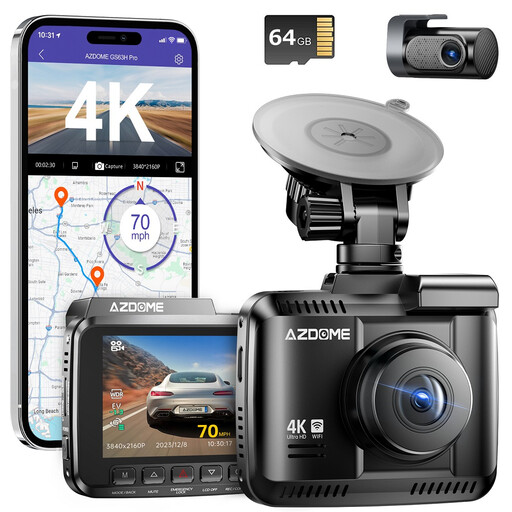
Why this model stands out: The AZDOME GS63H Pro offers a comprehensive package with a 4K front camera and a Full HD rear camera. A significant advantage is the included 64 GB memory card, which allows for immediate use out of the box.
Advantages:
Who is this model for? For drivers who want high-resolution, all-around documentation and prefer a ready-to-use kit without needing to purchase additional accessories like a memory card.
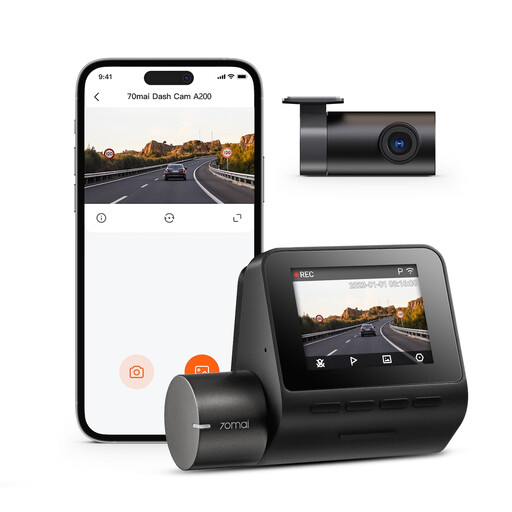
Why this model stands out: The 70mai Dash Cam A200-1 focuses on smooth image playback. The front camera records at 60 frames per second (FPS), which makes motion appear exceptionally smooth and details more discernible at high speeds.
Advantages:
Who is this model for? Ideal for commuters and frequent drivers who prioritise exceptionally smooth video recording to capture motion and details in moving traffic with precision.
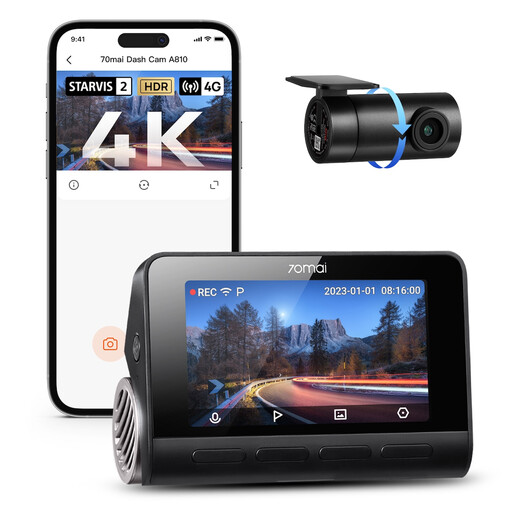
Why this model stands out: This model combines true 4K resolution with the advanced Sony STARVIS 2 image sensor, promising superior image quality. It also offers AI-powered parking surveillance. The A810 model was rated "Good" by publications like Autobild.de and Computerbild.de and received the "Technology Innovation Award" from Futures in 2024.
Advantages:
Who is this model for? For tech-savvy users seeking uncompromising image quality and advanced safety features like AI parking surveillance and driver-assistance systems.
If the models presented here don't perfectly match your requirements or if you're looking for different configurations, you can find a wider selection in our Car DVR Accessories category. There, you can filter and compare various models according to your preferences.
Yes, the use of a dash cam is generally permitted in Germany. However, there are data protection regulations to consider. Continuous, indiscriminate filming of public spaces is not allowed. For this reason, most cameras operate with loop recording. In the event of an accident, the recordings may be admissible as evidence in court, but the decision is made by the judge on a case-by-case basis.
Loop recording is a standard feature on modern dash cams. The camera records video in short segments (e.g., 1, 3, or 5 minutes). Once the memory card is full, the oldest, unprotected recording is automatically overwritten. This ensures continuous recording without the need to manually clear the memory card. Important events detected by the G-sensor are saved as write-protected files and are not overwritten.
Yes, for a reliable dash cam with parking surveillance, a so-called hardwire kit is typically required. This accessory connects the camera directly to the vehicle's fuse box to provide a constant power supply, even when the engine is off. Good hardwire kits include a battery monitor that cuts off power before the car battery's charge becomes critically low.