
Lieferung heute & morgen

Qualitätsgarantie

Willkommens-Angebote freischalten: KOSTENLOSE Lieferung | Bis zu 80 % RABATT | Kostenlose 30-Tage-JoyPlus-Testphase
App herunterladen
Purchasing a car camera that covers both the front and rear of your vehicle is a wise decision for enhancing road safety. However, the market is overwhelming and filled with technical jargon that often confuses more than it helps. Many drivers invest in devices that fail when they are needed most. This guide will show you what to look for to make an informed decision and steer clear of common purchasing errors.
Before we dive into the important features, you should be aware of the most common marketing traps that lead to useless devices.
To avoid the pitfalls mentioned above, focus on the following core technical features. These determine the reliability and image quality of your future car camera.
Video quality is primarily determined by the built-in image sensor. A 4K dash cam is only worthwhile when paired with a high-quality sensor.
A modern dash cam with parking mode also protects your vehicle while it's parked. The type of surveillance and power supply are critical here.
Based on the criteria above, we have compiled a few models for different needs.
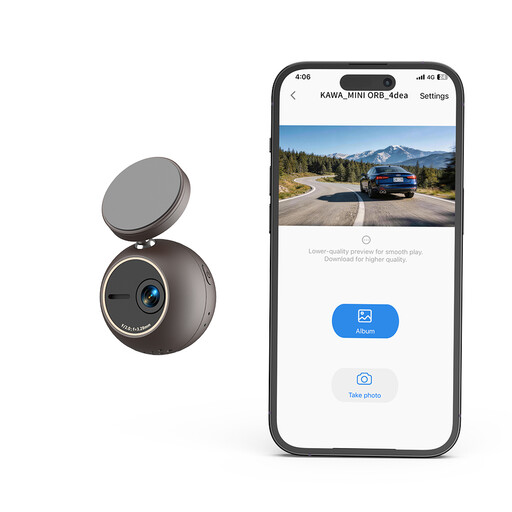
Why This Fits Their Persona: Ideal for drivers seeking a straightforward and reliable solution for front-view recording. The compact design doesn't obstruct the view, and operation via voice command and app is intuitive, eliminating the need to navigate complex menus.
This model offers a native 2K resolution, which is significantly sharper than many budget Full HD or interpolated 4K cameras. The G-sensor for emergency recording is reliable.
Compact, discreet design and easy management of recordings via the integrated Wi-Fi function and smartphone app.
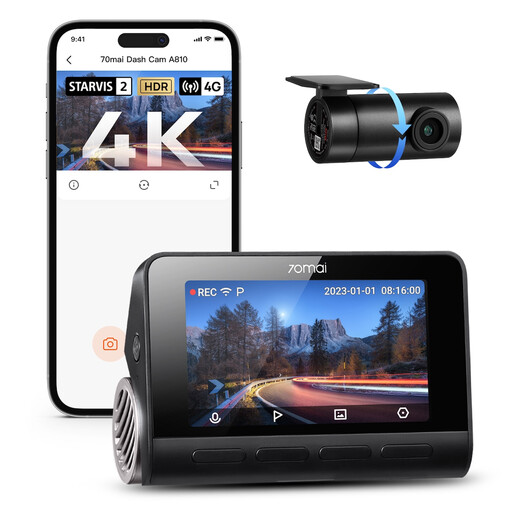
Why This Fits Their Persona: Perfect for tech enthusiasts and commuters who prioritize maximum image clarity and detail. The combination of front and rear cameras with advanced sensors provides comprehensive evidence capture, day and night.
Utilizes a Sony STARVIS 2 sensor for true 4K resolution and outstanding night vision. The dual-HDR function ensures balanced recordings without over or underexposed areas, avoiding the poor night vision trap.
True 4K resolution with one of the most advanced sensors on the market. The AI-powered parking mode (hardwire kit required) offers precise surveillance.
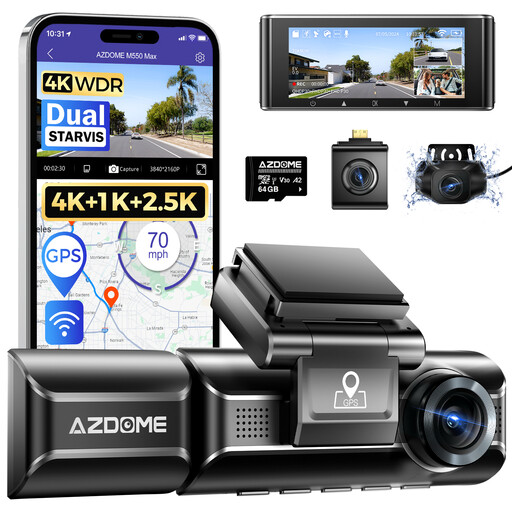
Why This Fits Their Persona: This system is designed for users who need complete surveillance. As a 3-channel dash cam, it records not only the traffic in front of and behind the vehicle but also the interior—ideal for rideshare drivers, taxis, or families who want to document the entire scene.
Provides comprehensive surveillance that goes far beyond a standard front-and-rear solution. The parking mode is designed for continuous operation and reliably protects the vehicle when paired with the appropriate hardwire kit.
Seamless 3-channel recording (front, rear, interior) in high resolution. The infrared night vision for the interior camera ensures clear images even in complete darkness.
We have compiled a complete, up-to-date list of products that fully meet these strict selection criteria and comply with German regulations.
Yes, using a dash cam is generally permitted in Germany but is subject to strict data protection regulations (GDPR). Permanent, eventless recording of public spaces is not allowed. Modern dash cams solve this problem with so-called loop recording: they continuously overwrite old footage. Only in the event of an incident (e.g., triggered by the G-sensor) is the relevant video sequence saved as a write-protected file. Such event-triggered recordings may be admissible as evidence in court.
A high-quality parking mode works in conjunction with a special hardwire kit that is connected directly to the vehicle's fuse box. This kit contains an integrated voltage monitor. It continuously monitors the car battery's voltage and automatically shuts off the dash cam before the voltage drops to a critical level needed to start the engine. This prevents the battery from being drained.
No, typically not. The GPS function is purely a receiver that uses satellite signals for positioning without sending any data itself. The dash cam's Wi-Fi creates a local network that your smartphone can connect to directly to download videos or change settings. A SIM card is only required for very specific models with 4G/LTE functionality that allow for remote access to the camera over the internet.