
Lieferung heute & morgen

Qualitätsgarantie

Willkommens-Angebote freischalten: KOSTENLOSE Lieferung | Bis zu 80 % RABATT | Kostenlose 30-Tage-JoyPlus-Testphase
App herunterladen
Purchasing a dash cam is a decision for greater safety and seamless documentation on the road. Models with the front and rear 4K dash cam specification, in particular, promise high image quality. However, the market is flooded with technical jargon and marketing promises that make an informed choice difficult. Many drivers invest in devices that fail to meet their expectations. This guide will help you avoid common pitfalls and identify the right features for your needs.
Before we delve into the technical details, it's important to understand the most common disappointments that result from ill-considered purchases.
To avoid the problems mentioned above, you should check three core areas before buying. These define the actual performance and reliability of a dash cam.
Resolution alone is not a definitive indicator. Pay attention to the combination of the following technical specifications:
A true dual dash cam with 4K at the front and at least 1080p (Full HD) at the rear offers comprehensive and detailed coverage of traffic events.
Modern dash cams are more than just cameras. Features like GPS and Wi-Fi significantly expand their utility.
The right dash cam depends on your individual needs. Here are some models tailored to specific user profiles.

Why This Fits Their Persona: Ideal for commuters and high-mileage drivers who need reliable front and rear documentation. The combination of high resolution, good night vision, and fast data access via the app provides a high level of security for daily use.
This model uses a high-quality sensor for true 4K recordings, thus avoiding the "fake 4K" trap. The NightVIS 2.0 technology ensures objectively better night vision than purely software-based solutions.
The combination of 5G Wi-Fi 6 for ultra-fast data transfer and a supercapacitor for high reliability in extreme temperatures makes this device exceptionally practical.
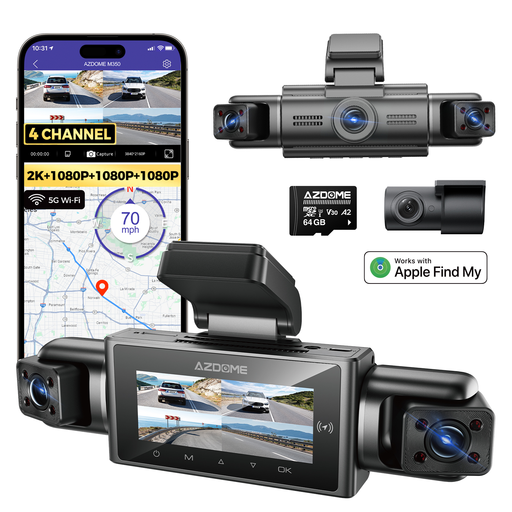
Why This Fits Their Persona: Perfect for users who want seamless surveillance of their vehicle and value innovative technology. The 360-degree car camera functionality via four channels covers every angle, and the Apple Find My integration offers unique added value.
Instead of focusing only on high resolution at the front, this system provides verifiable all-around coverage. It avoids the trap of inadequate surveillance by eliminating blind spots.
The native integration into the Apple Find My network for global vehicle tracking is a unique selling point. The 4-channel recording (2.5K front + 3x 1080p) ensures comprehensive documentation.
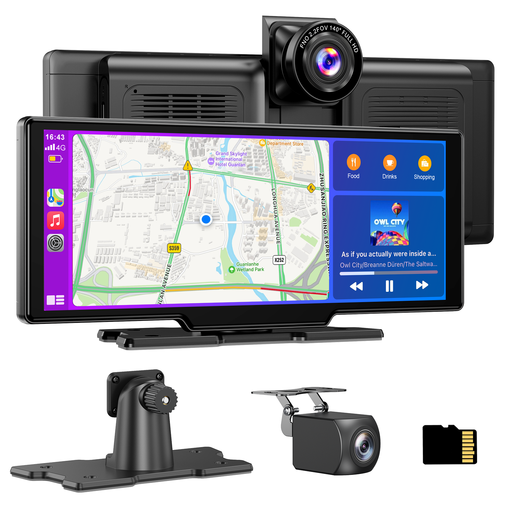
Why This Fits Their Persona: This device is designed for drivers who want to modernise their vehicle without complex modifications. It combines a 4K dash cam with a large display for wireless CarPlay and Android Auto, navigation, and media playback.
It solves the problem of a cluttered dashboard by bundling multiple functions into one device. The dash cam function is not an afterthought but offers full-fledged 4K recording quality.
The 2-in-1 solution instantly upgrades the cockpit. The simple plug-and-play installation via the cigarette lighter socket makes it suitable for almost any vehicle, with no technical expertise required.
We have compiled a complete, up-to-date list of products that fully meet these strict selection criteria and comply with German regulations.
Yes, using a dash cam to document driving events is generally permitted in Germany. However, there are data protection restrictions (GDPR). Permanent, indiscriminate recording of public space is not allowed. Most modern dash cams solve this problem with loop recording, where old material is continuously overwritten. Only in the event of an incident (e.g., triggered by the G-sensor) is the relevant sequence saved permanently. The recordings may only be used and shared for a specific purpose, such as for securing evidence after an accident.
A battery (usually lithium-ion) stores energy chemically and is susceptible to high temperatures, such as those that can occur in a parked car in summer. Heat can drastically shorten the battery's lifespan and, in extreme cases, pose a safety risk. A supercapacitor stores energy physically and is much more robust against extreme temperatures (e.g., -20°C to 70°C). It has a significantly longer lifespan and is therefore the more reliable and safer choice for use in vehicles.
For a reliable and long-term parking mode, a hardwire kit is generally required. It connects directly to the vehicle's fuse box and supplies the dash cam with power even when the ignition is off. Smart hardwire kits have a battery monitor that cuts off the power supply before the car battery's voltage drops to a critical level, preventing it from being drained. Some dash cams offer a parking mode via an internal battery, but its runtime is usually limited to a few hours or short events.