If you freeze individual portions
If you freeze cooked meals in individual portions, look for easy-to-adjust power and time settings. The BfR recommends stirring food partway through microwaving and checking that it has heated thoroughly throughout.


For individual portions of frozen couscous, a solo microwave with adjustable power and time settings is usually sufficient; you don’t need a grill just to reheat food. The key things to consider are whether your dish fits, whether the defrost function can be controlled, and whether you can stir the food while it heats. The Federal Institute for Risk Assessment (BfR) recommends storing leftovers correctly and heating food thoroughly when reheating it. However, this won’t reliably neutralise heat-stable toxins that may already have formed.
If you freeze cooked meals in individual portions, look for easy-to-adjust power and time settings. The BfR recommends stirring food partway through microwaving and checking that it has heated thoroughly throughout.
If space is limited in your kitchen, consider the microwave’s external dimensions as well as the size of your dish and the turntable. The stated capacity in litres alone won’t tell you whether your dish will fit.
If you heat larger containers or several portions at once, consider the cavity, turntable and power settings together. A larger cavity may take up more room where you plan to place the microwave.
A good fit if: you mainly want to defrost and reheat individual portions, and your dish and cover fit inside.
What to consider: Check the dish and turntable dimensions, not just the stated cavity capacity. An automatic programme doesn’t replace stirring or checking that the food has heated through.
A good fit if: you use larger containers or want a choice of power levels and defrost programmes.
What to consider: Make sure you have room for its larger footprint in your kitchen. A manufacturer’s claim of even heating doesn’t prove that every portion of couscous will be heated safely.
A good fit if: you also want to grill or bake regularly, as well as reheat food.
What to consider: These extra features aren’t needed for couscous alone. Factor in the space required and the extra cleaning.
| What matters to you | What to look for | Who should prioritise this? |
|---|---|---|
| Controlled heating | Adjustable power and time settings; easy access to the dish for stirring. | If I want to make sure the portion is hot throughout after stirring, I look for settings that are easy to control. Around 36% of consumers prioritise controlled heating. |
| Defrosting frozen portions | Compare the power levels and defrost programme; check the instructions to see whether the programme is suitable for your portion size and food. | If I’m heating a portion straight from the freezer, I want to be able to set the power and defrost function to suit it. Around 29% of consumers say defrosting frozen portions is their main buying priority. |
| Dish and available space | Measure your dish, including its lid, as well as the turntable and the microwave’s external dimensions. | If I have limited space or use a larger container, both the container and the microwave need to fit in my kitchen. Around 21% of consumers prioritise whether the container or microwave will fit. |
| Simple features | Choose extra features only if you’ll actually use them; check the guidance on suitable containers and the dimensions needed for installation. | If I mainly want to defrost and reheat food, I don’t want to pay for features I won’t need. Around 14% of consumers prioritise a simple feature set. |
A programme can’t rule out cold spots or reliably neutralise heat-stable toxins that may already have formed. The BfR recommends storing leftovers correctly, stirring food while heating it and heating it thoroughly.
Refrigerate cooked leftovers promptly or freeze portions you plan to use later. Stir the couscous while it heats and check that the whole portion is hot enough.
The cavity capacity alone won’t tell you whether your dish will fit on the turntable or whether the microwave will fit in the space you have available.
Measure your dish and the space where you plan to put the microwave, then compare them with the turntable size, cavity dimensions and external measurements of the specific model.
If your existing dish doesn’t fit, you may need to use a different suitable container.
You don’t need these extra features just to reheat food. They’re only worthwhile if you plan to use them for other dishes too.
Choose a grill or convection setting if you’ll use it regularly, and remember to allow for the extra space it requires.
Extra features may mean a larger footprint.
Containers vary in the temperatures and uses they’re suitable for. The Verbraucherzentrale (German consumer advice centre) recommends following the usage instructions and temperature limits for the specific dish or container.
Check whether the manufacturer says the container is suitable for both freezing and reheating at your chosen setting. Don’t continue using damaged containers.
You may need a replacement if your container is unsuitable or damaged.
The M20 electronic is a solo microwave with adjustable power.
The NN-SD38 is a larger solo microwave with inverter technology and defrost programmes.
The MH6535GIS combines a microwave and grill for households that will use both functions.
The freestanding FFL023MW0 has automatic programmes and lets you save a preferred setting.
The MG23T5018CW is a microwave with a grill for households that want to cook in other ways as well as reheat food.
According to their product descriptions, the following Joybuy models are suitable for defrosting and heating food. Before buying, check that your dish will fit and read the manufacturer’s instructions for defrosting and heating.
 No image available
According to the product name, this model has a defrost function and six power levels for frozen individual portions.
19 l, 700 W, turntable and inverter technology.
 No image available
The defrost function and adjustable power levels suit individual frozen portions, provided your container fits inside the cavity.
20 l, 700 W, six power levels, defrost function and 30-minute timer.
 No image available
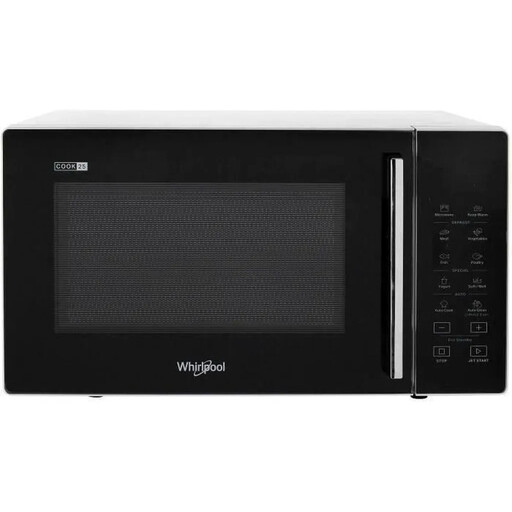
The 27-cm turntable can help you decide if you want to compare your dish size with the microwave.
25 l, 900 W, seven power levels and a defrost programme.
 No image available
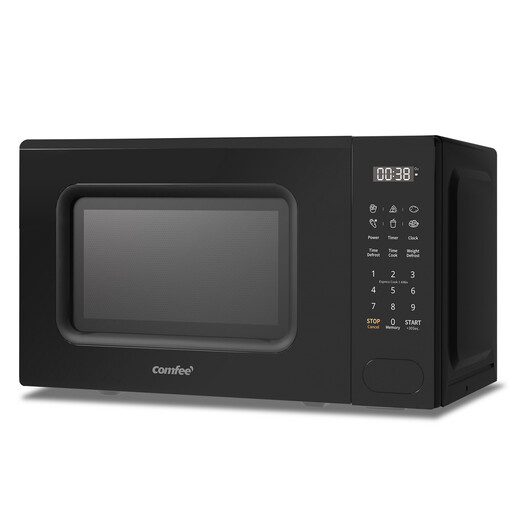
The defrost function and power levels are useful for frozen portions. Check the instructions to see how to use them for your portion size.
20 l, 700 W, eleven power levels and six pre-set menus.
 No image available
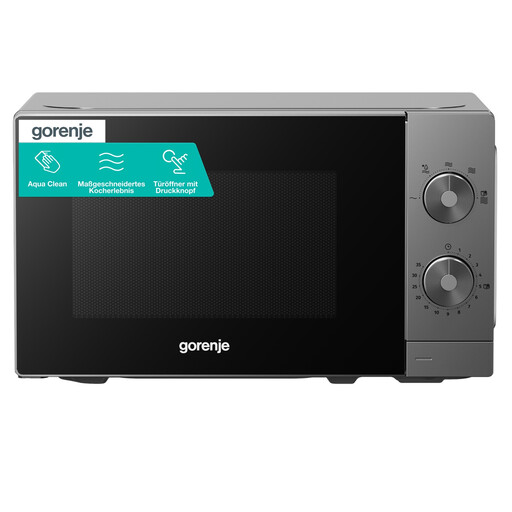
The adjustable power levels and defrost function are useful for food frozen in individual portions.
20 l, 700 W, five power levels and timed defrosting.
Cool cooked leftovers promptly and keep them refrigerated until you’re ready to use them, or freeze portions you plan to use later. Heat the portion evenly and stir it partway through microwaving. The BfR recommends heating food to at least 70 °C for two minutes throughout; if in doubt, you can check the temperature. Reheating won’t reliably neutralise heat-stable bacterial toxins that have already formed.
Only if the container’s instructions say it’s suitable both for freezing and for heating at your chosen power and temperature. The Verbraucherzentrale (German consumer advice centre) points out that plastic containers vary; you shouldn’t continue using damaged ones.
Compare the specific appliance’s external dimensions and installation instructions with the space where you plan to put it. If the door is visibly damaged or worn, the Federal Office for Radiation Protection recommends having it checked by customer services and repaired or replaced if necessary.
No. The CE marking is the manufacturer’s declaration of conformity, not an independent award. The European Union’s Your Europe website explains the marking in relation to the relevant product requirements. When you buy, check that the information applies to the specific model on offer.
Your statutory rights against the seller are separate from any voluntary manufacturer’s guarantee. Old electrical appliances shouldn’t go in household rubbish. The German Environment Agency lists options including recycling centres and suitable take-back points at retailers.