Families making several portions
If you want to make several cold drinks, compare the usable capacity with the amount you plan to prepare and check the ice-crushing function for the specific model.


A blender that specifically states it can crush ice is a sensible starting point for frozen mocha at a family breakfast. Its usable capacity should also suit the portions you plan to make. A more compact appliance may be enough if you don’t mind blending in several batches – jug capacity, ease of use and cleaning are more useful factors when choosing than wattage alone. If children will be having a drink too, plan a separate portion without coffee: the German Federal Institute for Risk Assessment notes that coffee and cocoa contain caffeine.
If you want to make several cold drinks, compare the usable capacity with the amount you plan to prepare and check the ice-crushing function for the specific model.
If you often use ice or frozen ingredients, check what the manufacturer says the specific model can process and whether its controls suit the texture you’re after.
If you don’t mind blending in several batches, a more compact appliance with easy-to-clean parts may matter more to your breakfast routine than a large jug.
First check whether the blender is specified for crushing ice. Then consider whether its capacity, footprint and cleaning requirements suit your breakfast routine.
| Consideration | What to check before buying | Who it matters to most |
|---|---|---|
| Ice and frozen ingredients | Check for a specified ice-crushing function, pulse or ice programme, and the manufacturer’s guidance for the exact model. | If I want ice cubes in my frozen mocha, the blender’s specified ice-crushing capability needs to suit my recipe. Around 34% of consumers prioritise ice-crushing ability. |
| Family portions | Compare the number and size of portions you plan to make with the model’s working or usable capacity. | If I want to make several drinks in one go, the actual usable capacity is key. Around 33% of consumers put family-sized capacity first. |
| Cleaning up after breakfast | Check each part individually to see whether it can be removed and whether the manufacturer says it is dishwasher-safe. | If I use the blender regularly in the morning, I want to be able to clean the jug, lid and accessible parts easily. Around 20% of consumers prioritise easy cleaning. |
| Kitchen space | Check the appliance’s height, footprint and the space needed to remove the jug at the intended location. | If my worktop space is limited, a well-fitting appliance matters more than blending a large batch in one go. Around 13% of consumers focus primarily on the space it takes up. |
For several breakfast portions, it’s the working or usable capacity of the specific model that matters – not just a large figure in the product name.
Add up the portions you plan to make and compare the total with the capacity stated for that model. If its working capacity is lower, you may need to blend an extra batch.
CHIP’s stand blender test notes that high power alone doesn’t guarantee a good result.
First check whether the manufacturer says the exact model can crush ice. If a particular texture matters to you, look for tests covering the specific model variant and use.
A voluntary guarantee does not determine the extent of your statutory rights if goods are faulty. Your Europe, the EU’s consumer portal, explains the difference between these protections.
Read the guarantee terms separately and, if there’s a fault, find out about your statutory rights against the seller.
The PowerBlend 1 JB1000WH is a compact stand blender for households happy to blend in several batches when needed.
The 3000 Series HR2291/41 is a stand blender for which Philips specifies ice crushing and a family-friendly jug size.
According to the manufacturer, the InfinyMix BL91HD combines a dedicated ice programme with a separate to-go cup.
The VitaBoost MMBH6P6BDE is an example of a larger, high-performance blender.
The Detect Power Mixer Pro TB301EUCP is an option to compare, but it isn’t automatically a recommendation for frozen mocha.
The selection ranges from portable blenders to stand blenders specified for crushing ice. If you’re making several portions for the family, compare the usable capacity of each model with your recipe.
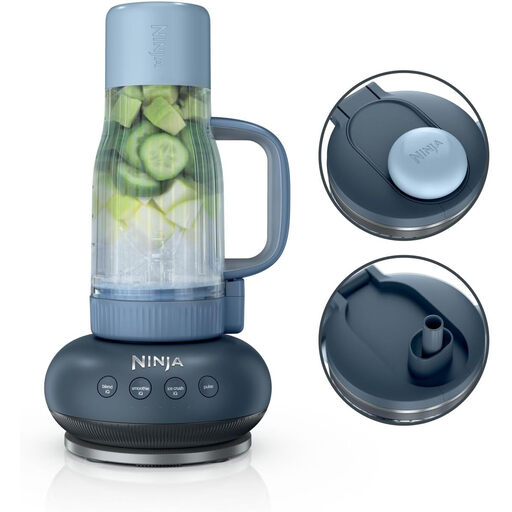 No image available
A portable option if you’re looking for a blender specified for crushing ice.
The product title lists a 710 ml travel cup, three pre-set automatic modes and dishwasher-safe parts.
 No image available
A stand blender option if you want to crush ice and use different containers for food preparation.
The product title lists a 1,500 ml blending jug, a 600 ml travel bottle and a 300 ml chopper, as well as 800 W.
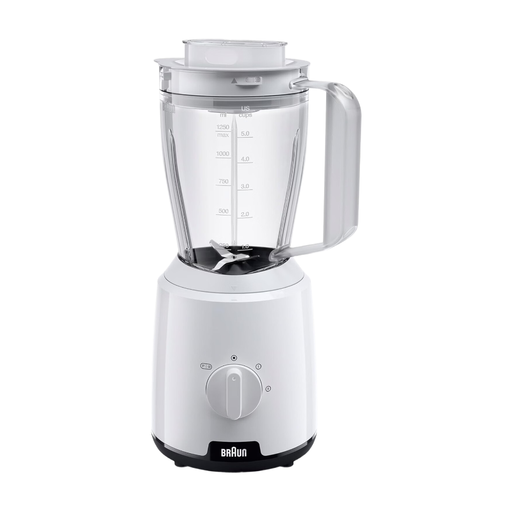 No image available
A more compact stand blender option if you’re looking for a clearly stated ice-crushing function and don’t mind blending in several batches.
The Joybuy product title lists a 1.5 l blending jug; Braun Household states that this model has a 1.25 l working capacity. Compare these figures with the amount of drink you plan to make. According to the product description, it should be run for no more than 2 minutes at a time, with the motor allowed to cool between cycles.
 No image available
A stand blender option if you’re looking for a model specified for crushing ice and with a pulse function.
The product title lists 600 W and 1.5 l.
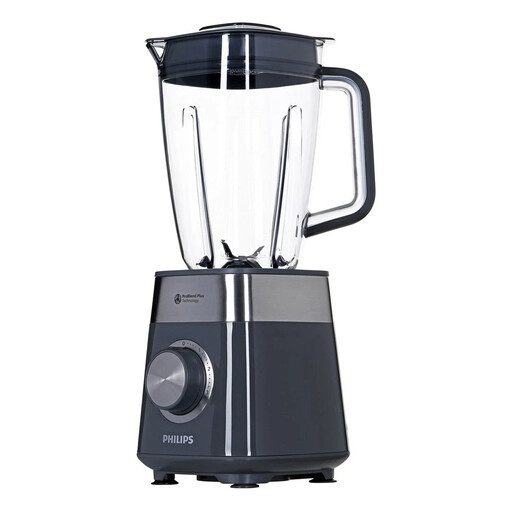 No image available
A stand blender option if you’re looking for an appliance specified for crushing ice.
The product title lists a 2 l jug. Check the capacity intended for your recipe for the exact model.
No. Compare the amount of drink you plan to make with the working or usable capacity of the specific model. Braun Household states that the JB1000WH has a 1.25 l working capacity; Tefal gives the BL91HD’s blending jug a usable capacity of 1.75 l.
Follow the instructions for your model and check whether each component is dishwasher-safe. Braun Household says the JB1000WH has detachable, dishwasher-safe parts; for the Tefal BL91HD, the dishwasher-safe claim applies specifically to certain jug parts without the blades.
Plan a separate portion for children without coffee. The German Federal Institute for Risk Assessment notes that coffee and cocoa contain caffeine, and that possible adverse effects depend on the amount consumed and individual sensitivity.
For a distance contract with a trader, you generally have a 14-day right to cancel from the date of delivery; statutory exceptions and conditions relating to return postage apply. Your Europe, the EU’s consumer portal, distinguishes this right from statutory claims for faulty goods, which it says have a minimum duration of two years from receipt.
For the specific offer, check details such as the product markings, identifiable manufacturer information and German instructions with any required warnings. The German Federal Network Agency lists these as checks in its market surveillance of electrical household products.