
Same-day & Next-day Delivery

Quality Guaranteed

Unlock Your Welcome Offers: FREE Delivery | Up to 80% OFF | Free 30-day JoyPlus trial
Download the APP
Frozen seafood is practical for households, keen home cooks and catering businesses: it can be portioned, stored and used for pasta, paella, sushi, salads or stir-fries. Even so, not every offer can be compared directly. Pack size, glazing, preparation state and allergens can all have a significant impact on the actual value of the product.
That is why the most important purchasing decisions start not with the product image, but with the label.
A pack may, for example, be advertised as 1 kg, even though the drained weight is only 700 g. The difference is usually due to protective glazing or added water. For a fair price comparison, you should always use the net quantity or drained weight.
This can be seen in products such as Asian Choice 31/40 Black Tiger Shrimp P&D 1kg (700g Net). The pack name states 1 kg, but the specified net quantity is 700 g.
Raw prawns and raw squid need to be heated thoroughly. Blanched or cooked products, on the other hand, are generally intended to be heated for a shorter time. If you fry an already cooked Seafood Mix for too long, it may become firm or chewy.
So look out for terms such as “raw”, “cooked”, “blanched”, “peeled” or “deveined”. These details are more important than general marketing claims such as “ready to cook”.
Prawns are crustaceans, while squid and mussels are molluscs. Surimi often also contains fish, wheat, egg and, in some cases, crustacean ingredients. A seafood mix may therefore contain several types of allergen.
Salt, water, humectants or acidity regulators may also be included in the recipe. Checking the ingredients list and allergen information helps prevent unsuitable purchases and makes planning easier for guests or commercial kitchens.
For individual households, packs of 200 to 800 grams are often easier to plan around. Catering businesses and high-volume users can work with 1 kg packs, but should take storage capacity, usage levels and drained weight into account.
IQF products are frozen individually. This means that, for example, frozen prawns can be removed in portions without having to defrost the entire bag. Portioning is less flexible with compact blocks.
Specifications such as 26/30, 31/40 or 16/20 usually refer to the number of pieces per unit of weight. A smaller number indicates larger prawns. Nevertheless, you should check the specific reference unit and pack contents on the label.
Vannamei prawns are suitable for pasta, rice dishes and stir-fries because they generally have short cooking times. Black Tiger prawns are often chosen for grilled dishes, hotpot or decorative plate presentations. With products supplied with shell or head, the usable portion differs from that of peeled versions.
Most products in this selection require storage at –18 °C or colder. Once defrosted, they should be refrigerated according to the packaging instructions and used within the specified period. The products listed are not intended to be refrozen.
Raw products should be cooked through completely. For practical kitchen planning, it is also worth distinguishing between already peeled prawns, whole squid and pre-cooked mixes.
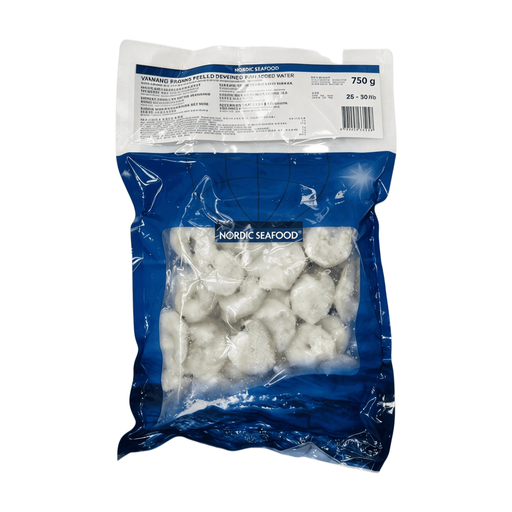
Why this product suits this profile: Peeled and deveined Vannamei prawns reduce preparation time and work well in pasta, rice dishes or stir-fries.
The size classification 26/30, weight of 750 g and “peeled & deveined” preparation state are clearly stated.
750 g pack, raw prawns, deveined; according to the product information, 15 g of protein and 0.9 g of salt per 100 g.
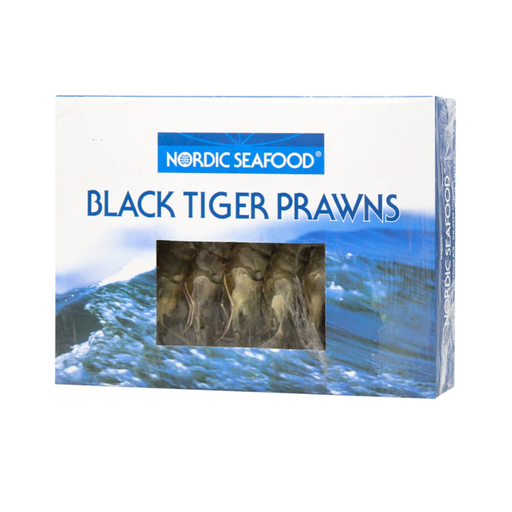
Why this product suits this profile: The HOSO version with a 16/20 size classification is suitable for grilled dishes and presentations where whole prawns are required.
The product description states the species, size classification and net weight. This makes it easier to compare the product with peeled versions.
Black Tiger prawns, whole version, 750 g net weight and 20 g of protein per 100 g according to the product information.
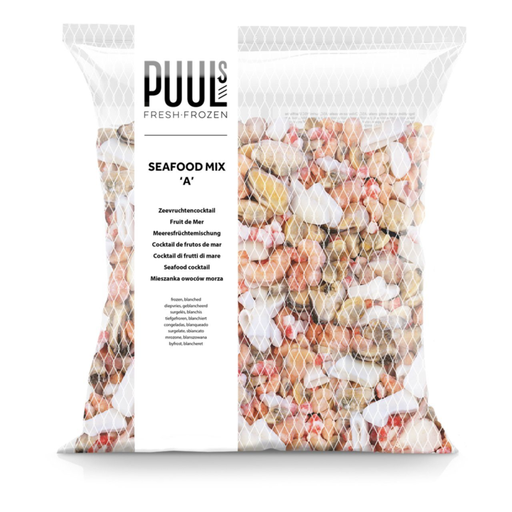
Why this product suits this profile: This mix combines prawns, squid, mussels, clams and surimi for paella, Frutti di Mare pasta or salads.
The ingredients list identifies the species and allergens included. This makes it easier to choose than mixes whose contents are not itemised in detail.
1 kg pack, several seafood components and 13 g of protein per 100 g according to the product information.
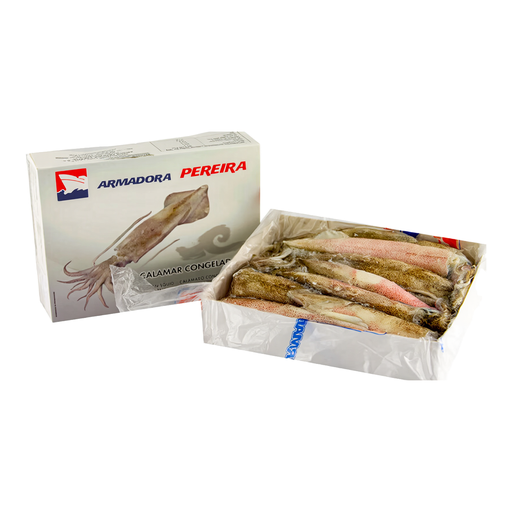
Why this product suits this profile: Whole squid can be used for grilled recipes, stuffed dishes or sliced into rings yourself.
According to the product information, the recipe consists of 100% squid. This makes the raw ingredient content clear and easy to verify.
1 kg pack, mollusc as the only listed ingredient and instructions for defrosting in the refrigerator.
Depending on the dish, other product types may also be suitable:
We have put together a complete, regularly updated list of products that fully meet these strict selection criteria and the safety regulations applicable in the EU.
The safest standard method is to defrost it in the refrigerator. The product should be placed in a sealed container so that the defrosting liquid cannot come into contact with other food. The instructions on the relevant packaging should then be followed. Defrosted products should not be refrozen.
If storage conditions of –18 °C or colder have been maintained continuously, the best-before date on the packaging applies. Frequent temperature fluctuations, opened packaging or freezer burn can affect quality. The packaging date and storage instructions are the key factors for an accurate assessment.
Compare the price per edible net quantity, not just the price per pack. You should also take into account raw and cooked products, shelled and shell-on products, the proportion of glazing, piece size and the intended use. This makes it easier to assess whether peeled Vannamei prawns, Black Tiger prawns, a seafood mix or an individual salmon fillet is the right choice for your kitchen.