What to consider when buying
Built-in oven with convection or hot air
Suitable if: you have a suitable built-in space and your baking plans involve larger tins or several batches.
Consider: the space and electrical connection must suit your kitchen. A claim about baking on several levels doesn’t prove that several tall fruit cakes will bake well at the same time.
Freestanding mini oven with convection
Suitable if: you don’t have a suitable built-in space and are happy to bake smaller quantities or in successive batches.
Consider: the litre capacity and number of shelf positions don’t tell you whether your loaf tin will fit with enough room above it.
Compare appliances based on your tins, the space available and the heating function your recipe calls for. The percentages in the table refer to consumers who rank each of the listed concerns as their top priority for this baking session.
| Priority |
What to check when buying |
Who it matters most to |
| Space and number of batches |
Compare tin dimensions, usable internal height, racks and the baking table for the shelf positions you plan to use. |
If we want to bake several tins in as few batches as possible, the usable rack area and clearance above the cake tins matter to us. Around 33 % of consumers say space and the number of batches are their top buying priority. |
| Built-in or freestanding location |
For a built-in oven, check the space dimensions and connection; for a mini oven, check the external dimensions and placement instructions. |
If there isn’t a suitable built-in space, a freestanding appliance needs to fit in the space available to us. Around 27 % of consumers rank the built-in or freestanding location as their top buying priority. |
| Heating function for your cake |
Check the recipe and instruction manual for top/bottom heat, convection, shelf position, temperature and preheating. |
If the base and topping of our fruit cake matter more to us than baking several trays at once, we want to choose a heating function to suit the recipe. Around 27 % of consumers prioritise the heating function and baking settings for their cake. |
| Energy and cleaning |
For appliances with published figures, compare kWh figures for the same heating function and consider how much cleaning they require. |
If we use the oven regularly, we want to consider baking cycles and cleaning effort together. Around 13 % of consumers make energy and cleaning their top buying priority. |
When baking several tall loaf cakes, the baking table for the specific oven is essential: manufacturer guidance on baking on several levels applies only to the types of baking and shelf positions listed. For fruit cakes with a crisp base, the NDR suggests bottom heat as a possible option; check the setting against your recipe. For ovens with published figures, the energy label gives consumption per standardised baking cycle and heating function, not your individual electricity use.
Products at Joybuy
This selection includes built-in ovens with hot air, as well as appliances for smaller batches, provided their dimensions and baking instructions suit your tins.
 No image available
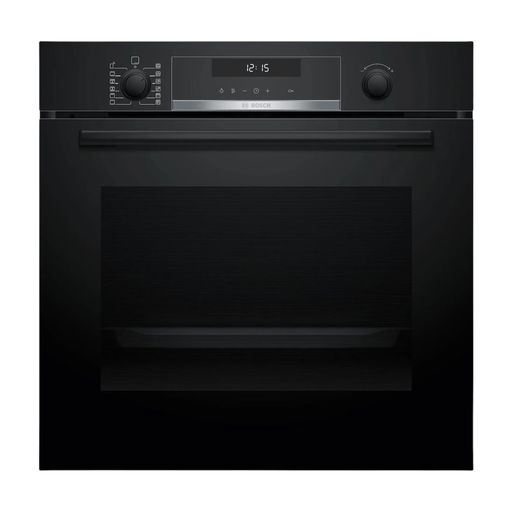
Bosch HBA571BB4 Series 2 built-in oven
An option if you have a suitable built-in space and are looking for a built-in oven with hot air.
71 l capacity; 3D hot air on up to three levels. This doesn’t guarantee that you can bake several tall fruit cakes at once; check the baking table for the specific model.
View at Joybuy
 No image available
Bosch Series 6 HBG578EB7 built-in oven
A built-in option if the space dimensions and connection suit your kitchen. Check the instructions for the cake tins you plan to use.
The product name lists 60 cm, Home Connect and AirFry. Before buying, check that these features meet your needs.
View at Joybuy
 No image available
Bosch Series 6 HBG578ES3 built-in oven
An option if you’re looking for a built-in oven and its dimensions suit your kitchen.
The product name lists a width of 60 cm, AirFry and 3D hot air. Check the baking table for the shelf positions and cake tins you plan to use.
View at Joybuy
 No image available
23-l mini oven with air fryer function and two cooking zones
May suit smaller batches; check beforehand that your loaf tin will fit inside.
The product name lists a capacity of 23 l, two cooking zones and 15 programmes. Check the usable internal dimensions and choose a function that suits your cake.
View at Joybuy
 No image available
Haier H6 ID23T3HTB built-in oven
A built-in option if the space dimensions suit the appliance and you can make use of its features for your baking plans.
The product name lists a capacity of 78 l and nine cooking functions. Check the internal dimensions and baking guidance for your cake tins.
View at Joybuy
Frequently asked questions
Can I bake several fruit cakes in loaf tins on different levels at the same time?
Not just because the oven claims to have “3D hot air”. AEG recommends following the instruction manual when baking on several levels and usually refers to flat biscuits and small bakes. Check the baking table for your specific oven and tall tins; if it doesn’t give a suitable setting, plan to bake in several batches.
Which heating function and preheating settings are right for fruit cake?
Follow your recipe and the model’s baking table, as the shelf position, temperature and timing depend on what you’re baking. The NDR suggests bottom heat as a possible way to give fruit cakes a crisp base. Preheat if the recipe or instruction manual says to.
What should I check when installing or positioning the oven?
For a built-in oven, check that the space dimensions and connection details are suitable for your kitchen. For a freestanding mini oven, check its external dimensions, the surface it will stand on and the placement instructions in the specific manual. You can’t tell whether a loaf tin will fit based on the litre capacity alone.
How can I understand energy consumption and my rights after buying?
For ovens covered by the scheme, the EU energy label shows consumption per standardised baking cycle, separately for each heating function. It doesn’t tell you what your electricity bill will be without details of how you use the oven and your electricity tariff. When you buy as a consumer in Germany, you have statutory rights against the seller if the product is faulty; the Verbraucherzentrale explains how these differ from a voluntary guarantee.
Does every small convection countertop oven need an EU oven energy label?
No. According to the European Commission, small and portable ovens are outside the scope of the oven energy labelling rules reviewed. This doesn’t tell you how energy-efficient a specific appliance is in use; compare the model-specific information available instead.


