Cobbler bakers with a large dish
You want to bake a dish to share at a picnic, and your main concern is whether the dish and portions will fit in the usable oven cavity.


A countertop oven may be all you need to bake a fruit cobbler for a picnic, provided your particular baking dish, including its handles, fits inside the usable oven cavity. A built-in oven is worth considering if you regularly bake larger quantities or other dishes on multiple shelves, but you’ll need a suitable space and installation. Follow your recipe for the heating mode and temperature, and plan for transport separately.
You want to bake a dish to share at a picnic, and your main concern is whether the dish and portions will fit in the usable oven cavity.
You need a freestanding appliance and are weighing up dish size, worktop space and whether you might need to bake in additional batches.
You regularly plan to bake other things as well as cobbler, so you’re checking how many shelves and what quantities the oven can handle.
A good fit if: You want to bake a single dish that you’ve confirmed will fit, and can’t use a built-in oven. Severin lists the TO 2078 as having a 20 l capacity, with conventional top and bottom heat and fan-assisted cooking.
Consider: The oven’s capacity alone doesn’t prove your dish will fit. You’ll also need to check the available worktop space and ventilation clearances.
A good fit if: You need a larger dish but a built-in oven isn’t an option. Rommelsbacher lists the BG 1805/E as having a 42 l capacity and accommodating baking tins up to 31.5 cm in diameter; CASO lists the TO 26 SilverStyle as having a 26 l capacity and accommodating tins up to 30 cm in diameter.
Consider: For square or tall dishes, you’ll also need to check the internal dimensions and shelf position. The stated diameters don’t guarantee that every dish will fit.
A good fit if: You have a suitable space for a built-in oven and want to use it for other baking too. Bosch lists the HBA514BS3 as having 3D Hotair for baking on up to three shelves.
Consider: The oven must fit the available space and be installed correctly. Multiple shelves aren’t proven to offer an advantage when you’re baking just one cobbler.
| Buying priority | What to check before buying | Who it matters to |
|---|---|---|
| Dish that fits | Measure the outside of the dish, including the handles, and compare it with the internal dimensions and shelf position. Rommelsbacher lists the BG 1805/E as accommodating round dishes up to 31.5 cm, while CASO lists the TO 26 SilverStyle as accommodating dishes up to 30 cm; these figures don’t replace checking your own dish. | If I want to be sure my dish will fit in the oven, I’ll measure it, handles and all. Around 33% of consumers put fitting their dish first. |
| Freestanding rather than built-in | Compare the appliance dimensions and the ventilation requirements in the manual with the worktop space available. | Without a space for a built-in oven, I need an appliance that fits on my worktop. Around 25% of consumers mainly want a freestanding oven. |
| Baking quantity and heating mode | Use the heating mode and temperature specified in the recipe. If you’re baking several dishes, check whether the oven is specifically designed for cooking on multiple shelves. | If I’m baking for several people or regularly cooking other dishes, I look at capacity and suitable features. Around 25% of consumers prioritise larger baking quantities. |
| Energy use and cleaning | For ovens with the relevant energy label, compare kWh per standard cycle using the same heating mode. Also check the cleaning instructions and features. | If I use the oven often, I want to keep an eye on energy use and cleaning. Around 17% of consumers prioritise running costs and cleaning. |
A capacity in litres doesn’t tell you the width or height of your baking dish, or whether its handles will fit. Your recipe may also call for a shallow dish.
Measure the outside of your dish and compare it with the oven’s internal dimensions, shelf position and the manufacturer’s guidance for that specific model.
If your dish doesn’t fit, you may need a different baking dish or an extra baking batch.
A tested strawberry and rhubarb cobbler recipe gives different instructions for conventional and fan-assisted ovens.
Follow the heating mode and corresponding temperature in your recipe, and check that the cobbler is cooked through.
For ovens covered by the relevant rules, an energy label gives standardised kWh per baking cycle for certain heating modes. It doesn’t show how much energy a particular cobbler recipe will use. The European Commission lists small ovens as an example of products outside the scope of the relevant ecodesign regulation.
Only compare specific energy-use figures on the same basis, and consider how often you’ll use the oven. For a small countertop oven, check the product information for the specific model.
Food safety also depends on storage and transport once the cobbler has been baked.
Make sure you have suitable refrigeration for perishable ingredients or accompaniments until they’re ready to eat. The German Federal Institute for Risk Assessment recommends keeping perishable foods sufficiently cool during transport, too.
Compact countertop ovens. The TO 2078 is one option for baking a single dish, provided you check that it fits.
Freestanding ovens with larger cavities, such as the BG 1805/E for shoppers looking to use a larger round dish.
Freestanding countertop ovens ranging from very compact to larger models. The TO 26 SilverStyle is one example.
Built-in ovens for a suitably equipped kitchen and regular baking. The HBA514BS3 is one example.
The selection below includes countertop and built-in ovens for baking. Check your cobbler dish’s dimensions against the usable oven cavity to make sure it will fit.
 No image available
A built-in option to consider if you have a suitable space and want to use the oven for other baking as well as cobbler.
70 l; 60 cm; 3 kW; fan-assisted cooking, grill and several cooking functions, according to the product details.
AquaClean steam cleaning and an LED timer are also listed.
 No image available
A freestanding option, provided you’ve confirmed that your cobbler dish fits inside the oven and you have enough worktop space.
32 l; 1,600 W; temperature range 100–250 °C; timer up to 60 minutes.
A crumb tray is included, according to the product name.
 No image available
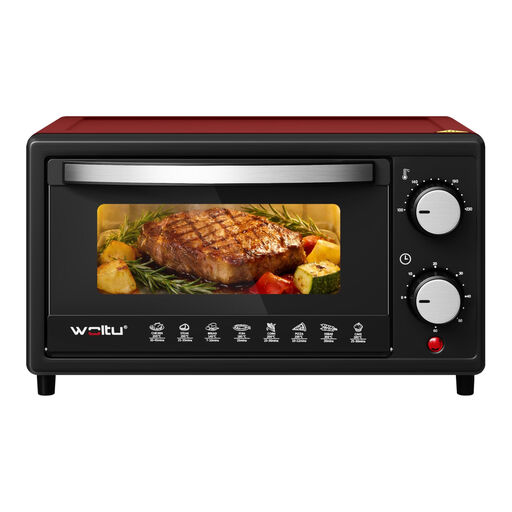
This compact design is only suitable if your particular dish, including its handles, fits inside. Check the available oven space before buying.
10 l; temperature range 100–230 °C; timer up to 60 minutes.
The listed appliance dimensions are 37 × 26.5 × 21 cm.
 No image available
A countertop option if your dish fits and you want to choose between the listed heating modes to suit your recipe.
28 l; top heat, bottom heat or combined heating; temperature range 100–230 °C; timer up to 60 minutes.
The stated capacity for a 26 cm pizza doesn’t prove that a cobbler dish of the same width will fit.
 No image available
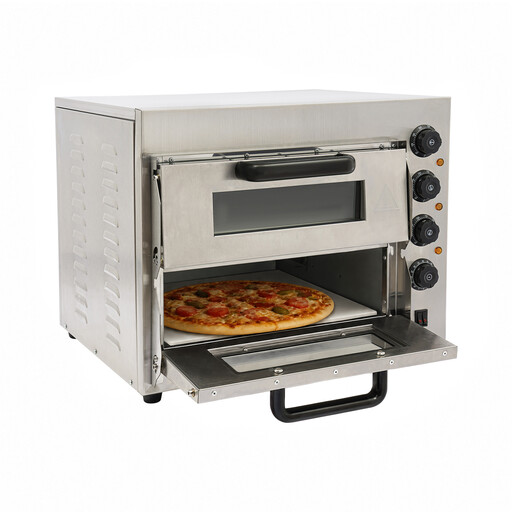
A freestanding option for baking several things, provided your dish fits on one shelf and you have enough worktop space.
Two shelves, each with a 20 l capacity; temperature range 50–350 °C; timer from 1–60 minutes.
The stated capacity for a 14-inch pizza on each shelf doesn’t confirm that a cobbler dish will fit.
Follow your specific recipe and the heating mode it recommends. A strawberry and rhubarb cobbler recipe from LECKER suggests 175 °C with conventional heat or 150 °C with fan-assisted cooking, and a baking time of around 50 minutes. These instructions won’t automatically apply to every recipe.
Before setting up your oven, check the manual for the specific model’s worktop and ventilation requirements. Rommelsbacher lists a removable crumb tray and coated oven cavity for the BG 1805/E. Always follow the instructions for cleaning your particular appliance.
An oven doesn’t replace safe food storage. The German Federal Institute for Risk Assessment recommends keeping perishable foods sufficiently cool during transport, too. Make sure you can keep your cobbler chilled until it’s time to eat, especially if it contains ingredients or accompaniments that need refrigeration.
For ovens with the relevant label, the EU energy label shows kWh per standard baking cycle for the listed heating modes. This isn’t an exact energy-use figure for your cobbler recipe. The European Commission lists small ovens as an example of products outside the scope of the relevant ecodesign regulation; you can’t tell whether a particular appliance is covered just from the label “mini oven”.