What should you look for when buying?
Small freezer box or existing freezer compartment
A good fit if: you only have a few cooled portions to freeze occasionally and your containers will fit.
The trade-off: A small box may not have enough freezing capacity for larger batches cooked together. Check the specific model’s annual energy consumption too.
Upright freezer with drawers
A good fit if: several people want to store portions separately and take them out at different times.
The trade-off: Drawers make it easier to keep portions organised, but a large appliance may be more than you need for just a few portions and requires enough floor space.
Chest freezer
A good fit if: you often freeze larger quantities and have enough floor space for the appliance.
The trade-off: A chest freezer stores food differently from an upright model. Labelled containers and baskets make it easier to find what you need.
If your crumble hasn’t been frozen before, you’ll need a four-star freezer compartment. Then compare your largest batch with the freezing capacity in kg/24 h, and check that your containers will fit inside.
| What matters |
What to check before buying |
Who should consider this? |
| Quantity to freeze at once |
Compare the planned number of portions with the freezing capacity in kg/24 h and the container dimensions; check for a four-star freezer compartment if you’re freezing food that hasn’t been frozen before. |
If I’m preparing lots of portions with others, I want to freeze them in line with the appliance’s capacity. Around 33% of consumers put freezing capacity first. |
| Separate storage |
Check that the compartments, drawers or baskets will fit your containers, and label portions with their contents, quantity and date. |
If several people need to take food out at different times, their portions should be easy to find and reach. Around 27% of consumers prioritise being able to take out portions separately. |
| Floor space |
Check the appliance and container dimensions, and make sure the door can open. If the appliance will be installed in a cool location, check that its climate class is suitable for the conditions there. |
If space is limited where I plan to put the appliance, it needs to fit along with enough room to access it; smaller batches may be a better option. Around 20% of consumers prioritise a small footprint. |
| Energy consumption |
Compare annual consumption in kWh and usable capacity. The energy rating adds context to the consumption figure, but doesn’t replace it. |
If I’m running an additional appliance all the time, I want to take its stated energy consumption into account. Around 20% of consumers prioritise running costs. |
Suitable freezers at Joybuy
This selection includes upright freezers with separate compartments and compact freezers for smaller quantities. Choose a freezer compartment, capacity and dimensions to suit the batch you’re cooking.
 No image available
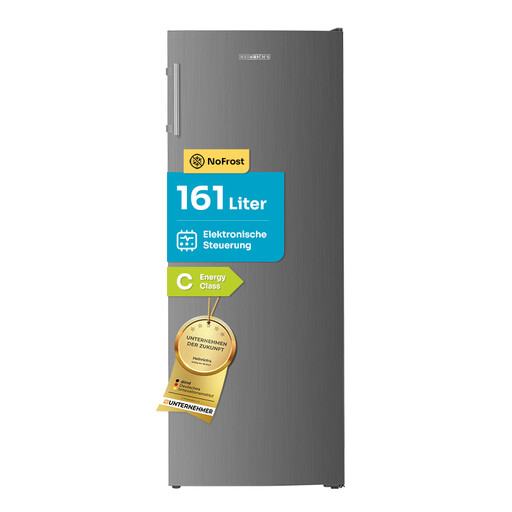
Heinrich’s upright freezer, 161 l, No Frost
The drawer layout may be useful if you want to store portions separately.
161 l; No Frost; energy class C; temperature range −14 °C to −22 °C according to the product name.
View at Joybuy
 No image available
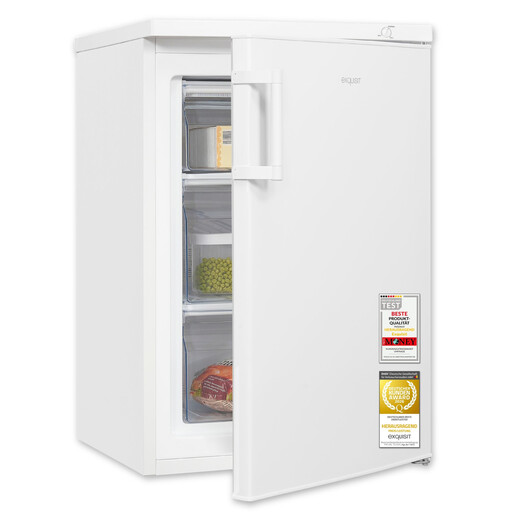
Exquisit GS581-H-010E, 85 l, four-star freezer compartment
The four-star freezer compartment is important for portions that haven’t been frozen before. Check that your containers will fit inside.
85 l; three drawers; according to the product description, manual defrosting is required if more than 5 mm of ice has formed.
View at Joybuy
 No image available
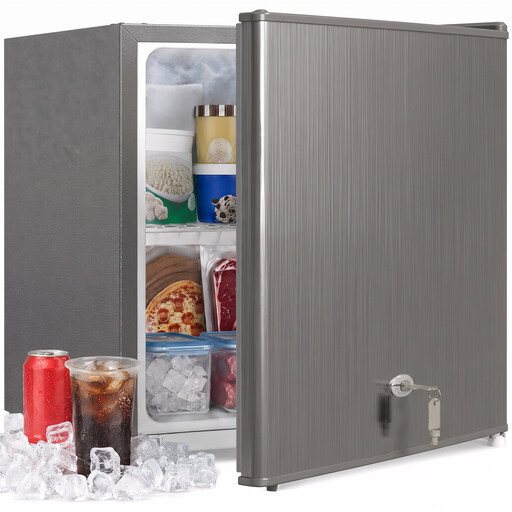
Mini chest freezer, 35 l, 47 × 44.2 × 48.8 cm
This compact design may suit smaller quantities, as long as the appliance and room to access it fit in the space you’ve chosen.
35 l; external dimensions 47 × 44.2 × 48.8 cm; 161 W according to the product name.
View at Joybuy
 No image available
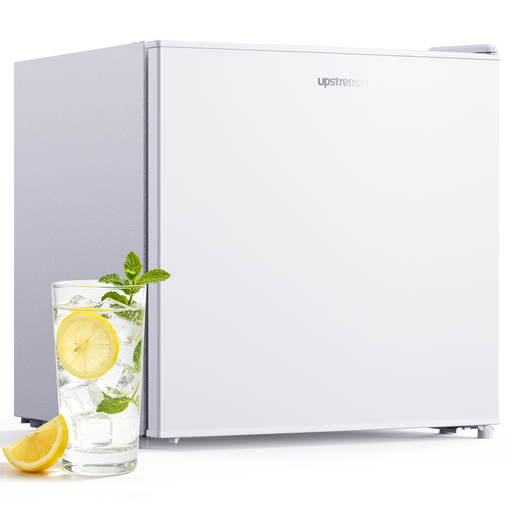
Upstreman UF35, 35 l, four-star mini freezer
The removable inner compartment can make it easier to organise food of different sizes.
35 l; reversible door; 41 dB according to the product name.
View at Joybuy
 No image available
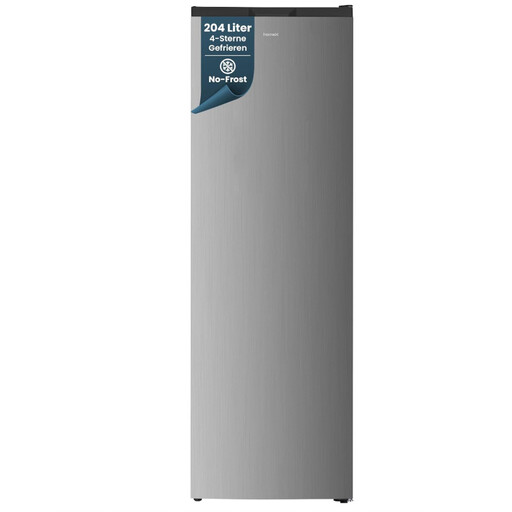
homeX FSN2041E-S, 204 l, NoFrost
Several drawers and compartments can help you store portions separately. Check the dimensions against the space where you plan to put it.
204 l; super-freeze function; 39 dB; energy class E according to the product name.
View at Joybuy
Frequently asked questions
When should freshly baked fruit crumble go in the freezer?
If you’re storing hot food for longer, cool it quickly to below 7 °C before portioning and packaging it. This is the advice of the German Federal Institute for Risk Assessment; it doesn’t specify a set cooling time for crumble. Make sure you also allow for the quantity that needs to be frozen at once.
How can I organise portions in the freezer?
Use freezer-safe containers and note the contents, quantity and date of storage. The Verbraucherzentrale gives a general guideline of up to three months for prepared meals; this isn’t a specifically tested shelf-life guarantee for fruit crumble. Nor does it tell you whether the crumble topping will have the texture you want after defrosting.
What should I bear in mind when installing and switching on the appliance?
Check that the climate class and installation conditions for the specific appliance are suitable for the location you have in mind. Severin’s guidance for the GB 8886 says that if the appliance hasn’t been transported upright throughout, it should be left to stand for at least four hours before switching it on. For other appliances, follow the relevant instructions. Don’t assume an appliance has NoFrost; check the specifications for the specific model.
How can I compare energy consumption, and what are my rights if an appliance is faulty?
For a rough cost estimate, multiply the stated annual consumption in kWh by your electricity price per kWh. Actual consumption may vary depending on use and where the appliance is installed. In Germany, if a new appliance is faulty, you generally have statutory rights against the seller for two years from the date of delivery, as the Verbraucherzentrale explains. This is separate from any additional guarantee advertised by the seller or manufacturer.
What energy label and disposal rules apply in Germany?
The EU A to G scale has applied to new fridges and freezers covered by the rules since 1 March 2021; the European Commission Representation in Germany explains the change. As the German Environment Agency advises, electrical appliances must be collected separately and can generally be taken to municipal collection points. When buying an appliance, check what additional take-back service the supplier offers for the delivery and the old appliance.


