You don’t automatically need a separate freezer for individual portions of cooled fruit crumble. Your existing fridge-freezer compartment may be suitable if it’s designed for freezing, has a four-star rating and has enough room for your containers. If you regularly freeze other food too, a separate appliance may be worth considering. Compare usable capacity, dimensions, defrosting method and kWh per year: figures from Exquisit for two models show that a smaller capacity doesn’t necessarily mean lower annual energy consumption.
Which option is right for you?
Freezing the occasional portion
If you only want to keep the odd portion of leftover crumble, first check that your existing fridge-freezer compartment is suitable for freezing and has enough room for the container. The consumer advice centre recommends a four-star compartment for proper, long-term freezing.
Preparing meals regularly
If you regularly freeze other portions as well as crumble, extra freezer space can come in handy. Choose a usable capacity that fits your containers and food without running an unnecessarily large appliance all the time.
Short on space
A separate appliance needs to fit not just in its designated space: measure the room needed to open the door and drawers, too, and compare the annual energy consumption of specific models.
What should you consider when choosing?
First, check that your existing compartment is suitable for freezing and has enough room. Only once you regularly need to freeze other food as well is it worth comparing an additional appliance by usable capacity, dimensions, energy consumption and defrosting requirements.
Existing four-star freezer compartment
Suitable if: you only freeze individual portions occasionally and have enough room in the compartment.
The trade-off: You won’t need another appliance, but space may be tight for containers and other food.
Small freestanding freezer
Suitable if: you regularly freeze several portions or other food and are short on space.
The trade-off: The additional appliance runs all the time; a compact design alone doesn’t tell you how much energy it uses each year.
Chest freezer
Suitable if: you regularly freeze larger amounts of food as well as crumble and have room for a chest freezer.
The trade-off: The extra space may be unnecessary if you only freeze individual portions now and then.
| Consideration |
What to check before buying |
Who is it most important to? |
| Enough freezer space |
Check that your existing compartment has a four-star rating and enough room for portion containers. |
If my existing compartment has enough room for containers and other food, I may not need an extra appliance. Around 36% of consumers put having enough freezer space first. |
| Annual energy consumption |
Compare the kWh per year on the EU energy label for specific models. |
If a separate appliance runs all the time, I want to compare its stated annual energy consumption, too. Around 29% of consumers prioritise energy use. |
| Space and access |
Measure the appliance’s external dimensions, the space needed to open the door and the drawers in its intended location. |
In a small kitchen, the door still needs to open and the container needs to be easy to reach. Around 21% of consumers focus on the space available. |
| Defrosting and care |
Check whether the exact model has NoFrost and what maintenance it requires. |
If I want to minimise manual defrosting, the features of the specific appliance matter. Around 14% of consumers prioritise maintenance requirements. |
Common buying mistakes
-
Buying a large appliance too quickly for the odd leftover portion
If you only freeze individual portions occasionally, a suitable existing compartment may be enough. A separate freezer runs all the time.
First check the rating and available space in your existing compartment, as well as how much extra food you regularly need to freeze.
-
Assuming “small” means “energy-efficient”
The consumer advice centre highlights the energy consumption of small freezers as a factor to consider. Exquisit lists 156 kWh/year for the 60-l GS111-041E weiss and 105 kWh/year for the 85-l GS81-051C inoxlook-az. These figures show that annual energy consumption can’t be judged by size alone.
Compare the stated annual energy consumption and the usable capacity you actually need for each specific model.
-
Confusing MinFrost with NoFrost
Beko describes the FSE1074N’s cooling system as static and lists MinFrost; Liebherr lists the FNe 1404 as a NoFrost model. These specifications apply to those specific appliances.
Read the specifications and care instructions for the exact model before assessing how much defrosting it will need.
Brands to consider
Exquisit
Useful for comparing two freestanding appliances with different usable capacities.
- Exquisit lists a capacity of 60 l, energy consumption of 156 kWh/year and dimensions of 48 × 85,5 × 45 cm for the GS111-041E weiss; for the GS81-051C inoxlook-az, it lists 85 l, 105 kWh/year and dimensions of 54,9 × 84,5 × 55,7 cm. Both models are listed as suitable for four-star freezing.
- Compare the dimensions and internal layout with your containers. Figures for these two models aren’t a general comparison of every appliance.
Liebherr
The FNe 1404 is a compact, freestanding NoFrost option for anyone who wants to minimise manual defrosting.
- Liebherr lists a total volume of 92 l, external dimensions (H × W × D) of 85 × 55 × 60,7 cm and a noise level of 37 dB for this model.
- These specifications apply to the FNe 1404. Compare the specific appliance’s dimensions and annual energy consumption with your needs.
Beko
The FSE1074N is an under-counter appliance with a static cooling system and MinFrost.
- Beko lists dimensions of 84 × 54 × 59 cm and a reversible door for this model.
- Beko lists 90 l in the product heading, but the technical specifications state a freezer capacity of 95 l. Before buying based on capacity, check the official specification sheet for the exact model. MinFrost is not the same as NoFrost.
Joybuy products for extra freezer space
This selection features small, freestanding freezers for individual portions of crumble and extra freezer space. The features and figures listed are taken from the relevant Joybuy product details.
 No image available
COMFEE' RCU40WH2(E) mini freezer, 31 l
The compact capacity may suit you if you only need a little extra freezer space for the odd portion.
31 l, four-star freezing, 147 kWh/year and energy class E; with a reversible door and adjustable feet.
View at Joybuy
 No image available
Upstreman UF35 mini freezer, 35 l
A compact option if you only have room for a limited amount of extra freezer space.
35 l, four-star freezing, 41 dB and a reversible door.
View at Joybuy
 No image available
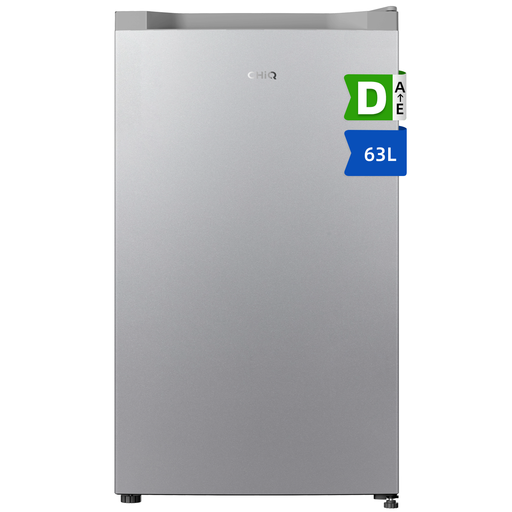
CHiQ JR63DSD freezer, 63 l
If you want to store more than individual portions of crumble, this model gives you extra freezer space.
63 l, four-star freezing, 47 cm wide, 38 dB, manual defrosting, reversible door and energy class D.
View at Joybuy
 No image available
COMFEE' RCU60WH2(E) freezer, 60 l
The larger capacity may work well for crumble and other food, provided you have the space and need for it.
60 l, three storage compartments, adjustable temperature and reversible door; freestanding design.
View at Joybuy
 No image available
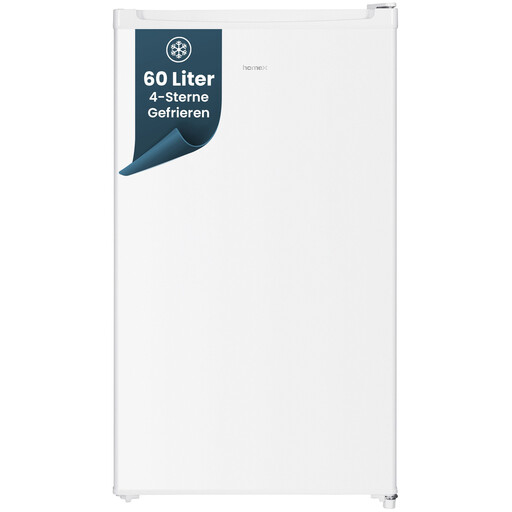
homeX FS1016-W freezer, 60 l
This capacity gives you room for extra portions; check first that the dimensions and internal layout suit your containers.
60 l, four-star freezing, temperature control, reversible door, 40 dB and energy class E.
View at Joybuy
Frequently asked questions
Can I freeze cooled fruit crumble in my fridge-freezer compartment?
Yes, if the specific compartment is suitable for freezing and has enough room. For proper, long-term freezing, the consumer advice centre recommends checking that fridge-freezer compartments have a four-star rating. Look for the rating on your appliance.
How should I pack individual portions?
Use suitable freezer containers or bags and label them with the contents and date frozen. The Federal Centre for Nutrition lists cake among foods that can be frozen; this doesn’t establish whether this particular crumble will stay crisp after thawing.
What should I consider when positioning the appliance and checking its energy consumption?
Measure the space, including room for the door to open, and compare the kWh per year on the EU energy label. If possible, don’t place the appliance next to a heat source, and follow the manufacturer’s installation instructions.
Can an old freezer go in household rubbish in Germany, and when must a retailer take it back?
An old appliance must not go in household rubbish. Under Section 17 of the German Electrical and Electronic Equipment Act (ElektroG), retailers must, subject to the conditions set out there, accept an old appliance of the same type free of charge when selling a new one. For home deliveries, the law also provides for free collection. Check the return arrangements with the retailer when you buy.


