
Lieferung heute & morgen

Qualitätsgarantie

Willkommens-Angebote freischalten: KOSTENLOSE Lieferung | Bis zu 80 % RABATT | Kostenlose 30-Tage-JoyPlus-Testphase
App herunterladen
The selection of fruit mueslis on supermarket shelves can be overwhelming. Between crunchy mueslis, organic varieties, and low-sugar options, it's often difficult to find a product that meets your personal needs. This article serves as a guide. It presents objective criteria to help you choose and showcases a selection of products with different strengths to make your purchasing decision easier.
To find a fruit muesli that fits your dietary preferences, the following three criteria can help guide your choice.
A look at the nutrition table and the ingredient list is insightful. The "of which sugars" value includes both the sugar naturally present in fruits and grains as well as added sugar. A muesli with no added sugar avoids the addition of refined sugar, glucose syrup, or similar sweeteners. Here, the sweetness comes primarily from the dried fruit. Honey or agave syrup are also often used for sweetening and are listed in the ingredients.
A whole grain muesli uses the entire grain kernel, including the nutrient-rich outer layers. This generally leads to a higher content of nutrients and fibre. A high-fibre muesli can contribute to a balanced diet. The fibre content is declared per 100 grams on the packaging and provides a good basis for comparison between different products. This allows you to assemble a healthy breakfast based on clear facts.
The ingredient list reveals specific characteristics. Those who value organic farming can look for products with an organic muesli certification. The list is also crucial for people who want to avoid a particular ingredient. For example, there are varieties specifically labelled as muesli without raisins. The type of muesli—whether it's a classic flake mix, a crunchy muesli with fruit, or a traditional Bircher muesli—is also determined by the ingredients and how they are processed.
Here is a selection of fruit mueslis that cater to different characteristics and preferences.
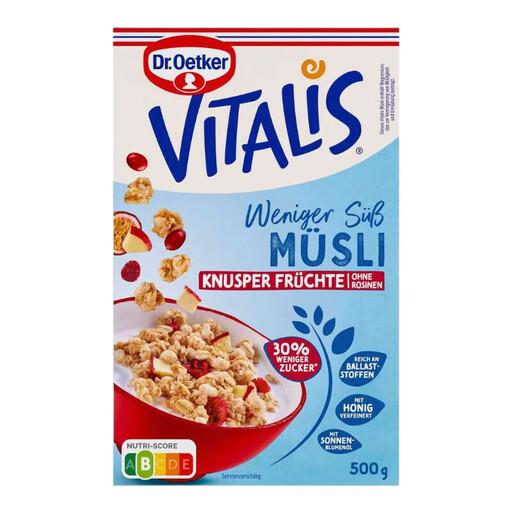
Why it stands out: This crunchy muesli combines baked whole grain oat flakes with fruity cranberries and apple pieces. It is specifically positioned as "less sweet" and is completely free of raisins, making it appealing to a specific target audience.
Pros:
Who is it for? This muesli is aimed at people who prefer a crunchy muesli with fruit but are looking for a less sweet option and specifically want to avoid raisins.
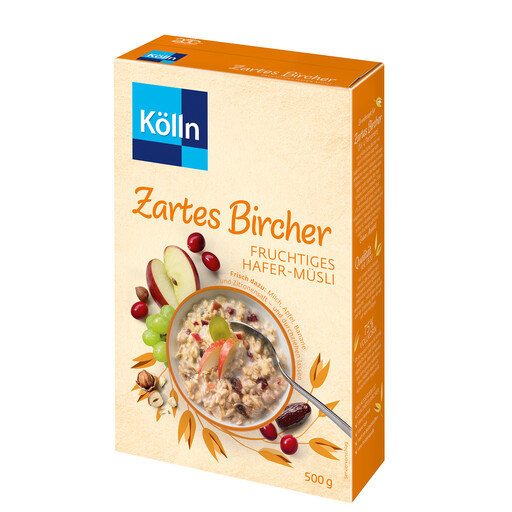
Why it stands out: The K?lln Bircher Obst Müsli is based on the classic recipe from its inventor, Dr. Bircher-Benner. It features delicate oat flakes that develop a creamy consistency in liquid, complemented by a mix of apples, raisins, dates, and hazelnuts.
Pros:
Who is it for? Anyone looking to buy Bircher muesli and prepare a traditional, creamy breakfast will find this to be a perfect base. It is suitable for lovers of soaked, soft mueslis.

Why it stands out: This muesli from Alnatura is distinguished by its organic quality and high fruit content of 40%. It contains no added sugar; the sweetness comes exclusively from the sultanas, raisins, figs, apricots, and apples.
Pros:
Who is it for? This organic muesli is ideal for health-conscious individuals looking for a product with no added sugar who value ingredients from certified organic farming. The high fruit content will appeal to lovers of very fruity muesli blends.
The selection presented here covers only a small fraction of the available fruit mueslis. Each variety has its own unique characteristics, from the fruit composition to the type of grain flakes.
Didn't see your favourite? Discover our entire range of fruit mueslis and find the perfect variety to suit your taste and needs.
A classic fruit muesli is a loose mix of grain flakes (e.g., oats, wheat) and dried fruit. A crunchy muesli, often also called granola, contains flakes that are mixed with ingredients like honey, syrup, or oil and then baked. This process creates crunchy clusters. There are also hybrids, such as crunchy muesli with fruit, which combine both elements.
To identify a muesli with no added sugar, check the ingredient list on the packaging. Terms like sugar, cane sugar, glucose syrup, fructose syrup, or even honey and maple syrup indicate added sweeteners. The "of which sugars" value in the nutrition table is not sufficient on its own, as it also includes the sugar naturally present in fruit and grains.
Fibre is a key component of a balanced diet. A high-fibre muesli, especially a whole grain muesli, can contribute to your daily fibre intake. Whole grains, nuts, seeds, and dried fruits are typical sources of fibre in muesli mixes. The exact content is listed per 100 g on the packaging, allowing for a direct comparison.