If you’re chilling cut fruit only until you’re ready to prepare it soon, and you already have a suitable freezer, a fridge with room for covered containers should be enough. If you don’t have a suitable freezer, a fridge-freezer could work for smaller or occasional batches. For larger quantities on a regular basis, compare your needs with those of a separate freezer. The German Federal Institute for Risk Assessment (BfR) recommends keeping cut fruit chilled and covered. Also compare fridge and freezer capacity separately, along with the appliance dimensions, annual energy consumption and defrosting requirements.
Who should consider these options?
Preparing fruit salad
If you cut up fruit in advance, you’ll need room for covered containers and reliable refrigeration until you’re ready to prepare it soon. The German Federal Institute for Risk Assessment recommends keeping cut fruit in the fridge until it’s ready to eat.
Planning freezer storage
If you’re portioning fruit to use later, check whether your existing freezer compartment has enough space or whether you need extra freezer capacity. The German consumer advice centre recommends choosing capacity to suit your needs, especially if you regularly freeze larger quantities.
Making the most of your kitchen space
If you want to balance your fridge and freezer needs with the space available and energy consumption, compare the dimensions and annual energy use of the specific appliances. The German consumer advice centre notes that larger fridges can use more electricity.
What should you look for when buying?
The key considerations are whether you already have somewhere else to store frozen portions and how large your batches are likely to be.
Fridge with an existing freezer
A good fit if: you only need to chill the fruit salad briefly and already have a suitable freezer.
Consider: The fridge won’t give you any extra freezer capacity, so you’ll be relying entirely on your existing freezer.
Fridge-freezer
A good fit if: you need fridge space for preparation and freezer space for smaller or occasional batches, all in one appliance.
Consider: Check the fridge and freezer capacities separately. The models covered here have LowFrost, but that doesn’t mean you won’t need to defrost them.
Fridge plus a separate freezer
A good fit if: you regularly freeze larger quantities at once or store a lot of frozen food long-term.
Consider: An extra appliance needs space and runs continuously, so make sure its freezer capacity suits your actual needs.
| What you need |
What to look for |
Who it matters most to |
| Chilled storage |
Check the usable fridge capacity and shelf layout. Make sure there’s room for your own covered containers. |
If I prepare cut fruit, I want somewhere chilled for covered containers until I’m ready to use them soon. Around 36% of consumers would put safe short-term storage first. |
| Freezer space |
Compare the freezer capacity in litres with the portions you plan to pack. For larger batches, also check the specific model’s freezing capacity. |
If I freeze larger portions at once, the freezer needs to hold the whole batch. Around 29% of consumers would make sufficient freezer space their top buying priority. |
| Dimensions and interior layout |
Check the external dimensions and door hinge position where you plan to install the appliance. For tall or wide containers, check the usable internal dimensions too. |
If my kitchen space is limited or my containers need particular shelves, the appliance must fit the space and the containers. Around 21% of consumers would prioritise fit and interior layout. |
| Energy use and maintenance |
Compare annual energy use in kWh for appliances of a suitable size. Don’t assume LowFrost and NoFrost mean the same thing. |
If the appliance runs continuously, I want to understand its energy use and any defrosting needed before I buy. Around 14% of consumers would make running costs and maintenance their top priority. |
Common buying mistakes
-
Assuming total capacity is the same as usable space
Fridge and freezer space are separate. Even if the total capacity looks right, there’s no guarantee that your containers will fit on the shelves or in the drawers.
Measure your containers and compare the fridge and freezer capacities, as well as the interior layout, separately.
-
Confusing LowFrost with NoFrost
On the Siemens and Bosch models mentioned here, LowFrost reduces ice build-up, but the product pages confirm that they still need defrosting. Manual defrosting may therefore still take time.
Check the defrosting information for the full model and don’t rely on a feature name that merely sounds similar.
-
Assuming a freshness drawer is a substitute for careful chilling
A freshness feature doesn’t prove that cut fruit salad can be stored safely without a cover or for any length of time. The BfR notes that pre-cut fruit is highly perishable.
Prepare the fruit hygienically, keep the pieces covered and chilled, and plan to use them soon.
Key brands at a glance
Siemens
The KG39EAICA iQ500 is a fridge-freezer with separately stated fridge and freezer capacities.
- Siemens lists 249 l of fridge capacity, 94 l of freezer capacity and 149 kWh/year for this model.
- Siemens states that this model still needs defrosting. These specifications don’t automatically apply to other appliances from the brand.
Bosch
The KGE39AICA Serie 6 is a fridge-freezer with separately stated fridge and freezer capacities.
- Bosch lists VitaFresh, LowFrost, 249 l of fridge capacity, 94 l of freezer capacity and 149 kWh/year for this model.
- The product page confirms that the appliance still needs defrosting. The freshness feature doesn’t prove that it offers any special protection for ready-cut fruit salad.
Hisense
According to Hisense, the RB440N4AFA is a freestanding fridge-freezer with a total capacity of 336 l.
- Hisense lists an A energy efficiency rating and Total No Frost for this model.
- The manufacturer’s claims about flavour or vitamins don’t amount to an independent assessment of its suitability for fruit salad.
Gorenje
According to Gorenje, the RK6192EW4 combines 205 l of fridge space with 109 l of freezer space.
- Gorenje lists a CrispZone drawer and a freezing capacity of 4,9 kg in 24 hours for this model.
- The stated annual energy consumption is 234,89 kWh. FrostLess doesn’t automatically mean you won’t need to defrost the appliance.
Beko
The TS190030N is a compact fridge with 88 l of fridge capacity, making it an option if you have a separate freezer.
- Beko lists a reversible door and an F energy efficiency rating.
- Allow for a separate freezer if you plan to freeze the portions afterwards.
Joybuy products for chilling and freezer storage
This selection includes fridge-freezers for chilling and freezing in one appliance, as well as fridges without a freezer compartment for households with a separate freezer.
 No image available
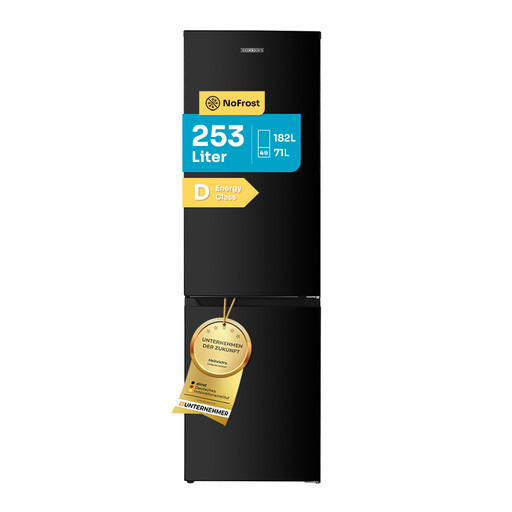
Heinrich’s fridge-freezer, 253 l
Chill prepared containers and freeze portions in one appliance. 182 l fridge capacity and 71 l freezer capacity; No Frost; 39 dB.
View at Joybuy
 No image available
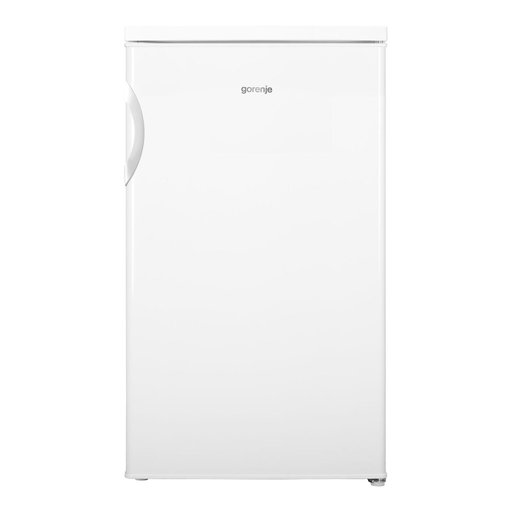
Gorenje G200 R49DPW fridge, 133 l
A fridge without a freezer compartment for covered containers, if you have a separate freezer. 133 l; D energy efficiency rating.
View at Joybuy
 No image available
Sonlu CS-100L fridge, 82 l
For short-term chilling of prepared containers when you have a separate freezer. 82 l; E energy efficiency rating.
View at Joybuy
 No image available
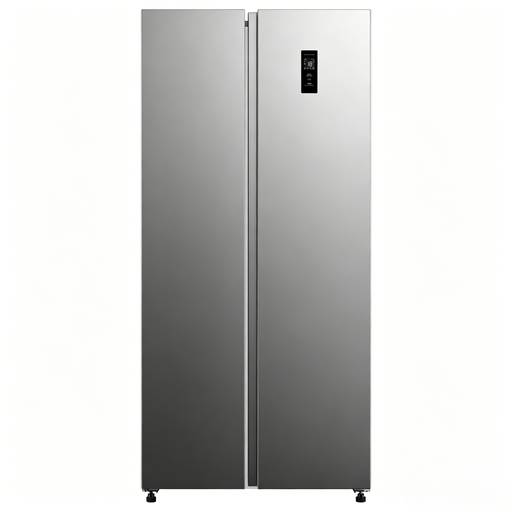
Sonlu CC-520WE side-by-side, 444 l
Chill and store frozen food in one appliance. 276 l fridge capacity and 168 l freezer capacity; No Frost; 83 cm wide; E energy efficiency rating.
View at Joybuy
 No image available
CHiQ JR263LGE fridge-freezer, 262 l
Keep covered containers chilled and freeze portions in one appliance. Low Frost; 54 cm wide and 176 cm high. The product description says the freezer compartment needs to be manually defrosted around once or twice a year.
View at Joybuy
Frequently asked questions
Can cut fruit salad be left out of the fridge until you’re ready to prepare it?
No. The German Federal Institute for Risk Assessment recommends keeping cut fruit, especially pieces of melon, chilled until it’s ready to eat. Cover the pieces completely and use them soon; chilling doesn’t replace hygienic preparation.
Do I need to freeze a whole fruit salad as a mixture?
No, you can prepare and freeze the fruit in individual portions. The German Federal Centre for Nutrition recommends using suitable packaging, portioning and labelling. You can pre-freeze individual fruits to help stop them sticking together. Whether the defrosted mixture has the texture you want depends on the fruit you use.
What temperature is a useful guide for storing frozen food?
The German consumer advice centre recommends −18 °C as the optimum temperature for upright freezers and chest freezers. Check that the specific appliance offers a suitable freezing function and temperature setting; a standard fridge compartment isn’t a substitute.
How do I compare the energy consumption of fridges?
For appliances with a suitable capacity, compare the annual energy consumption in kWh shown on the EU energy label. To estimate your own costs, multiply kWh/year by your electricity price in €/kWh. Actual consumption also depends on how and where the appliance is used.
What applies in Germany to energy labels and old appliances?
Household refrigeration appliances covered by EU rules must meet energy labelling and product information requirements. The European Commission makes model information available through EPREL. Germany’s Federal Environment Ministry also highlights online retailers’ take-back obligations for old electrical appliances. Before buying, check how collection of the specific appliance will be arranged.


