
Lieferung heute & morgen

Qualitätsgarantie

Willkommens-Angebote freischalten: KOSTENLOSE Lieferung | Bis zu 80 % RABATT | Kostenlose 30-Tage-JoyPlus-Testphase
App herunterladen
A fruit slicer can core apples, portion avocados, prepare pineapples or chop fruit and vegetables evenly. However, not every model is suitable for every household. Some kitchen tools are designed for a single type of fruit, while others require considerable pressure or are difficult to clean after use.
Before buying, it is therefore worth looking at the actual design rather than relying on eye-catching marketing claims.
A combination tool sounds practical, but it is not automatically suitable for every type of fruit. An avocado slicer with a stone remover, for example, is designed for soft flesh. Hard apples, pineapples and firm vegetables, on the other hand, require sturdy cutting elements and suitable leverage.
So check whether the fruit slicer is explicitly intended for the fruit you want to prepare. An apple slicer with a coring function serves a different purpose from an avocado slicer or pineapple slicer.
“Stainless steel” does not automatically describe the entire construction. What matters is whether only the blade, or also the handles and connecting parts, are made of metal. Plastic components can reduce the weight, but they must be suitable for contact with food and sufficiently robust.
Also pay attention to the cleaning instructions. For a tool with a joint, folding mechanism or narrow gaps, washing by hand may be more practical than cleaning it in the dishwasher.
A fruit slicer with a fixed cutting grid produces evenly sized pieces when used with suitable fruit. With food of different sizes or very hard produce, however, the result may vary. An obst and vegetable slicer with multiple inserts also requires careful handling and sufficient space on the chopping board.
For frequent kitchen tasks, rust-resistant stainless steel blades are a sensible choice. Serrated blades can be helpful with softer fruit because they grip the skin and compress the flesh less. Smooth blades are more suitable for clean, controlled cuts.
With a fruit knife, the blade length is also relevant. Compact knives can be guided precisely, while a specialist fruit slicer with several cutting segments can speed up portioning.
Compare the diameter or working width with the fruit you usually prepare. According to the product description, the Leifheit ProLine Apple Slicer is designed for fruit up to 90 mm in diameter and divides apples and pears into twelve segments.
For preparing salads or crudités every day, a vegetable slicer with interchangeable inserts may be more practical. For individual types of fruit, a tool designed specifically for that purpose is usually easier to use.
A kitchen tool should be fully accessible for cleaning after use. Check the following:
For products intended for preparing baby and toddler food, information on food-safe materials, cleaning and the recommended age should be read particularly carefully. Suitability for food preparation does not replace adult supervision.
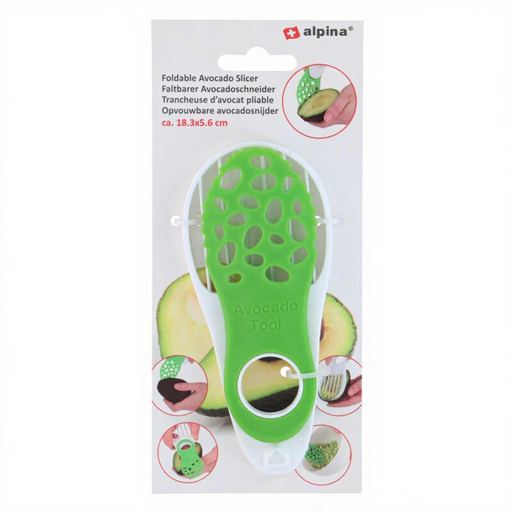
Why this product suits this profile: This compact 3-in-1 model opens, removes the stone from and portions avocados using a single kitchen tool. Measuring 12.5 × 5.6 × 1 cm and weighing 22 g, it is ideal for households with limited storage space.
Its use is clearly limited to avocados. This means you do not have to use an unsuitable universal tool for hard fruit.
Food-safe PP plastic, low weight and several preparation steps combined in one tool.
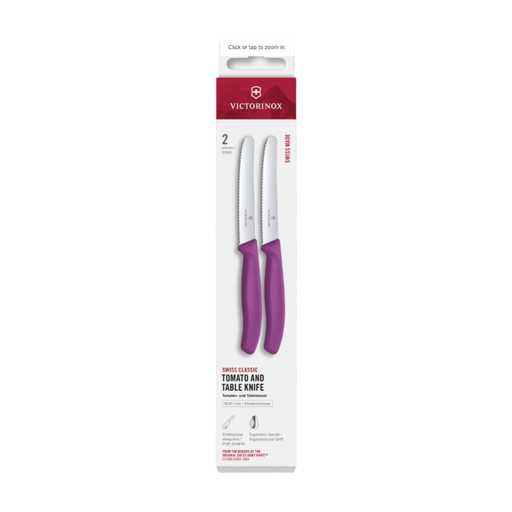
Why this product suits this profile: Two fruit knives with 11 cm serrated stainless steel blades are ideal for precise cutting tasks involving soft skins and soft flesh.
The serrated blade is designed for clearly defined applications rather than making vague claims of suitability for every type of food.
PP handles, two knives in the set and, according to the product information, a dishwasher-safe design.
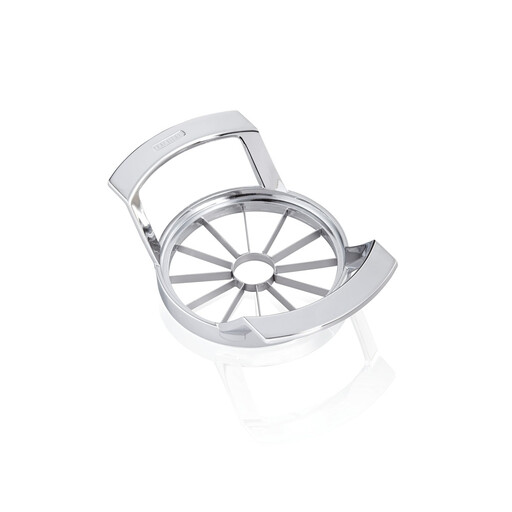
Why this product suits this profile: The apple slicer divides apples and pears into twelve segments while removing the core. Its design is suitable for larger fruit up to 90 mm in diameter.
Its clearly defined purpose prevents the tool from being used on hard stones or unsuitable stone fruit.
Twelve evenly sized segments, chrome-plated metal and, according to the product description, a dishwasher-safe design.
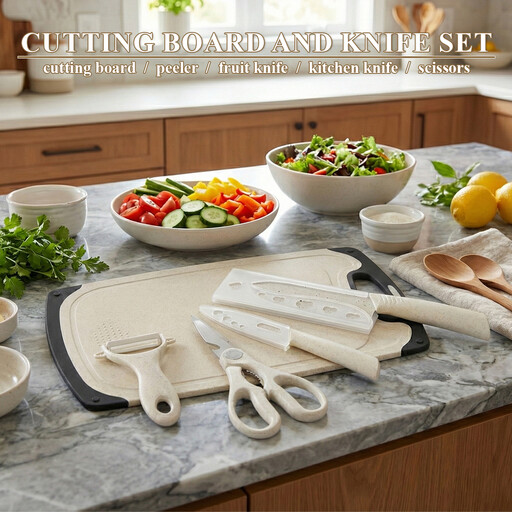
Why this product suits this profile: The set combines a chopping board, knife, fruit knife, safety scissors and Y-shaped peeler for preparing small portions.
Protective covers, rounded handles and a non-slip underside address common storage and handling issues. Sharp parts must still be kept out of children’s reach.
Several tools for fruit, soft vegetables and small portions; according to the product information, BPA-free PP and wheat-straw fibre.
We have put together a complete, regularly updated list of products that fully meet these strict selection criteria and the safety regulations applicable in the EU.
For apples, a model with a central corer and fixed cutting grid is practical. According to the product description, the Leifheit ProLine Apple Slicer divides apples and pears into twelve pieces. Before buying, compare the fruit diameter with the size of the fruit you normally use.
That depends on how you intend to use it. If you regularly prepare apples or pears, a combined slicing and coring tool can reduce the number of preparation steps. For occasional use, a separate fruit knife may be sufficient. For avocados, a specialist fruit slicer with a corer is useful if you also want to portion the flesh.
Its lifespan depends on the material, level of use and care. Stainless steel blades should not be used on unsuitable hard stones or frozen food. Plastic joints and ceramic knives require careful handling. Always follow the care and safety instructions provided by the relevant manufacturer.