Photographers shooting a dark food scene
You want the tart to stand out from the background and light to fall on the fruit and glaze, without losing the dark look of the image.


For a fruit tart against a dark background, window light is often a good place to start: side or backlighting can be directed with care using a screen. A dimmable LED panel is particularly useful if you want to work at any time of day or repeat the same light angle and brightness. Make sure the diffusion, screening, footprint and power supply suit your set-up.
You want the tart to stand out from the background and light to fall on the fruit and glaze, without losing the dark look of the image.
You need natural-looking fruit colours and lighting settings you can reproduce across several shots.
You need to fit the light, mount and power supply around a limited shooting area.
Nikon USA describes side or backlighting as a typical approach to food photography. For a dark mood, Canon Europe recommends screening out incoming window light.
A good choice if: you have a suitable spot by a window during the day and want to start taking photos without a light.
The trade-off: The light changes throughout the day. A white card will lift the shadows, but can also weaken the dark look.
A good choice if: you take photos at different times and want to control the position, brightness and white-light settings.
The trade-off: Diffusion and screening take up space. Manufacturer specifications are no substitute for a test shot with your tart and camera.
A good choice if: you have little space to work with or only want to add light to a small area of the tart.
The trade-off: A smaller light source is not automatically a soft main light for the whole tart.
| What you need | What to check before buying | Who it matters most to |
|---|---|---|
| Keeping light on the tart | Check that the light and mount can be positioned as needed, and whether a suitable grid or other means of screening is available. | If I want the tart to stand out from the dark background without brightening the whole scene unnecessarily, precise control of the light is my main concern. This is the top priority for around 36% of consumers. |
| Judging fruit colours and shine | Compare the white-light settings on the specific model and check the fruit and a white reference in a test shot. | If natural-looking fruit colours and controllable reflections matter to me, I want to assess the light on the actual subject. This is the main concern for around 29% of consumers. |
| Reproducing the light at different times | Compare the brightness and colour-temperature settings, as well as the power adapter or compatible battery option. | If I don’t always take photos at the same time of day, I need light that can be adjusted independently of the window light. Around 21% of consumers put this first. |
| Fitting the set-up into a small space | Check the dimensions of the light and mount, as well as the power supply and what’s included with the exact variant. | If there’s little room on my table, I need to be able to position the light and mount sensibly. This is the main priority for around 14% of consumers. |
Manufacturer figures describe a particular model and may refer to specific testing conditions; they don’t tell you what the shadows and reflections will look like on your tart.
Only compare figures that relate to the model you’re considering, and check the light angle, diffusion, screening and fruit colours in a test shot.
Adding more fill light can work against the dark mood you’re aiming for.
Start with one main light and adjust its direction or screening before adding a second light.
What’s included can vary by model and set.
Before ordering, compare the exact variant with your set-up and the equipment you already have.
Depending on the variant, you may need to buy batteries, mounts or light modifiers separately. Check what’s included against your existing set-up.
The P60x is a bi-colour panel designed for a set-up with a light modifier and directional main light.
The P260C Pro is a larger bi-colour panel with an integrated diffuser and several power options listed by the manufacturer.
The LUMIS LED Panel Bi-Color is an option if you want a larger, adjustable light source in a fixed set-up.
The RGB660 PRO II EU two-light set offers two positionable panels for shots using multiple light positions.
The VIJIM VL120 Bi-Color 2029 is a small, rechargeable panel for mobile or supplementary lighting.
This Joybuy selection includes compact LED lights for a space-saving set-up or targeted extra light on the tart.
 No image available
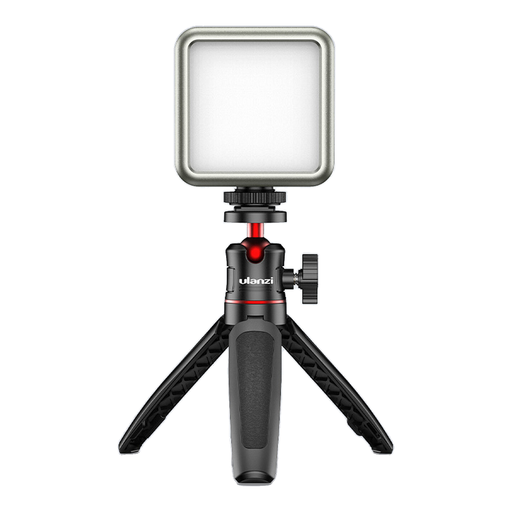
This compact, battery-powered light could be a good choice for targeted extra lighting. Check in a test shot whether it covers the area you want.
The product title lists a 2.000-mAh battery, dimmable brightness and an adjustable range of 2.500–9.500 K.
 No image available
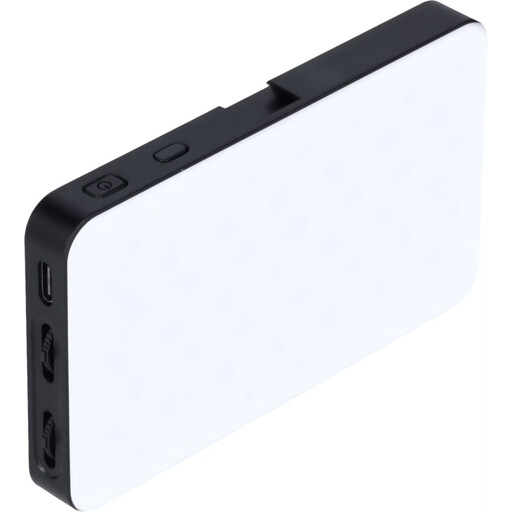
This compact light with an integrated battery could suit a small set-up. Check the colours and reflections on the tart in a test shot.
According to the product description: bi-colour settings from 2.500–9.000 K, brightness control from 0–100%, 381 lx at 0,5 m and CRI/TLCI 98+. It also lists dimensions of 11,5 × 6,8 × 1,6 cm, a weight of 125 g, Cold Shoe and 1/4-inch connections, and around 80 minutes of battery life at 100% power.
Not necessarily. Start with side or backlighting and check the shadows in a test shot. A white card on the opposite side will lift the shadows; if you want to keep the dark mood, less fill light may work better.
Start by positioning the light at the side of the tart and take a test shot. Adjust the angle or diffusion if the fruit is reflecting too much light. Only use a mount and light modifier that are suitable for your specific panel. For example, the manufacturer says the amaran P60x comes with a softbox and grid.
It depends on the model and the version on offer. Rollei lists batteries for the LUMIS LED Panel Bi-Color as optional. The NEEWER RGB660 PRO II two-light set includes power adapters and stands, but no NP-F batteries, according to the EU product page. Check what’s included with the specific variant.
If a product is faulty, you have statutory rights against the seller. These are separate from any voluntary guarantee, as explained by the Verbraucherzentrale. In Germany, online orders generally come with a 14-day right to cancel from the date of receipt. Exceptions and the specific circumstances of the contract should also be taken into account.
Within its area of responsibility, Germany’s Federal Network Agency checks electrical and electronic products for matters including CE marking, manufacturer details and German-language instructions with the required warnings. According to the European Union, CE marking is only required where the relevant harmonised rules stipulate it; it is not a quality mark for photographic results.